
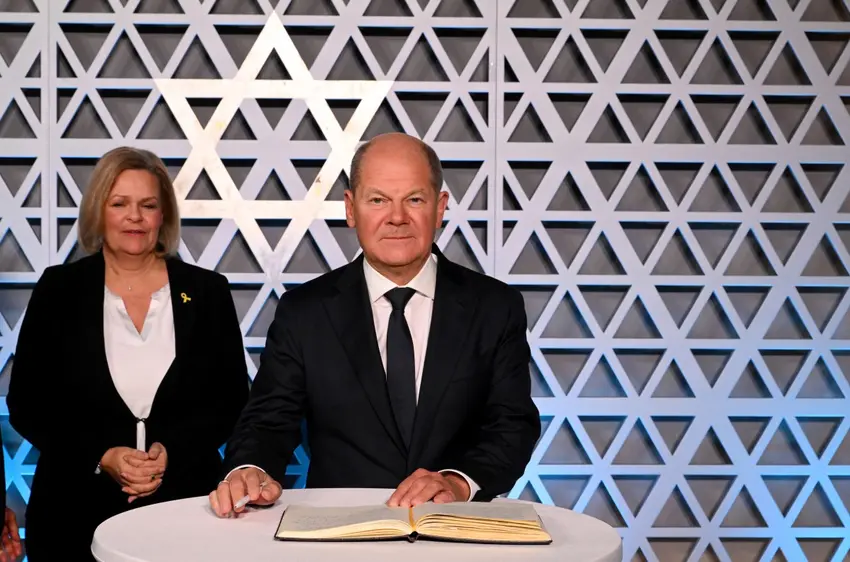
Germany must never 'turn the page' on the Holocaust, says Scholz
Chancellor Olaf Scholz said Sunday that Germany had a responsibility to keep alive the memory of the Holocaust committed by Germans during World War II.
"I am against turning the page, saying 'that was long ago'," Scholz told a gathering of the Jewish community in Frankfurt to mark the 80th anniversary of the liberation of the Nazis' largest concentration camp, Auschwitz.
"We keep alive the memory of the civilisational split of the Shoah (Holocaust) committed by Germans, which we pass down to each generation in our country again and again: our responsibility will not end," he said.
The Holocaust is "millions of individual stories", people "like you and me - it is also this awareness that we must pass down in our remembrance", he added.
This collective memory is based on "indisputable facts that everyone in our country must face regardless of origin, family history or religion", he said.
Scholz also underlined the "worrying and alarming normalisation" of anti-Semitism, hate and the far right, especially on social media where this was often accompanied by calls to violence.
READ ALSO: 'How did the world allow Auschwitz?' Nazi death camp survivors speak out ahead of anniversary
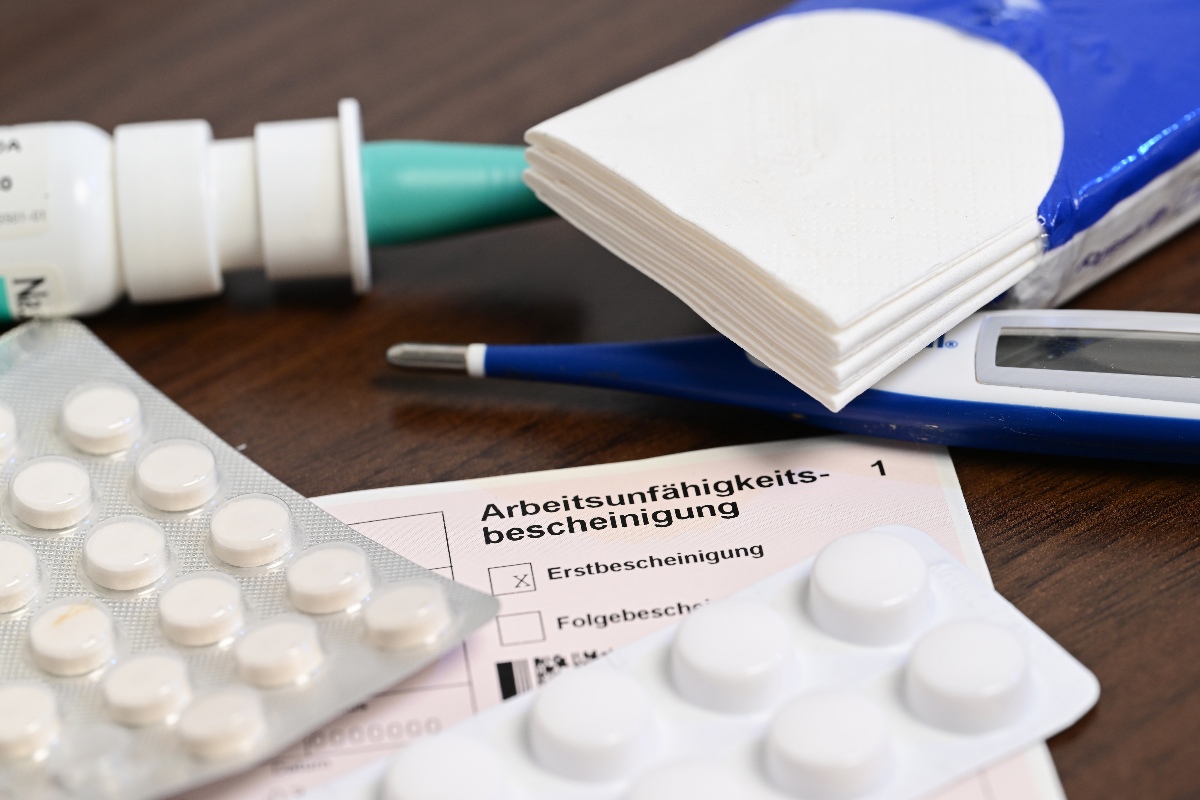
Flu wave spreading in Germany
Health experts say a flu wave is underway in Germany.
The Robert Koch Institute (RKI), Germany’s centre for monitoring and preventing disease, said people of all ages are affected by the virus, which is sweeping through Germany.
The RKI examines samples from people who come to doctors' offices with cold symptoms to estimate how common a virus is.
Roughly speaking, a flu epidemic begins when influenza viruses are found in every fifth sample analysed. The latest weekly report from the RKI's Influenza Working Group shows this. A total of around 11,070 laboratory-confirmed cases were submitted in a week.
"Influenza cases are being recorded in all age groups," the report states.
It is unclear how long the wave will last.
"There are longer and shorter waves of flu," said RKI spokeswoman Susanne Glasmacher. "You have to take it as it comes."
In some years, there has been a second wave of flu at the beginning of spring, for example in March 2023.
The RKI said for this reason it is still worth getting a flu jab for the winter season if you're in a risk group.
READ ALSO: Health experts warn of emerging flu wave in Germany
Germany's Washington envoy worried for US democracy under Trump
Germany's ambassador to the United States worries about Donald Trump's "plans for revenge" and thinks his policies could weaken the country's democratic institutions, according to a confidential cable revealed on Sunday by the German daily Bild.
In a cable reportedly sent by Andreas Michaelis last Tuesday to the foreign ministry, the envoy denounced President-elect Donald Trump's planned "strategy of maximal disruption" to "redefine the constitutional order".
Michaelis sees Trump as a man driven by "desire for vengeance" and thinks he aims to "maximally concentrate powers" in the presidency, to the detriment of Congress and the states, which would "largely sap" the United States' fundamental democratic principles, according to the cable quoted by Bild.
Questioned about the cable, Foreign Minister Annalena Baerbock confirmed its existence.
"Of course the embassies write reports, that's their mission, especially during changes of government for us to know what to expect...," Baerbock told the ZDF television channel.
"And the American president has already announced what he intends to do... and of course we have to prepare for that."
Contacted earlier by AFP, the German foreign ministry said it does not comment on "internal documents, analyses and embassy reports" in principle.
READ ALSO: 'Predictable' Trump is opportunity for Europe, says CDU's Merz
Germany could send troops to future Ukraine buffer zone, defence minister says
Germany's defence minister said he was open to sending German soldiers to Ukraine to help secure a demilitarised zone there if a ceasefire were agreed with Russia, in remarks published Saturday.
In an interview with the Suddeutsche Zeitung newspaper, Boris Pistorius also said Germany should aim to spend around three percent of GDP on defence.
US President-elect Donald Trump wants members of the NATO military alliance to devote five percent of their national output on defence, a demand that has already been rejected as too high by German Chancellor Olaf Scholz.
Asked about a possible deployment of German troops to help secure a buffer zone between Russia and Ukraine if one were agreed, Pistorius said: "We're the largest NATO partner in Europe. We'll obviously have a role to play."
He said the issue would "be discussed in due time".
With reporting from AFP and DPA
Comments