
Ukraine allies to hold last defence meet in Germany before Trump takes office
Ukraine's Western allies will gather with President Volodymyr Zelensky at a US base in Germany on Thursday in their last such meeting before Donald Trump returns to the White House in less than two weeks.
US Defence Secretary Lloyd Austin is expected to announce a substantial new military aid package for Kyiv at the 25th such talks at Ramstein Air Base that will include representatives from some 50 countries.
Ukrainian president Zelensky only confirmed late Wednesday that he will fly in for the meeting.
NATO Secretary General Mark Rutte and EU foreign policy chief Kaja Kallas were also expected at the Ukraine Defence Contact Group meeting alongside German Defence Minister Boris Pistorius.
Russian and Ukrainian forces now engaged in fierce fighting in the almost three-year-old war are looking to secure their battlefield positions before Trump's January 20 inauguration.
Once back in office, Trump, who has criticised US military aid for Kyiv, has promised to bring a swift end to the war, but without making any concrete proposals for a ceasefire or peace deal.
The United States under President Joe Biden has been Ukraine's biggest wartime backer, providing military aid worth more than $65 billion since February 2022, and a senior US defence official told journalists this week that a "substantial announcement" on aid is likely to come at the Thursday meeting.
Germany has been Ukraine's second-biggest backer at some $30 billion so far, including money committed for this year.
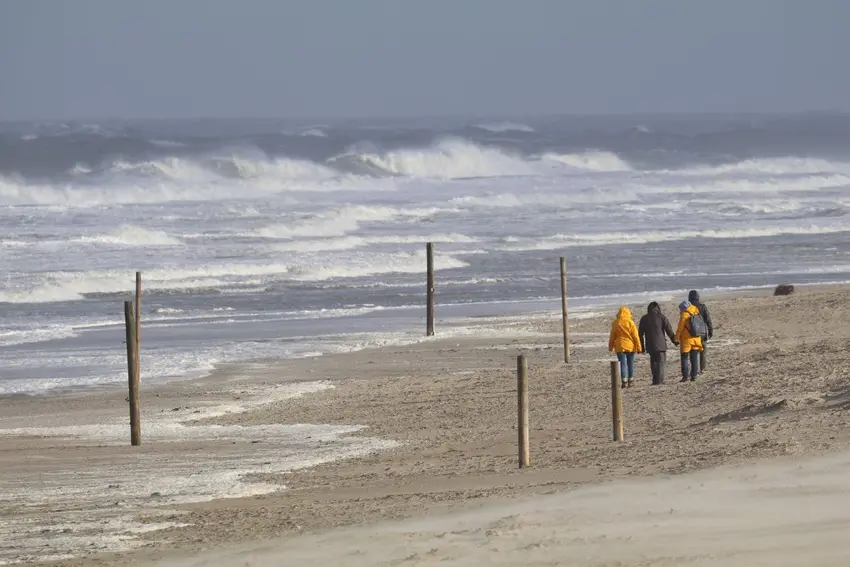
Record high temperatures in the German North Sea
Germany's Agency for Shipping and Hydrography (BSH), which analyses ocean surface temperatures off the German coast on a weekly basis, measured the highest temperatures since records began (in 1969) this year.
With an average surface temperature of 11.1C, the office said 2024 overall was the fourth warmest year recorded. But the highest temperatures recorded last year also broke all-time heat records for the North Sea.
Experts say the German North Sea is getting warmer and warmer due to climate change - the Baltic Sea is also alarmingly warm.
READ ALSO: Germany says 2024 has been its hottest year on record
According to BSH, only in the month of January did the average surface water temperatures drop below the recent average (which is based on temperatures from the previous 30 years). Data from the Baltic Sea showed a similar trend.
Warmer water temperatures can have devastating impacts on local ecology. For example, algal blooms are more likely in warmer waters and these can deprive the surrounding water of oxygen, leading to dead zones where marine creatures die off in mass. Greenhouse gas emissions also drive ocean acidification which can also disrupt marine food chains.
Report shows political change needed to maintain the care sector
The government's ninth Age Report, which was discussed by the Federal Cabinet on Wednesday morning, suggests that the number of very old people and people in need of care in Germany is expected to increase by several million in the next 25 to 30 years.
According to the report, the number of people over 80 is expected to increase from around 6 million today to 8 to 10 million in 2050.
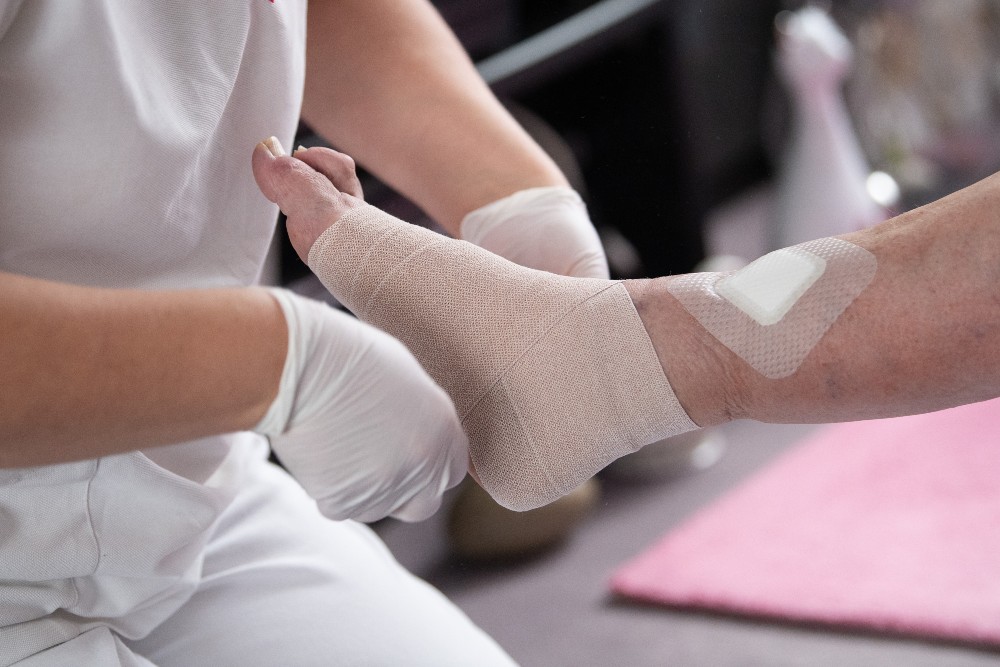
"By 2055, the number of people in need of care is expected to increase to 7.6 million across all ages," the report says. In 2023, the number was around 5.7 million, according to Germany's Statistical Office.
READ ALSO: Germany sees 'explosive' hike in people needing old-age care
Federal Senior Minister Lisa Paus (Greens) emphasized that it is necessary to cushion the development with political measures.
Among the proposed solutions is a wage replacement benefit for people who care for others at home, similar to the parental allowance for childcare. Said benefit was proposed, but not provided by the former traffic light coalition government.
On the bright side, the report found that retirement incomes have developed positively overall, suggesting that the majority of pensioners are satisfactorily provided for financially.
Nevertheless, it's known that the risk of poverty increases with age, especially for women. Currently 17 to 19 percent of those over 65 are considered to be at risk of poverty in Germany, and that rate is higher than in the general population.
Germany reforms process to return Nazi-looted art
The German government has signed off on a reform plan for the process of returning art looted by the Nazis, despite criticism from victims' families and lawyers.
The change would mean "Germany will better live up to its historical responsibility", culture minister Claudia Roth said in a statement.
Germany in 1998 signed the Washington Declaration which commits 44 signatory nations to track down and return art stolen by the Nazis to its rightful owners.
Almost 80 years after the end of Hitler's regime, the process of returning works to their rightful owners has struggled to make progress.
Under the current system, both claimants and the holders of allegedly looted art have to consent to arbitration -- a step many current owners have in practice refused to take.
The proposed reform would see the current advisory commission, whose decisions are not binding, replaced with an arbitration court for restitution claims.
The new mechanism would allow victims to make a "unilateral appeal" for the return of their artworks, Roth said.
Germany to Trump: 'Borders must not be moved by force'
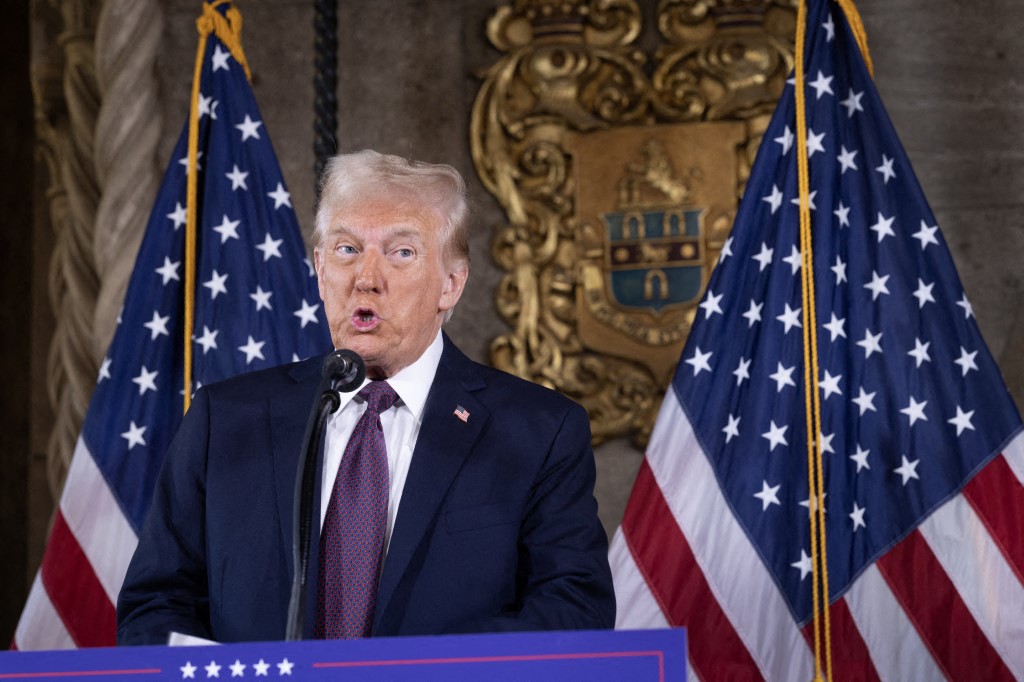
Germany told Donald Trump on Wednesday that borders must not be changed by force after the US president-elect refused to rule out military action to take Greenland, an autonomous territory of Denmark.
AFP reported that German government spokesman Steffen Hebestreit said in response to Trump's remarks that "as always, the firm principle applies... that borders must not be moved by force", pointing to international agreements such as the UN Charter.
German Chancellor Olaf Scholz also said Wednesday that EU leaders were baffled the President-elect's comments.
"In my discussions with our European partners, there has been a notable incomprehension when it comes to current statements from the USA regarding the principle of the inviolability of borders," Scholz said.
Trump, in a news conference on Tuesday, refused to rule out military intervention over Greenland and the Panama Canal, both of which he has said he wants the United States to control.
Trump also called the border with the United States' northern neighbour Canada an "artificially drawn line" and promised to rename the Gulf of Mexico the "Gulf of America".
Hebestreit refused to be drawn on whether the German government takes Trump's threats against NATO allies Denmark and Canada seriously.
"I don't want to assess" the comments, Hebestreit told a regular news conference, adding only that the German government had "taken note" of them.
Changing weather conditions to bring snow, rain and storms to Germany
Parts of Germany will be hit with snow while other areas will see storms, according to the German Weather Service (DWD).
On Thursday, DWD predicts that two weather fronts over Germany will generally bring snow to northern areas, while it will be warmer in the south - at least initially. However, on Thursday morning, DWD also warned of high winds and storms in the south.
Meteorologist Julia Tuschy from the DWD said, "It is relatively certain that it will snow down to low altitudes". But she added that it's not certain how much of it will remain on the ground after the storms pass by.
A wide strip of snow is likely to fall - from the Rhineland and Hanover area to the Altmark in Saxony-Anhalt and northern Brandenburg. In the afternoon, the DWD expects snowfall to ease in the west and intensify in Saonxy-Anhalt and northern Brandenburg.
In these areas temperatures are expected to range between 0 - 6C, meanwhile in the south, highs of between six and 14C can be expected.
READ ALSO: Snow and freezing temperatures set to hit northern Germany
With reporting by AFP and DPA.
Comments