
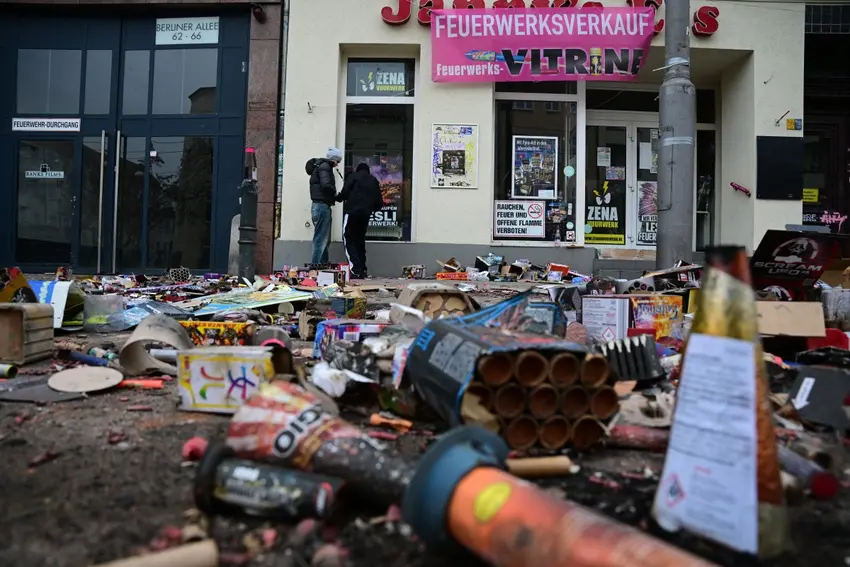
Germans celebrate the new year with a particularly intense use of fireworks, which drives the recurring debate about outlawing the most powerful devices, particularly given the high number of injuries each year, as well as the pollution and noise they cause.
Some 13 law enforcement officers were injured as a result of the accidents this year, including one seriously, said police spokesman Florian Nath.
Around 330 people were detained in Berlin overnight, police said, but contrary to previous years, "there was no major violence or incidents," they added.
Near Paderborn in the northwest region of North Rhine-Westphalia, a 24-year-old man died after detonating a pyrotechnic rocket, according to local police, who believe the victim had made the device himself.
In Oschatz in Saxony, a 45-year-old man died of serious head injuries when he set fire to a "pyrotechnic bomb". According to the police, it was a powerful F4 category firework, which requires a special permit to purchase.
In the same eastern region of Saxony, a 50-year-old man died on the spot from head injuries in the town of Hartha when he tried to detonate a pyrotechnic pipe bomb, a police spokesperson said.
Near Hamburg in the north, a 20 year-old man died lighting a pyrotechnic firework.
Finally, in Kremen near Berlin, a fifth man died from "inappropriate manipulation" of pyrotechnics, according to local police.
READ ALSO: What are the rules for setting off fireworks in Germany on New Year's Eve?
The Berlin Accident Clinic (UKB) reported that it treated 15 seriously injured people on Wednesday morning. Five suffered serious injuries to their hands, faces and eyes from so-called ball bombs, while others lost individual fingers or parts of their hands or suffered hearing loss and burns.
Ball bombs (Kugelbomben) often contain a dangerously large amount of explosive black powder; large ball bombs are banned in Germany, but they can be imported illegally from abroad or made at home.
"Handling unapproved fireworks is a criminal offence punishable by up to three years' imprisonment or a fine," the Ministry of the Interior says on its website. "If people or objects of significant value are knowingly endangered, a prison sentence of up to five years can be imposed." A fine of up to €50,000 can also be issued.
Meanwhile, Germany's Pyrotechnics Association criticised the flourishing trade in illegal fireworks and blamed such explosive devices for the numerous serious injuries on New Year's Eve.
"These highly dangerous DIY devices have nothing to do with legal and tested New Year's Eve fireworks from specialist retailers or discounters," said Ingo Schubert, board member of the Federal Pyrotechnics Association.
Instead, Schubert said politicians were to blame for injuries and even deaths caused by illegally marketed fireworks because they did not take decisive enough action against illegal trade.
Serious injuries were "practically impossible with certified firecrackers and rockets, even if they are used improperly," he said.
Every year, there is a fresh dispute about the exception made for the sale of private fireworks on New Year's Eve, especially following the ban on firecrackers that was implemented during the Covid-19 pandemic.
The police, the fire service, the German Medical Association and environmental and animal rights activists, are all against the unrestricted sale of fireworks for New Year's celebrations.
Comments