
Salaries in Germany are comparatively high compared to most of the world, but they may seem pretty low if you’re coming from the US or Switzerland, for example.
According to OECD statistics from 2023, Germany has the 12th highest wages on average for full-time employees. But this does put it below many of its neighbours including Belgium, Austria, Denmark and the Netherlands – and just below Canada and Australia as well.
A common question among people considering moving to Germany for a job is, will my salary be enough to live on?
Here’s a look at how much salary you need to live in different cities and districts around the country.
On average, a gross yearly salary of €35,704 is enough to afford a comfortable life in Germany. But you’ll need more than that to live in most of the bigger cities.
That’s the finding of a recent data analysis by Focus, which looked at living costs in 400 cities and districts in the Bundesrepublik.
The analysis was based on expenses calculated for a single person who lives alone in a 68 square metre apartment.
To calculate the average gross salary needed in each region, researchers looked at housing cost data as well as cost of living figures which were then adjusted for inflation and according to a regional price index.
To give an idea, the cities that had living costs that were closest to the German average were Bielefeld in North-Rhine Westphalia and Kassel in Hesse.
Where in Germany do you need a higher salary?
The most expensive places to live in Germany are Munich, and a couple of its surrounding districts, according to the analysis.
You’d want a yearly salary of at least €53,800 to live comfortably here.
That’s just slightly higher than what the average full-time employee in Germany currently brings in. According to Destatis, the average monthly income for full-time workers was €4,479 in 2023, which amounts to €53,748 for 12 months.
After Munich comes Stuttgart, where residents would expect to need average annual income of around €45,700.
Germany’s biggest cities by population are all among the most expensive places to live. In Berlin, Hamburg, Frankfurt, Cologne and Düsseldorf, you can expect to need an income close to €45,000 to meet basic living costs.
Higher rents in the bigger cities is the primary factor pushing living costs above surrounding suburban and rural areas.
Interestingly, Freiburg im Breisgau (€44,157) and Heidelberg (€43,718), rank among the most expensive cities in the country despite being much smaller in population. Both of these cities, however, have notable universities.
READ ALSO: RANKED - The 'best' universities in Germany for 2025
Where are the cheaper places to live?
Putting the biggest cities aside, other large cities in Germany are significantly cheaper.
A salary of €37,051 would be enough to live comfortably in the rest of Germany’s cities with more than 100,000 residents.
In cities with populations between 10,000 to 100,000, you could generally get by with relative ease with €35,656 in annual income, and in rural districts it’s pretty similar, at €35,216.
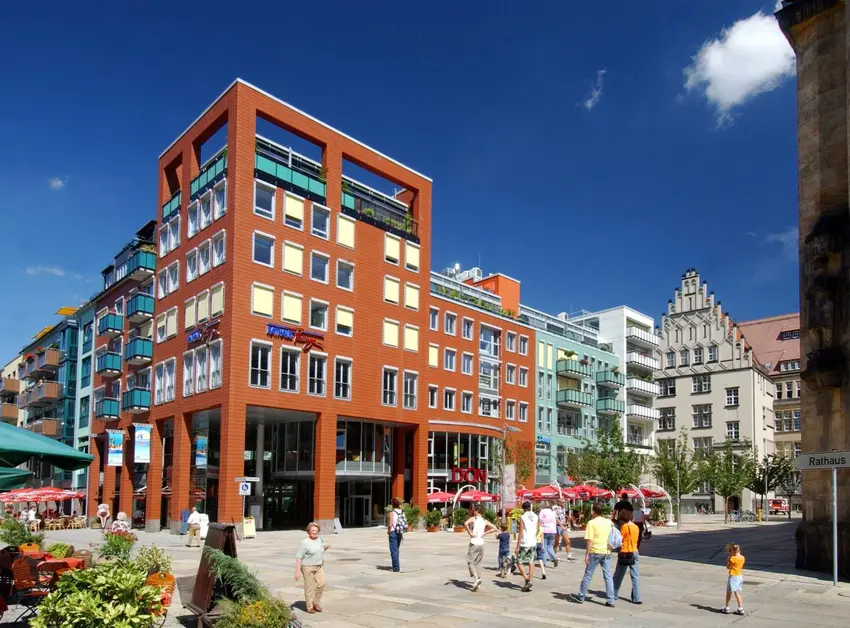
The cheapest major city to live in is Chemnitz in Saxony, where you can get by with €31,296 per year, according to the study.
Other cities with significantly low costs include Magdeburg in Saxony-Anhalt, Salzgitter in Lower Saxony and Gelsenkirchen in North Rhine-Westphalia.
Note that the analysis did not include the costs of maintaining a car. So your expenses could be a bit higher if you use one.
Comments