
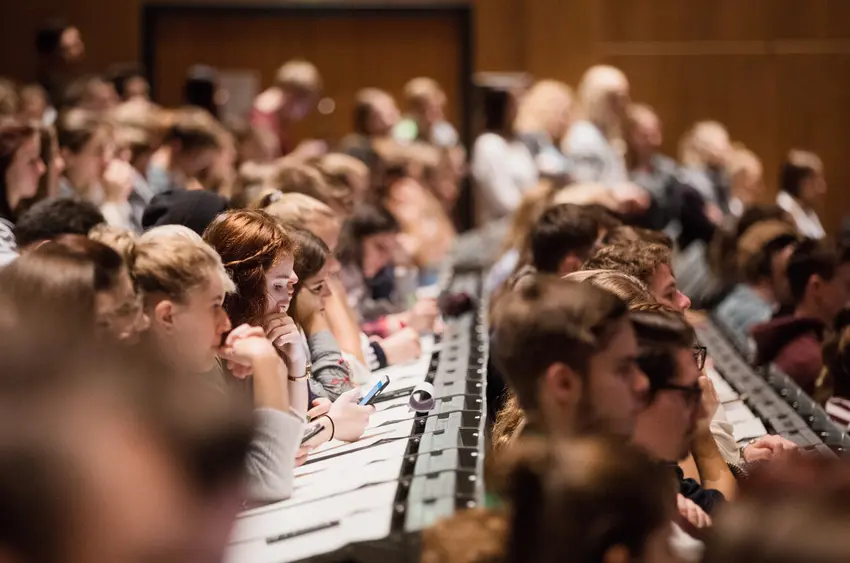
When you start your studies as an international student in Germany, you're embarking on a huge and exciting adventure.
You'll have a chance to meet new people from all over the world, deepen your knowledge at a respected university and fully immerse yourself in Germany's fascinating language and culture.
With so many generous funding schemes and perks like a discounted nationwide travel pass, there's never been a better time to be studying in Germany.
Here's what students can expect when heading back to university in the new year, according to student advice portal Studying in Germany.
1. Blocked account requirement goes up to €11,904
In order to meet the requirements for a student visa, many internationals opt for what's known as a blocked bank account, which only allows you to withdraw a certain amount of money per month.
This academic year, students need to deposit €11,904 annually (amounting to €992 per month) to cover their living expenses. Previously, the threshold was set at €11,208 per year or €934 per month.
READ ALSO: How much money do international students need to study in Germany?
2. Increase in the minimum wage
For students looking to work while completing their degree, there's good news: Germany's statutory minimum wage is set to go up once again at the start of next year, meaning an automatic pay rise for millions of workers.
By January 2025, the minimum wage will rise to €12.82/hour, offering a monthly gross salary of €2,222 for those in full-time work, or €1,111 for those working 20 hours per week.
The last increase in the minimum wage was at the start of 2024, when the hourly rate was upped from €12 to €12.41.
3. Mini-job income threshold to rise
Many students in Germany work a mini job alongside their studies, allowing them to earn a bit of extra spending money without paying full social security contributions.
From January 2025, students can earn up to €556 per month in this type of job, working approximately 43.3 hours per month at the new minimum wage.
That equates to around 11 hours per week - well under the 20 permitted for international students.
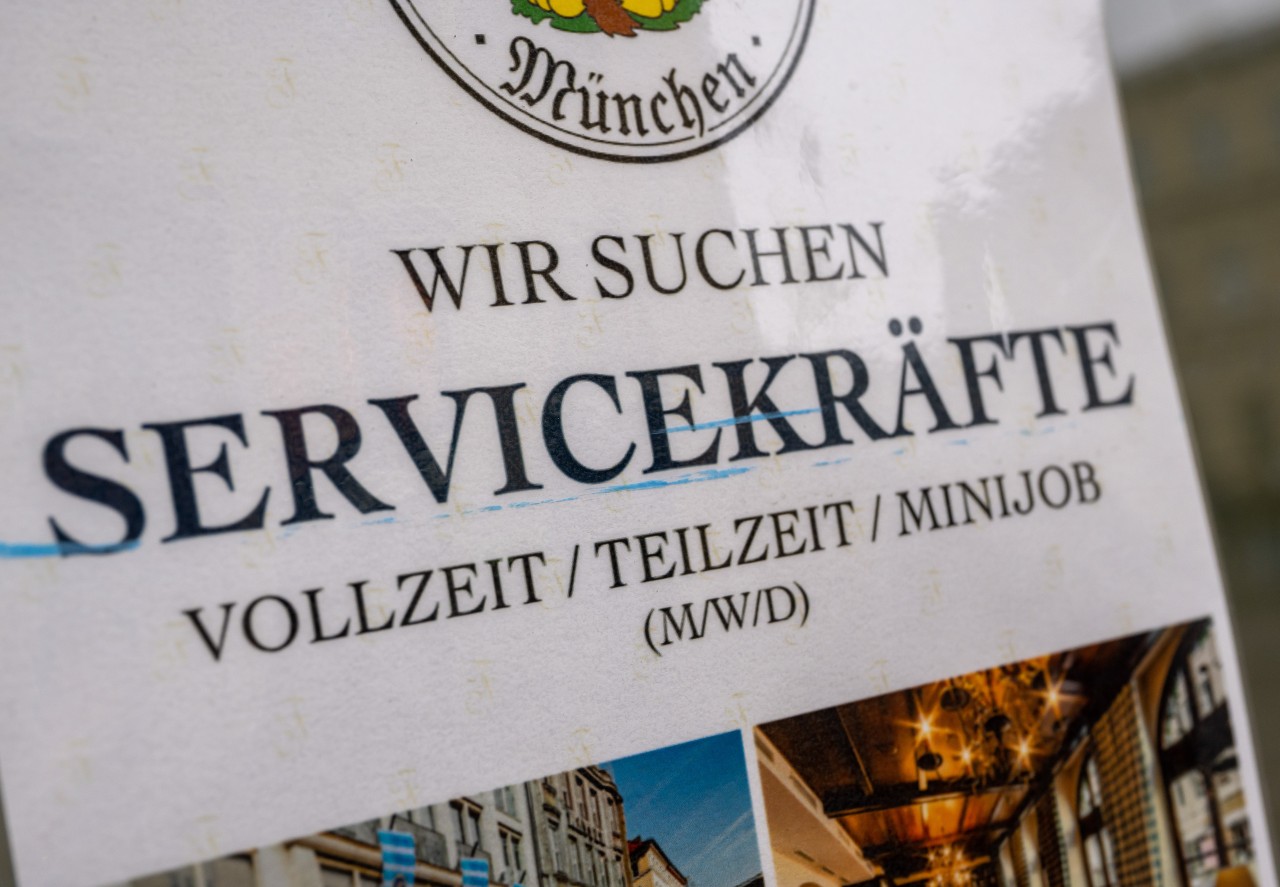
4. Munich's Technical University introduces tuition fees
From the start of the winter 2024/2025 semester, non-EU students will be asked to pay tuition fees at the renowned Technical University of Munich (TUM) in Bavaria.
For students embarking on bachelor's degrees, the fees will generally range between €2,000 and €3,000 per semester, amounting to €4,000 to €6,000 per year. For students taking master's degrees, the fees will be between €4,000 and €6,000 per semester or €8,000 and €12,000 per year.
Though most states in Germany offer tuition-fee free study, Bavaria has recently introduced its Higher Education Innovation Act, which allows universities to introduce fees.
So far, TUM is the first university in Bavaria to do so, while other universities such as the University of Regensburg and Munich's Ludwig Maximilian University remain completely free.
READ ALSO: What you need to apply for university in Germany
5. German universities to get more EU Erasmus+ funding
Over the new two years, German universities are set to receive a whopping €220 million in funding to support international exchanges through the EU's Erasmus+ Programme.
Of this, €186 million will be used to support around 58,000 students and staff in exchanges to other EU countries and academic institutions. An additional €31 million will go to around 7,000 students visiting Germany through the Erasmus+ programme.
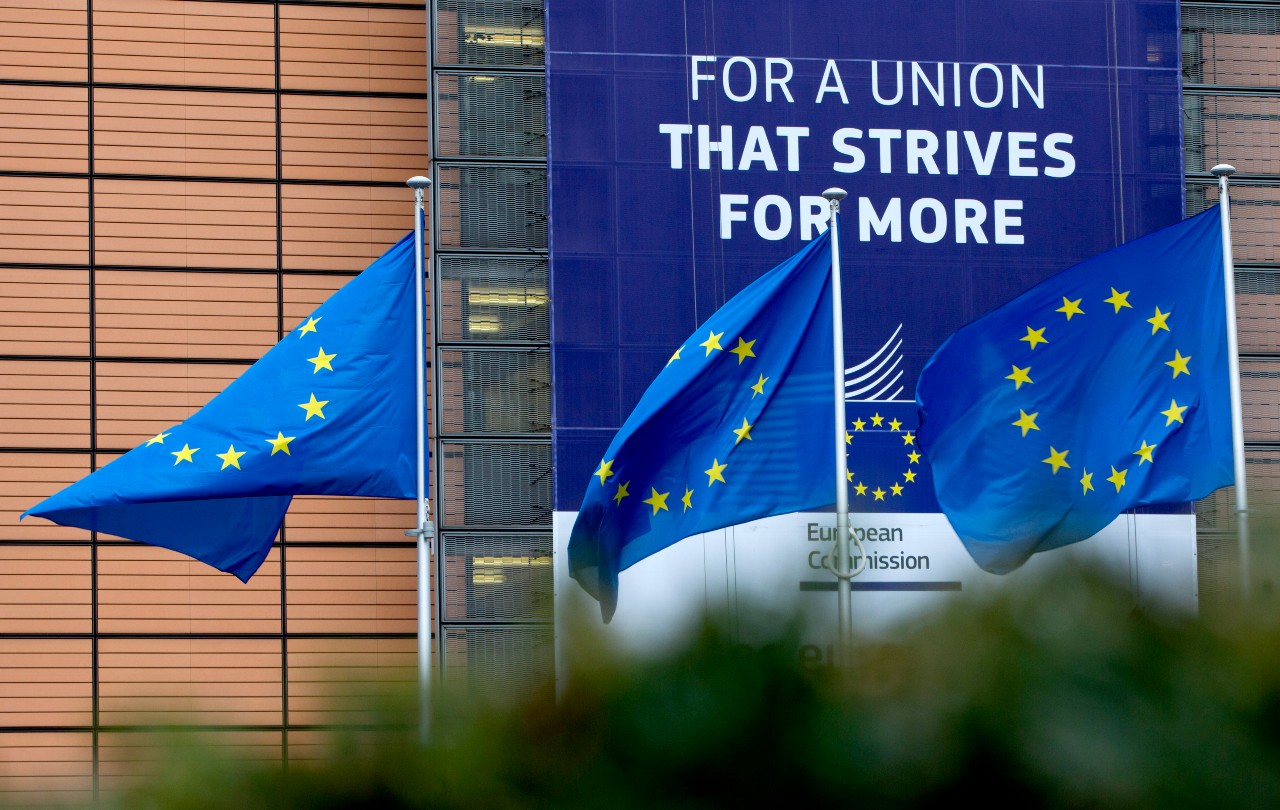
The Cooperation Partnerships, which aims to foster a more international approach to education and academia, will also receive €11 million in funding.
6. International students gain extended working rights
As part of its Skilled Immigration Law, the former coalition government introduced sweeping changes designed to make it more attractive to study in Germany.
In one particularly important change brought in this year, international students are now able to work more hours to help fund their studies.
Since March this year, students have been able to work up to 280 half-days or 140 full-days per year, or 20 hours per week. This includes prospective students applying to university and those undertaking preparatory courses such as language classes ahead of their degree.
In addition, non-EU citizens can live in Germany for up to nine months while seeking vocational training, provided they are under 35 and have a B1 German language certificate. They can also work for up to 20 hours a week while looking for a training spot.
7. Students to receive more financial support
This year, a sweeping reform of Germany's BAföG student finance system brought with it some positive changes for students.
Most notably, the maximum allowance has increased by five percent to €855 for students under 25 years old, €992 for 25-30 year olds, and up to €1,088 for over 30 year olds.
Housing support has also increased to €380 per month for students living away from home.
Other key changes include the introduction of a flexible semester that allows students to claim financial aid for one semester longer without needing a valid reason, and an additional semester of funding for students changing courses.
In addition, students from low-income households will receive a one-off grant of €1,000 to support them at the start of the studies.
READ ALSO: Germany to increase financial aid for students
8. New discounted Deutschlandticket for students
When Germany's national Deutschlandticket travel pass was first launched, there was an uproar in the student community that they seemed to have been forgotten.
Since then, this issue has been rectified - and students can now enjoy local and regional travel all around Germany for just €29.40 per month.
With the price of the standard Deutschlandticket shooting up to €58 per month in the new year, this equates to a pretty hefty discount of almost 50 percent.
9. German universities listed in 2025 QS global rankings
In the latest Quacquarelli Symonds (QS) rankings of top universities, five German institutions have made it into the top 100 for 2025.
The Technical University of Munich (TUM) once again topped the list in Germany, taking the 28th spot in the world rankings overall.
Ludwig-Maximilians University of Munich (LMU München) ranks 59th, followed by the University of Heidelberg at 84th, tied with the Tokyo Institute of Technology. The Free University of Berlin is positioned at 97th, with the University of Aachen completing the list at 99th.
READ ALSO: RANKED - The 'best' universities in Germany for 2025
Four additional universities also secured spots in the top 200: Karlsruhe Institute of Technology (KIT), Humboldt University of Berlin, Technical University of Berlin (TU Berlin), and the University of Hamburg, in that order.
10. Moderate economic recovery expected in 2025
Germany's has borne the brunt of some pretty gloomy economic news lately, from stagnant growth to layoffs at prominent German companies.
However, there are signs that a modest recovery could be on the cards, with a few hopeful trends forecast for 2015.
Next year, the country could slowly start to shake off its recession and see GDP grow by one percent throughout the year. Meanwhile, the rise in the cost of living could slow down significantly, with inflation dropping to two percent per year.
READ ALSO: How do I stay in Germany after graduating from a German university?
According to experts, the job market is also expected to remain stable, with low unemployment of around three percent. With Germany still battling labour shortages, this could mean good opportunities for finding part-time work and internships as a student.
Comments