
German Christmas markets are copied throughout the world, delivering a taste of Deutschland. But nothing beats the real thing - and many of these culinary delights you won't find anywhere else.
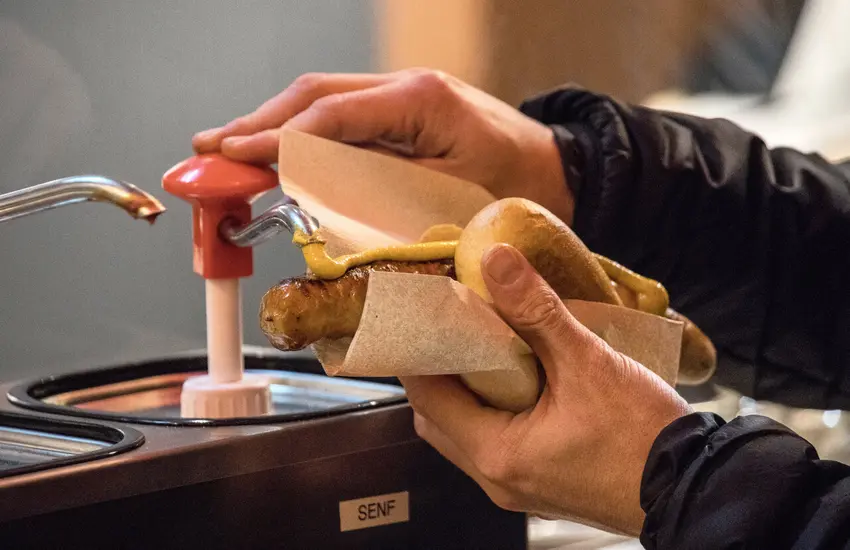
Bratwurst
No Weihnachtsmarkt is complete without one or 50 Bratwurst stands. Although hardly ground-breaking, a sausage in a bun topped with ketchup or mustard (or preferably, both), and delicious onions at a reasonable price is the perfect market snack.
The type of sausage will vary depending on where you are but a classic you see often is the Rostbratwurst, such as the versions from Thuringia or Nuremberg. Keep an eye out for vegan and vegetarian options which some German markets offer nowadays.
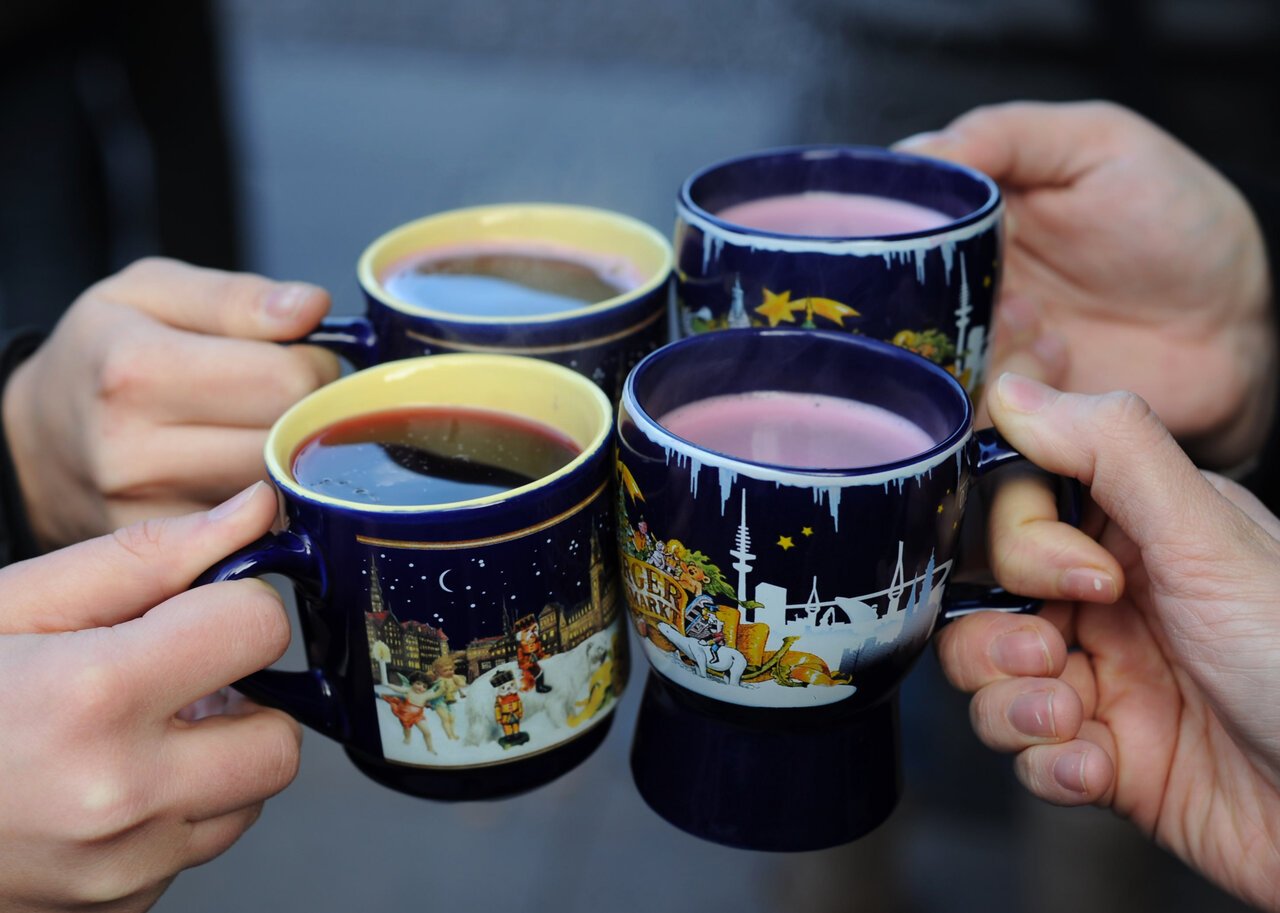
Glühwein
Mulled wine is a must if you're at a German Christmas market. This warm drink is made of wine (it can be red or white), sugar, cinnamon, cloves, lemon, orange and star anise. If you're looking to get even more merrier (and to sufficiently warm up) order your Glühwein mit Schuss (with a shot). It will come with an extra shot of alcohol, often rum.
If you're not drinking, look out for non-alcoholic versions of Glühwein - or Kinderpunsch (children's punch) as it's commonly referred to in German. The wine is usually replaced with a mixture of fruit tea, apple and orange juice.
READ ALSO: 5 things you need to know about German Glühwein
Maronen
Is there anything more Christmassy than chestnuts roasted on an open fire? Look out for German markets where experts are preparing them for you freshly. You can watch them while waiting in the queue and then receive a bag of toasty chestnuts all ready to peel and nibble on as you stroll and look at the stalls.
Stollen
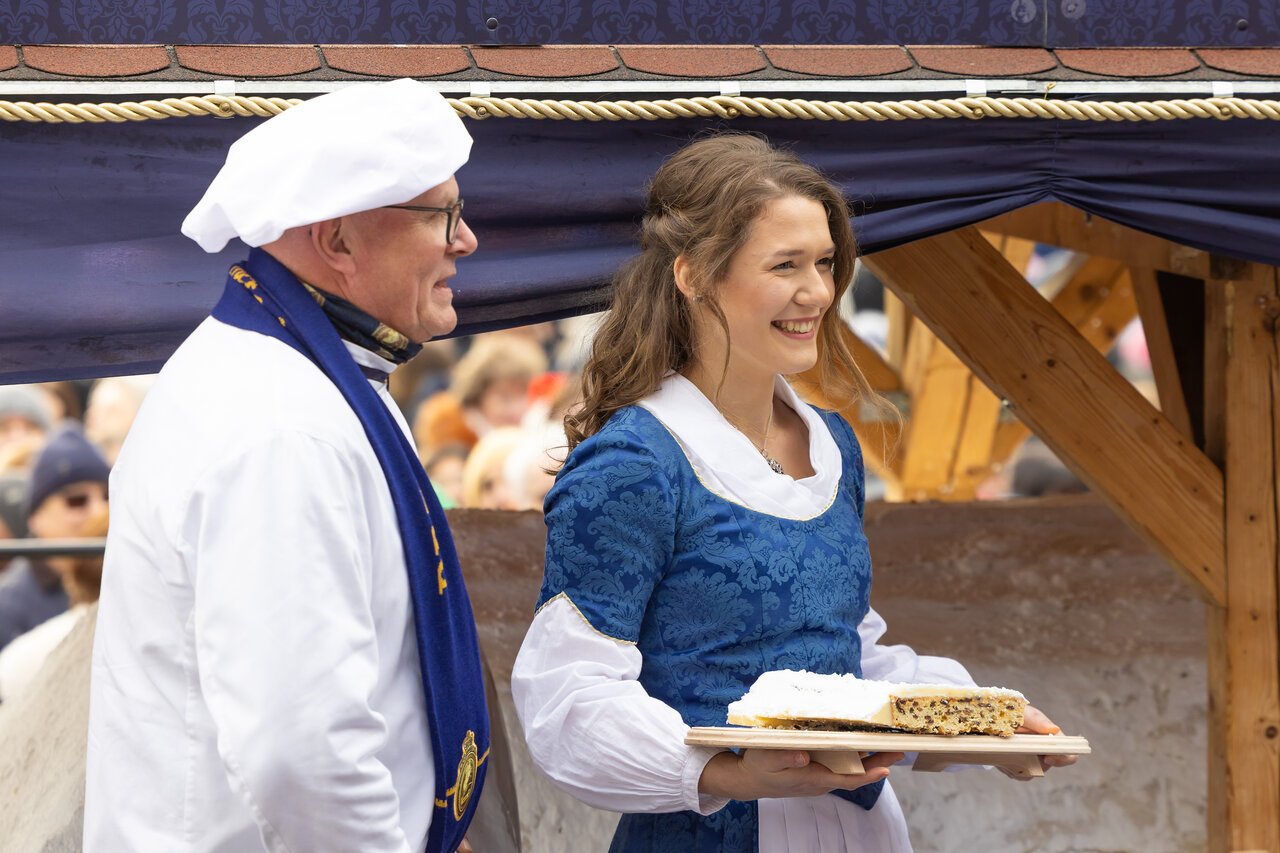
No visit to Germany in winter is complete without feasting on Stollen, a fruit bread filled with nuts, spices and dried fruit and dusted with a sugar coating. Some versions have marzipan or chocolate. It's delicious topped with butter, jam or nothing at all (although some people prefer cheese).
While everyone gets excited by the start of advent, let's not pretend it's the only event starting in December. No friends, 1st December also marks the beginning of Cheese & Stollen month, the perfect mix of German baking and British ingenuity no one asked for. You're welcome.
— Nic Houghton (@40percentgerman.bsky.social) 2 December 2024 at 09:50
[image or embed]
Bonus points if you try Stollen in Dresden, where it is said to have originated. Every year on the Second Advent weekend, the city holds a festival dedicated to the special Dresden Christmas Stollen complete with a 'Stollen Girl' and a giant Stollen weighing almost two tonnes. The giant cake bread is sold in small portions to visitors. This year the fest took place on the weekend of December 7th. But there's still time to try Stollen from Dresden or indeed any Christmas market in Germany.
Kaiserschmarrn
This much-loved Austrian dish is a favourite of Germans. And it's easy to see why. Made of thick spongey shredded pancake bites with a delicious dipping sauce, such as Apfelmus (apple puree), this is a dessert-style delight that is sure to please.
If you want to go for sugar overload, enjoy your Kaiserschmarrn (which is sometimes known as Kaiserschmarren by the way) with a hot chocolate.
READ ALSO: An essential guide to Bavaria's Christmas markets this year
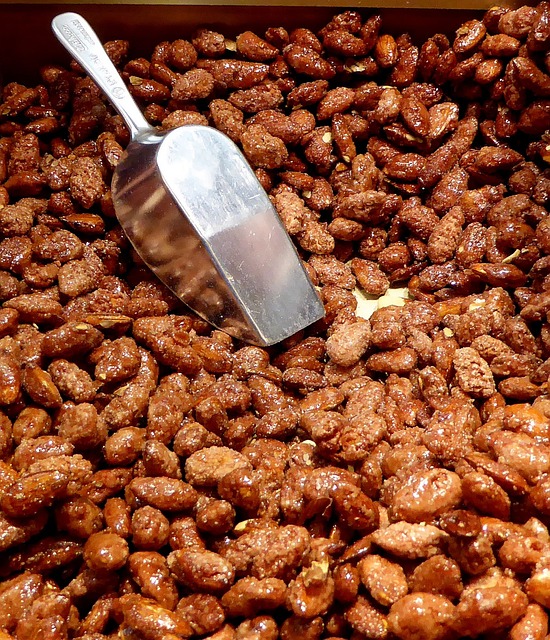
Gebrannte Mandeln
You will usually smell the delicious waft of what translates literally as 'burnt almonds' before you see them. Of course, they aren't really burnt. They are usually roasted in sugar, vanilla and cinnamon and other Christmas spices. Treat yourself to a bag that you can dip into while walking around the market.
Kartoffelpuffer
If you're looking for another hot snack, why not try the humble Kartofelpuffer, often known as a Reibekuchen or Kartoffelpfannkuchen? As you probably know, potatoes are a national treasure in Germany. This dish is a kind of fried pancake made from grated potato, onion, eggs and flour. Traditionally, Reibekuchen can be found the whole year round and are sometimes served as part of a sweet dish and sometimes savoury.
The way they are served depends on where you are in Germany. In Bavaria, for instance they are often served as an accompaniment to traditional dishes such as Wurst and Sauerkraut, while in the Rhineland they are eaten with beetroot, apple compote or jam. In parts of Saarland, the northern Rhineland-Palatinate and in Hesse, Reibekuchen are often served as an accompaniment to a green bean soup.
In Thuringia you might also find them with leeks and smoked meat, and they have even become a popular frozen food.
Käsespätzle
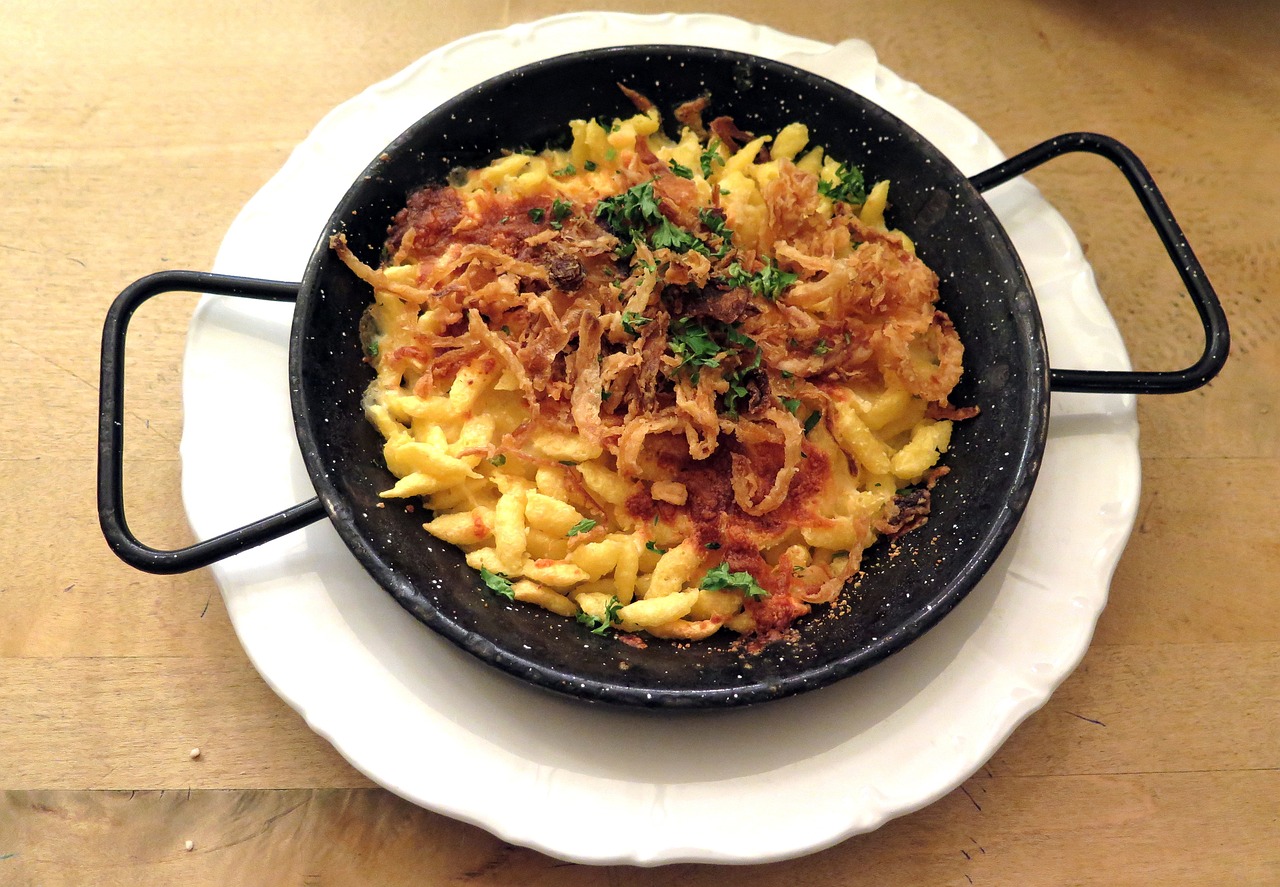
A traditional dish of many southern German regions, as well as Austria, Käsespätzle is a kind of mac and cheese. Expect egg noodles smothered in cheese and topped with caramelised onions, this dish will line your stomach and keep you full for hours.
Eierpunsch
This drink is inspired by egg nog and is sure to make you feel Christmas-ready. It's a sweetened alcoholic egg-based tipple often topped with whipped cream. A perfect choice for an evening out with friends at a market.
Crèpes
This French staple is also a favourite of the Germans and you'll find them at Christmas markets across the country. Whether you try a sweet option with sugar, cinnamon or Nutella or something savoury, these are a warm pick-me-up for strolling around markets in the cold months.
And if none of these sound appetising you might also spot on stalls: Lebkuchen (gingerbread) and Marzipankartoffeln ('marzipan potatoes'). These are, thankfully, not real potatoes, but rather marzipan sweets shaped like Kartoffeln. Enjoy!
Do you have any tips for delicious German Christmas market food and drink? Let us know by emailing news@thelocal.de or leave a comment below.
Comments