
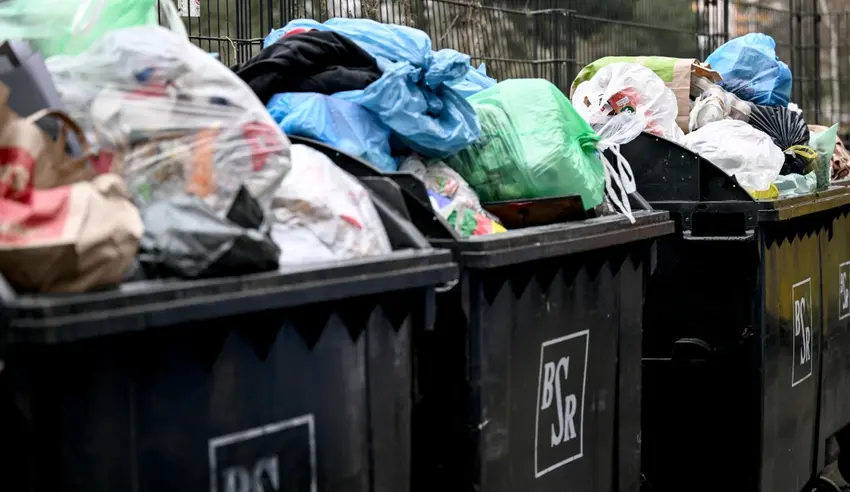
Anyone who's spent time in Germany will be aware of how seriously the country takes recycling.
In fact, it's not uncommon for Germans to tell off the neighbours who are putting their waste in the wrong recycling bin. Meanwhile, bin collectors can refuse to pick up rubbish if it's in the wrong place - and you can even face fines for disposing waste incorrectly.
So it's worth taking note of this change coming up next year as a new EU law on the disposal of textiles comes into force in Germany.
The aim is to minimise the environmental impact of textile production and disposal.
READ ALSO: The complete guide to recycling in Germany
What's changing?
From January 1st 2025, people in Germany will no longer be allowed to dispose of old textiles in Restmüll or residual waste. This is the black bin for all waste that can't be recycled. Instead, textiles have to be collected separately in special containers.
Although many people already put old clothes in clothing containers, it also applies to other items.
As well as clothing, the regulation includes things like bed linen, towels and curtains. Other items that affected are blankets, carpets and leather.
The aim is to stop these materials being dumped or incinerated when possible, and instead make sure they are separated to allow for re-use and recycling when possible.
Why is the EU changing the rules?
Philip Heldt from the North Rhine-Westphalia Consumer Advice Centre said change was needed because the clothing industry is responsible for more greenhouse gas emissions than all international air and sea travel combined.
Heldt said that Germany is prepared for the new requirements thanks to its existing used clothing collection system. Bins can usually be found around supermarkets and other locations, such as train or S-Bahn stations. Some you can search for online. For instance, German Red Cross clothing containers can be found using this search tool.
READ ALSO: Five ways living in Germany makes you greener (without even realising it)
However, more clothing bins - and new ways of tackling how to deal with old textiles - will probably be needed. That's because of the sheer amount of waste generated by the fast fashion industry, which causes global problems.
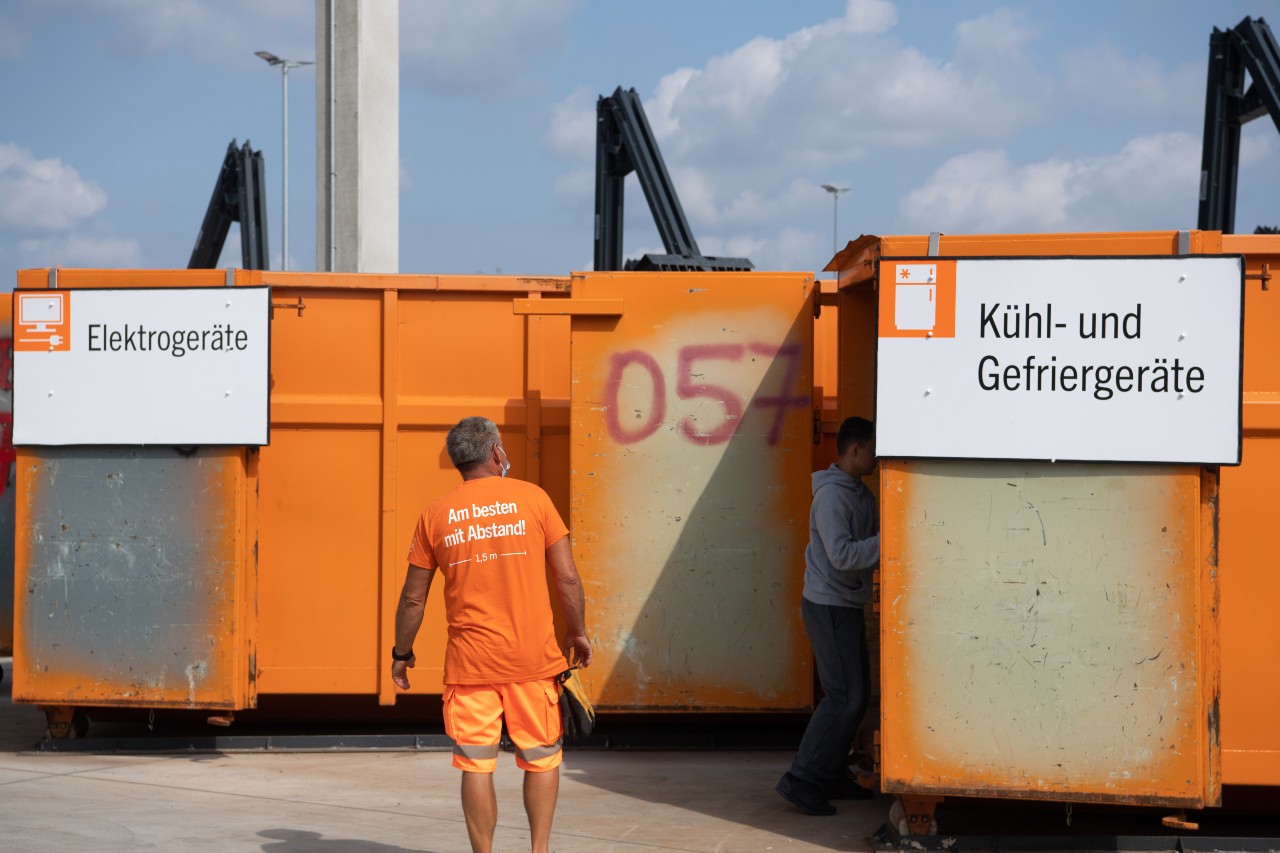
Some of the clothes in these containers are donated to charities or social groups but most are sold to textile sorting companies, which often export them to other countries.
Textiles that can't be re-used are either incinerated or recycled into nonwovens or cleaning cloths, for example. But if clothing ends up in household waste, it cannot be reused - and is often incinerated.
"The technology is there," said Heldt, but he added that there are still difficulties with figuring out the best way to recycle clothes. He said research was being carried out on how to improve recycling processes.
People who do not comply with the new regulations could face consequences. For example, waste collection services may not take residual waste containing textiles.
Are there any exceptions?
It's still not clear what the law is around soiled materials. For example, clothes covered in paint may not be suitable for recycling.
Heldt told German media there is a problem there. He said: "Depending on how the directive is interpreted, in theory all textiles should be included, including defective and dirty ones.
"However, since this runs counter to the goal of good recycling, which is desired in the textile strategy, this must be weighed up."
German law has not yet ruled on this, but in Austria, defective and soiled textiles should still be disposed of in the residual waste bin so as not to endanger recycling. Heldt said he expected that clarification will soon follow in Germany.
The textile industry is said to be responsible for up to 10 percent of global CO2 emissions. Meanwhile, according to the Federal Ministry for Economic Cooperation and Development (BMZ), the industry causes 20 percent of freshwater pollution, mainly through the use of chemicals in production.
Textile production also contributes significantly to microplastic pollution in the oceans, as synthetic fibers are released during washing.
READ ALSO: 'Zu verschenken' - it is legal to put old stuff on the street in Germany?
German vocabulary
Disposal - (die) Entsorgung
Old clothing container - (der) Altkleidercontainer
To recycle - recyceln
Collected - gesammelt
in force/into force - in Kraft
We’re aiming to help our readers improve their German by translating vocabulary from some of our news stories. Did you find this article useful? Let us know.
Comments (1)