
In the latest English Proficiency Index (EPI) released by international language school Education First (EF), Germans were once again ranked among the best non-native speakers of English in the world.
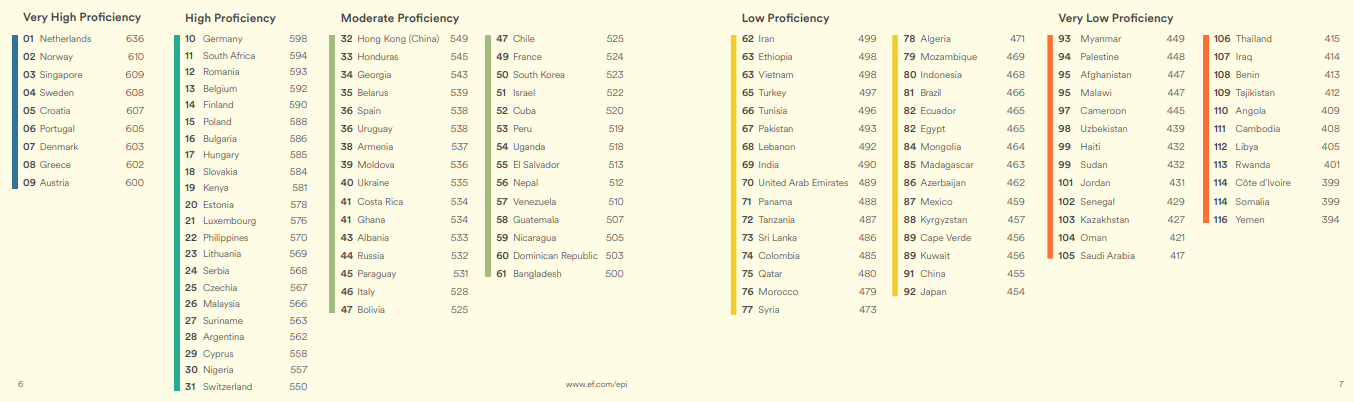
Maintaining its spot in the rankings from last year, Germany landed in 10th place out of 116 countries surveyed - exluding those where English is spoken as a first language.
The Netherlands - a country whose native tongue is often said to be a mixture of English and German - once again secured first place in the rankings, followed by Norway, Singapore, Sweden and Croatia.
The other European countries to come in ahead of Germany on the scoreboard were Portugal, Denmark, Greece and neighbouring Austria.
On the other end of the scale, Yemen came last in the EPI rankings, while Azerbaijan was the lowest-scoring country in Europe.
But though Germany has held its place in the rankings for the second consecutive year, there are signs that English proficiency has decreased slightly over time.
In terms of its overall EPI score, Germany dropped six points to 598, putting it in the "high" rather than "very high" category for the first time since 2017.
The country reached its peak in 2020 and 2021, when Germany achieved an English proficiency score of 616 for two years running.
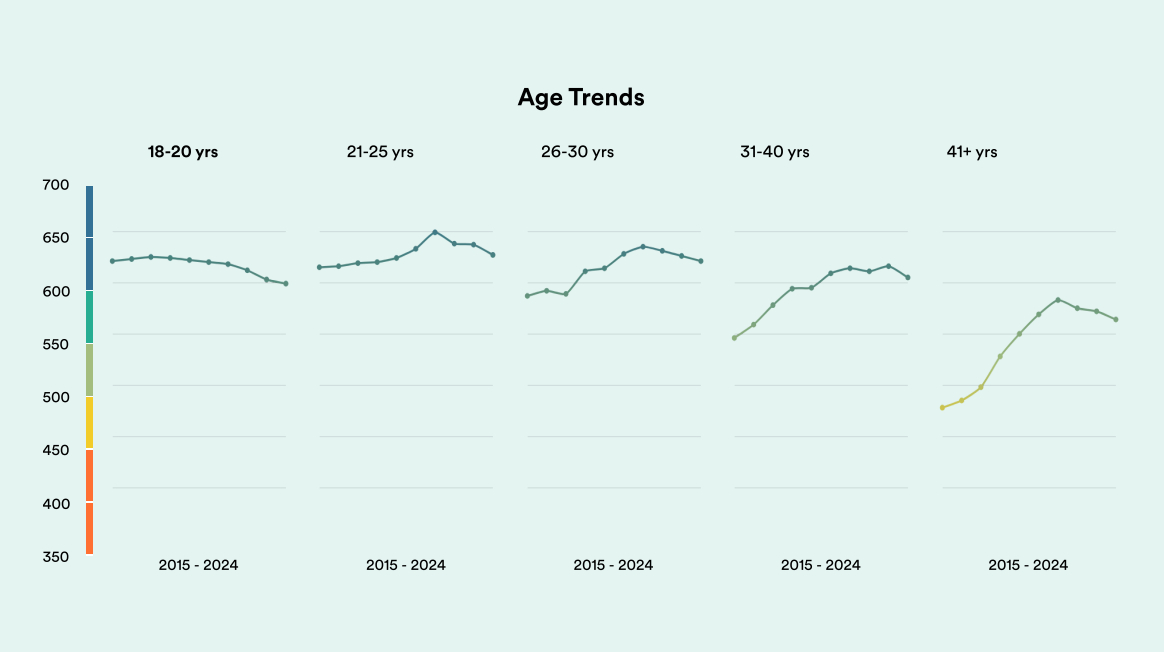
This is reflected in a general trend of stagnating English skills among young people, as well as a drop-off in English proficiency in every age group surveyed.
Among all age groups, Germans aged 20 to 25 significantly overperformed, sitting comfortably in the "very high" proficiency category with a score of 627.
READ ALSO: How well do Germans speak English compared to the rest of Europe?
Perhaps unsurprisingly, older Germans aged 41 and over were the least comfortable speaking English, though with a score of 564 they still fall into the high-proficiency category.
While they still performed well, the youngest group of 18 to 20-year-olds have noticeably slipped in the rankings in recent years - potentially due to the restrictions in travel and learning during the Covid pandemic.
This year, Germans aged 18 to 20 dropped to 599 in the EPI rankings, making them the age group with the second lowest English proficiency.
Where in Germany do people speak the best English?
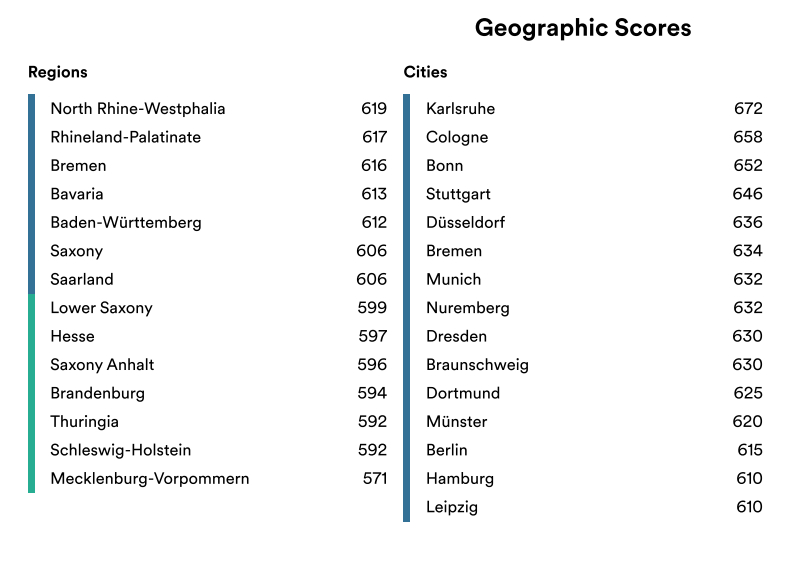
As you might expect, Berlin was among the cities with the highest level of English proficiency.
The German capital outperformed the country more generally to rank in eighth place among capital cities worldwide, with Amsterdam taking the top spot.
In the trendy and very bilingual Hauptstadt, an overall EPI score of 615 was achieved this year, putting English speakers there in the very-high proficiency category.
However, a surprise winner emerged when it came to the German cities with the best English speakers, with the Baden-Württemberg city of Karlsruhe coming in top of the rankings with an incredible score of 672.
READ ALSO: Why the English 'idiot's apostrophe' has German grammar police up in arms
This was followed by Cologne, Bonn, Stuttgart and Düsseldorf, with Munich landing in seventh place and Berlin landing in thirteenth place.
Of the cities in the former GDR states, only Dresden (9) and Leipzig (15) were listed alongside Berlin in the top fifteen English-speaking cities.
This was reflected in the states that came top and last in the rankings.
Germany's most populous state, the western state of North Rhine-Westaphalia, came at the top of the scoreboard, followed by Rhineland-Palatinate, Bremen, Bavaria and Baden-Württemberg.
These federal states all scored between 612 and 619 in the rankings.
At the bottom of the scoreboard, meanwhile, was Mecklenburg Western-Pomerania with a score of 571, followed by Schleswig-Holstein, Thuringia, Brandenburg and Saxony-Anhalt.
Comments