
What are Germany's key economic numbers right now?
At $4.59 trillion per year in nominal GDP - which is the total amount the country produces - Germany is the largest economy in Europe by quite some distance and third only to the US and China worldwide, coming just ahead of Japan.
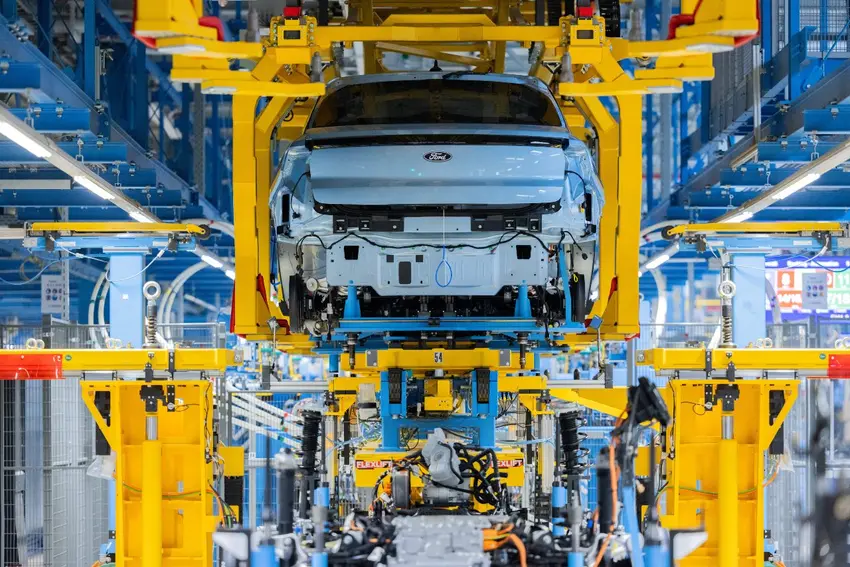
Its manufacturing, automotive, chemicals, and machinery sectors field world-leading small and medium-sized enterprises making highly specialised goods. The country is also home to some of the world's largest companies, like VW, Mercedes-Benz, BASF, and Bayer.
But large as the German economy is, it's actually shrinking slightly right now - or in recession.
READ ALSO: German economy 'to shrink again' in 2024
In 2023, the economy got about 0.3 percent smaller overall - the worst performance of any major world economy. By contrast, the American economy grew by 2.5 percent last year. Vice-Chancellor and Economy Minister Robert Habeck has since announced the government expects a second straight year of economic contraction in 2024. Forecasters originally thought the German economy would shake off last year's gloom - and grow by at least a little bit - 0.3 percent. But now they're warning that their original optimism was misplaced - and the economy will shrink by 0.2 percent.
That would be Germany in its first two-year long recession in over two decades.
If Germany's economy is so big, why is this happening?
Experts say that's down to a number of factors - both within Germany and outside of it.
Recent world events haven't helped. Germany was dependent on Russia for over 55 percent of its gas at the time Russia invaded Ukraine - forcing Germany to find alternative energy sources quickly.
According to an analysis by The Economist in Focus magazine, the energy and intensive manufacturing and chemical sectors in Germany consume about 80 percent of all energy corporations use in the country - despite making up only 16 percent of the German economy. With energy prices higher, many have cut production hours in order to save costs - but that's also meant that they end up putting out less.
But the European Central Bank's Isabel Schnabel recently said that the rest of Europe has been considerably more resilient than Germany after 2021 - meaning that Russia's invasion can't be the only explanation.
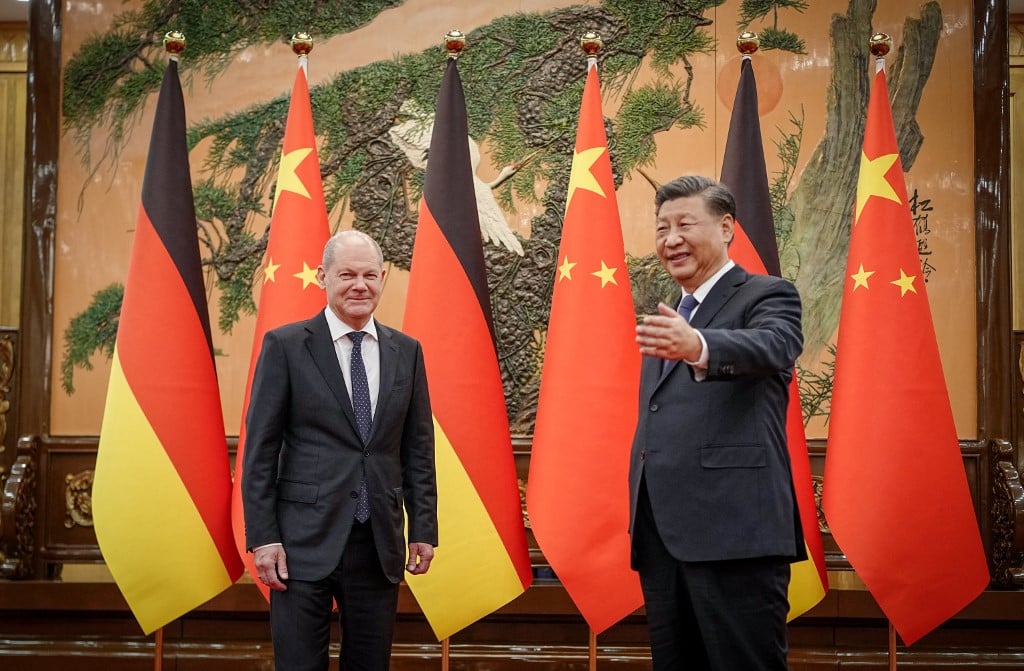
Another answer goes to how dependent Germany is on exporting the goods it makes abroad. This means it competes heavily with China, which also produces a substantial amount of exports - including vehicles that compete directly with German companies.
China is currently also producing more vehicles than its own population can buy, putting pressure on German producers. A decade ago, this situation was different - as Germany was mostly selling cars to China. But now China is itself able to produce many of the things it used to rely on German companies for.
At the same time, many big German companies haven't yet found enough alternative customers. China also subsidises its industries in a way that Germany does not - making it harder to compete.
READ ALSO: As EU targets Chinese cars, French and German rivals sputter
When might things improve?
The government's forecasters say they're expected 2025 and 2026 to be markedly better years for German economic growth - with a forecast of one percent growth next year and 1.6 percent in 2026.
That would mean the country ends up shaking off the recession that's plagued it in 2023 and 2024. But even if those projected figures end up being right, they're still a long way behind the predictions economists are making for countries like the US, Sweden, Poland, or Estonia.
Experts say even when the economy does return to normal in Germany, challenges like the country's aging population and dependence on foreign demand for German products are likely to stick around for a long time.
Are there reasons for some optimism?
Yes.
Forecasters say that after six percent inflation last year - and much higher levels in 2022 - cost of living increases are slowing sharply, down to 2.4 percent in 2024. 2025 is expected to once again see two percent inflation in Germany - signalling an end to years of rapid increases in cost of living.
Also, the unemployment rate in Germany has remained stable - coming in at just 3.1 percent in 2023 - and likely to stay there through 2025.
READ ALSO: German inflation falls to lowest level in nearly four years
What's the ultimate effect of all these numbers on everyday life in Germany?
For starters, with inflation and cost of living finally set to stabilise at the levels seen before Russia's invasion of Ukraine, grocery and other prices should finally stop rising so quickly. That doesn't mean prices will fall from where they've already come to in the last few years - but it does mean the rest of the economy, including worker wages - has a chance to catch up.
Forecasters predict that'll have an effect on consumer confidence - meaning that more people in Germany will be able to spend money on consumer goods like vehicles and electronics a little more freely - with basic items like groceries no longer spiralling up in price.
With demand for these goods going up, businesses here should begin doing better - meaning they can more readily invest in projects and hire more skilled workers. Even though the unemployment rate has remained stable for the last few years, lower business confidence has meant that fewer German companies were advertising new jobs. If the latest forecasts hold out, that should soon change. That means more job postings, stoking more skilled labour immigration into Germany or allowing people already here to secure higher-paying work, rather than being stuck in old jobs.
Ultimately though, the underlying risks to Germany's economy could still jeopardise all this and affect Germany as a destination for investment and skilled workers. Some companies and workers may simply opt for somewhere else - as better opportunities become available in other European countries - or the US - where better economic growth leads to more jobs being available, with higher salaries.
Comments (1)