

Applying for German citizenship is all about showing successful integration, whether that's being able to communicate in German, supporting yourself and your family financially or understanding the way things work in the Bundesrepublik.
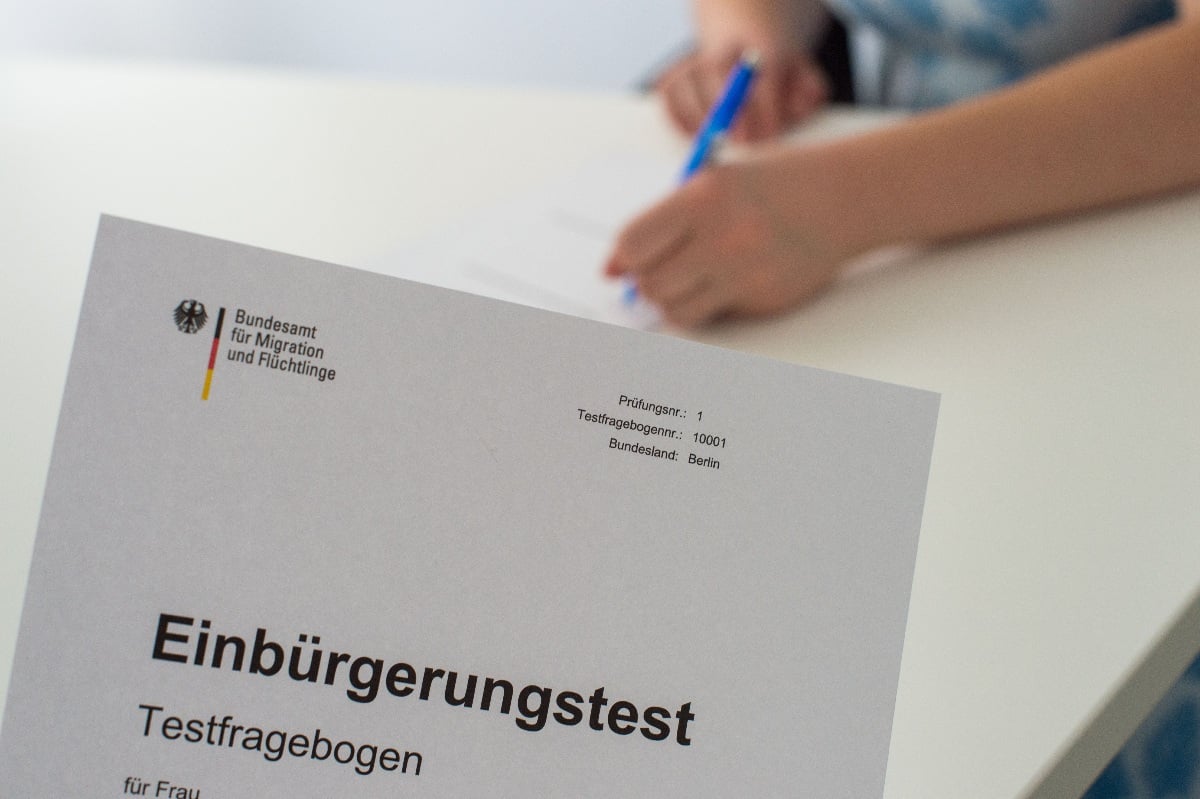
When it comes to the latter, applicants are usually asked to take what's known as the Einbürgerungstest - citizenship exam - a list of 33 questions that relate to all aspects of Germany's life, history, politics and culture.
Most people who take the test report that getting the required 17 correct answers isn't too much of a challenge: there are only a certain number of questions the government can choose from, and it's easy to run through these online to prep yourself beforehand.
One thing that can be challenging, however, is locating a test centre and booking the test in the first place. Here's what you need to know about the process.
How do I book an appointment for the German citizenship test?
Though some organisations (such as the Bavarian Red Cross) have partnered with the Federal Migration Office (BAMF) to offer the citizenship test, by far the most common place to take it is at the Volkshochschule, or VHS.
These adult education centres are located in pretty much every city in Germany, offering German language courses and other classes at a low cost thanks to generous government subsidies.
You can find one by searching for your town, city or state and the words 'VHS' or 'Volkshochschule' online; or, if you want to be more specific, by searching for 'VHS Einbürgerungstest' along with your city or place of residence.
A quick search for the VHS Einbürgerungstest in Dortmund, for example, will lead you to the Dortmund Volkshochschule website and a list of upcoming appointments for the citizenship test.
One thing that can be confusing for foreigners is that fact that it's impossible to book these tests online or over the phone.
Instead, you have to go in-person to your local VHS and pay the €25 fee to register - usually in cash or with an electronic cash (EC) card.
You should also bring some official ID - such as a passport or your long-term residence permit - with you as this will be required when you register.
To save time while registering, make sure you also have all the relevant information about the test you want to book, such as the date, time and course code, to hand as well.
When should I register?
As with any of the paperwork you need for your citizenship application, the best rule of thumb is to try and get in as early as possible.
Long delays and waiting lists are par for the course in Germany, so getting the ball rolling as soon as you can is the best way to speed up the process.
That said, each of the Volkshochschulen and other test centres will have some ground rules when it comes to booking the test: in many cases, you won't be able to book more than three months in advance, and you'll also need to find out when the colleges are open for in-person registrations.
This information should also be available on the website of your local VHS or test centre, but if you're struggling to find it, searching the name of the VHS and a few keywords like 'Anmeldung' and 'Öffnungszeiten' should bring you to the right place.
READ ALSO: Language and citizenship tests - 7 essential articles for German naturalisation
What to do if there are no appointments
For several months now, the availability of citizenship tests has been a huge problem around the country - and following the introduction of the Germany's new citizenship law, the situation has got even worse.
In places like Düsseldorf and Hanover, for example, appointments are entirely booked up for the whole of 2024, meaning would-be applicants have to wait until next year to sit their test.
If this is the case, find out the earliest date you can book a test and try and make it to the VHS as soon as possible. In Hanover, for example, appointments for 2025 are available from September this year, so it's worth finding a time to get to the test centre before the spaces are filled up once again.
Another option is to try and get an appointment at another VHS a little further afield, such as in a smaller town or city nearby. In Berlin, you'll probably need to look further than your local borough to find an available appointment - so even if you're based in Pankow, you may need to find an appointment in Mitte or Köpenick.
Luckily, it's not too important where you sit the test.
Though your exam will include three specific questions related to the state where you live, these will be included based on your address rather than the test centre location.
READ ALSO: What I was asked about in my German citizenship test
How long does it take to get my results?
Once you've sat your citizenship test, it will be sent off to BAMF to be marked and for your official mark (and certificate) to be issued.
The processing time for this will depend a lot on how many people are taking their Einbürgerungstest around the country, but you should generally expect to wait around 6-8 weeks for your results.
If you don't want to wait that long before handing in your citizenship application, it's possible to send an incomplete application with a note explaining when your test is booked for and promising to submit your certificate as soon as you have it.
Comments (2)