
When it comes to organising our towns and cities, one of the most pressing questions today is how to transition to sustainable and green mobility.
Despite the high-quality public transport in most urban areas, cities in car-loving Germany are still dominated by drivers, and efforts to create pedestrian zones in places like Berlin have often been mired in legal challenges.
Nevertheless, the city of Cologne is forging ahead with new plans for a major car-free zone, based on a concept introduced in Barcelona almost a decade ago.
The idea is based on so-called 'superblocks', and the aim is to cut down traffic and transform part of the city centre into a pedestrian- and cyclist-friendly haven.
What exactly is a 'superblock'?
A superblock may sound like something you'd find in a gigantic lego set, but in reality, it's an area of a city that is shut off from everyday traffic.
This could be an entire neighbourhood, or a collection of houses and streets that are grouped together into a 'block' where only residents and delivery drivers are permitted access. What's more, the drivers who are allowed in will only be able to drive at walking speed, making the environment safer for cyclists and pedestrians.
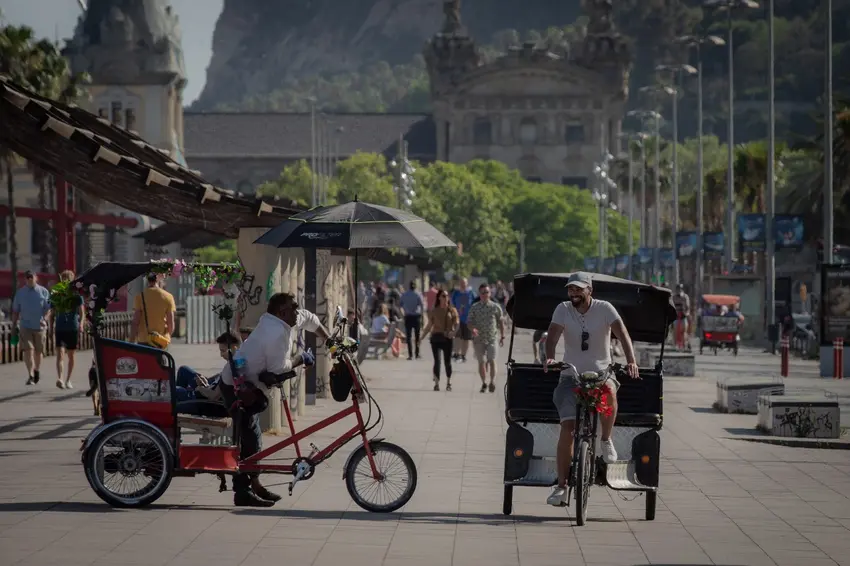
In Barcelona, the city with the highest concentration of cars in Europe, the concept was brought in back in 2016. Given that the Catalonian capital is organised in grids, it was relatively easy for the local government to group blocks of streets together and create pedestrian and cyclist zones with extra space for seating areas, trees and playgrounds.
Within five years, the superblocks were expanded to cover around one million square metres of the city centre, and the concept proved to be hugely popular. In a recent study from the University of Barcelona, 80 percent of respondents said the superblocks had improved their lives, while the number of businesses in the areas grew by 30 percent.
READ ALSO: Is Germany really such a car-obsessed country?
What's the plan in Cologne city centre?
Following a campaign by local residents, the central Winzerveedel neighbourhood, which is situated between Barbarossaplatz and the Volksgarten, is set to be turned into Cologne's very first superblock.
According to campaigners, the area has been "forgotten" by urban developers over the past 30 years, with "no flower beds, almost no trees, not a single bench". Currently, the narrow streets of Moselstraße, Trierer Straße, Pfälzer Straße and Burgunderstraße are being overrun by cars, with scooters and bicycles often ending up parked on the pavement.
Following consultations with residents and other stakeholders, the area between Südstadt und Qwartier Latäng is set to be closed to everyday traffic.
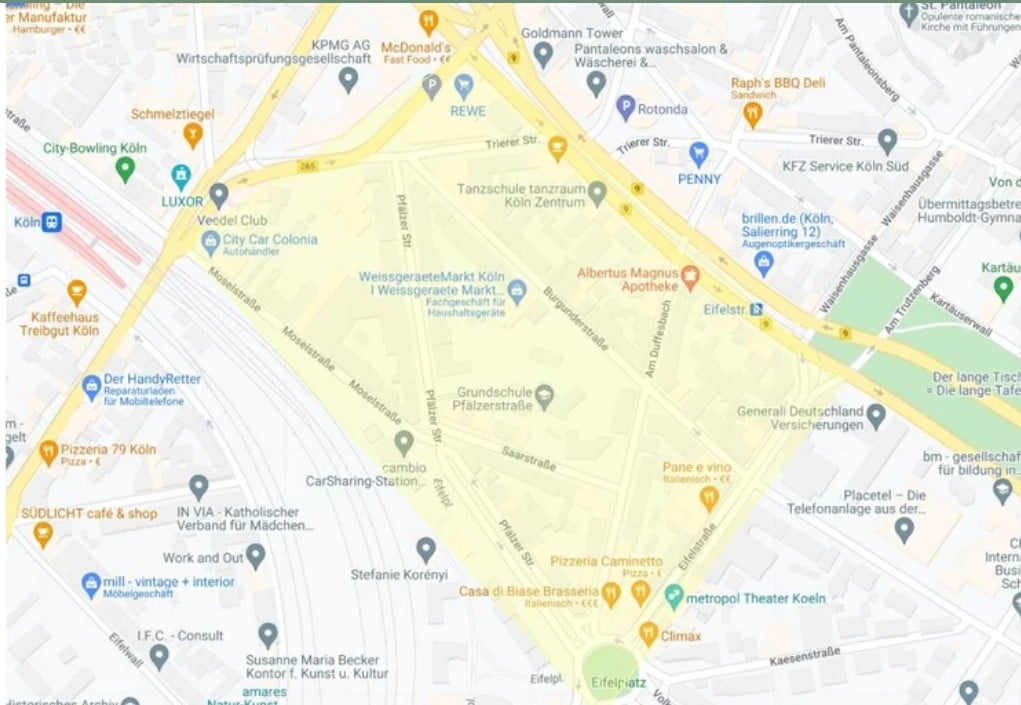
This would see surrounding streets like Luxemburger Straße, Salierring, Eifelstraße and Bahnstrasse turned into one-way streets with a reduced flow of traffic.
Beyond restricting access to cars, the primary aim of the Superblock Winzerveedel campaign is to create more space for residents.
"This space will be used to restructure footpaths and cycle paths, bicycle stands and parking areas, plant trees and install benches," campaigners explain on their website. "In this way, we want to ensure greater safety on the way to school, accessibility and quality of life in our neighbourhood."
READ ALSO: How Berlin Friedrichstraße ended up at the centre of the car-free debate
Could this be expanded in Cologne and elsewhere?
With the local council only agreeing to the plans at the start of September, it's definitely early days yet - and an intensive planning and consultation phase still needs to happen.
However, the Winzerveedel proposals are being discussed as a pilot project, meaning its failure or success could be used to determine whether to roll out more superblocks in the city in the long run.
As many other German cities look to the future and attempt to tackle their car problems, other local governments will no doubt be following the developments closely. A few years down the line, it's possible that Cologne could be held up as a trailblazer: something like the Barcelona of Germany.
Comments