
As The Local has been reporting, immigration offices across the Bundesrepublik have been struggling to keep up with the wave of incoming citizenship applications that was triggered by the enactment of Germany’s dual citizenship law.
Earlier this month it was reported that offices in Hamburg had 26,000 pending applications – 3,000 from June alone.
Immigration offices in the capital city had also reported receiving 5,000 new applications in just the first month after the dual citizenship law took effect. Thanks to a newly digitised system, Berlin’s immigration office (LEA) said it’s increased its processing time three-fold, but it still has quite a hefty backlog to get through on top of the new applications that continue to pour in.
The surge in applications comes as major delays for both citizenship and visa-related appointments were being reported at immigration offices around the country.
READ ALSO: 'Just useless' - Why does it take years to get an appointment with Nuremberg's immigration office?
The Local reached out to immigration offices ahead of the citizenship law change, and the majority of them said they were already dealing with staffing issues and major backlogs.
This week serious backlogs among the relevant authorities in Baden-Württemberg were reported. According to SWR Aktuelle, the Baden-Württemberg Association of Cities estimated that most of the region’s large cities were dealing with twice as many applications as in previous years – resulting in predicted wait times of up to three years.
The city of Stuttgart suggests that the procedure currently takes 18 months on average. The city currently has 8,000 applications waiting to be processed, with 70 more arriving each day. But the issue is also felt in rural districts.
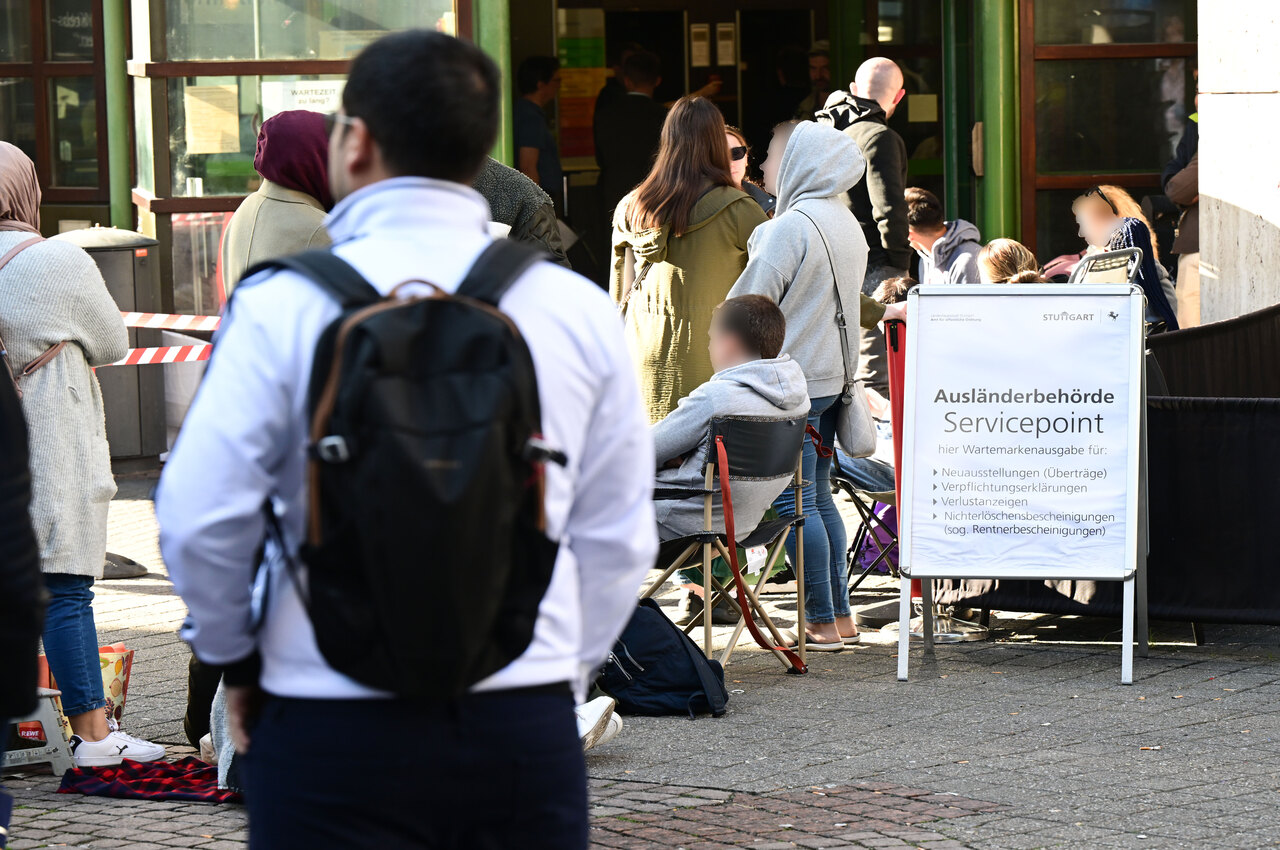
The Lake Constance district, for example, has already had to stop accepting applications. According to the district office, around 2,000 people in the region are currently waiting for naturalisation.
Nearly every immigration office in Germany’s south-western state has thousands of unprocessed applications piling up, and the Association of Cities is demanding that local governments be reimbursed for the related costs.
Germany’s Interior Ministry (BMI) has said that it’s "keeping an eye on this", but given budget constraints and the slew of other issues that reportedly need more funding (aid for Ukraine, renovations to the national rail network, etc.) it seems unlikely that federal support will arrive any time soon.
A project aimed at easing the naturalisation process
But there is one project, launched by the Federal Commissioner for Migration, Refugees and Integration, which could serve as a model for streamlining the naturalisation application process by helping potential citizens.
The project is called Pass[t] Genau – which translates to “Fits exactly” – and is designed to help advise applicants as they prepare their documents.
The pilot project is currently operating in Mecklenburg-Western Pomerania and Rhineland-Palatinate. Here “naturalisation pilots” advise would-be citizens to ensure they submit all of the correct documents. They also maintain contact with the authorities to assist when things get stuck.
Susanne Kolb, Pass[t] Genau project manager for Rhineland-Palatinate, told SWR that providing this support to applicants also helps the immigration offices by cutting down on the number of incomplete applications and helping to avoid unnecessary delays.
If you’re interested in receiving support from Pass[t] Genau, and live in either Mecklenburg-Western Pomerania or Rhineland-Palatinate, you can apply on the project website. (They are also seeking volunteers to be trained as naturalisation guides.)
What if I live elsewhere?
Unfortunately, Pass[t] Genau currently only has the financing to operate in Rhineland-Palatinate and Mecklenburg-Western Pomerania.
Asked about the potential for extending its services, project manager Kolb told SWR that the initiative could easily be transferred to other federal states, but at the moment this would require individual states to sort out their own financing for the project.
However, law firms that specialise in immigration and citizenship issues often offer similar services. In particularly complicated cases, working with an immigration lawyer may save you significant time and frustration, but of course you’d have to pay for those services.
If you’re on a tighter budget you may want to try on your own first, with the help of our extensive reporting on the citizenship application process, to help you put your best foot forward.
READ ALSO:
Comments