
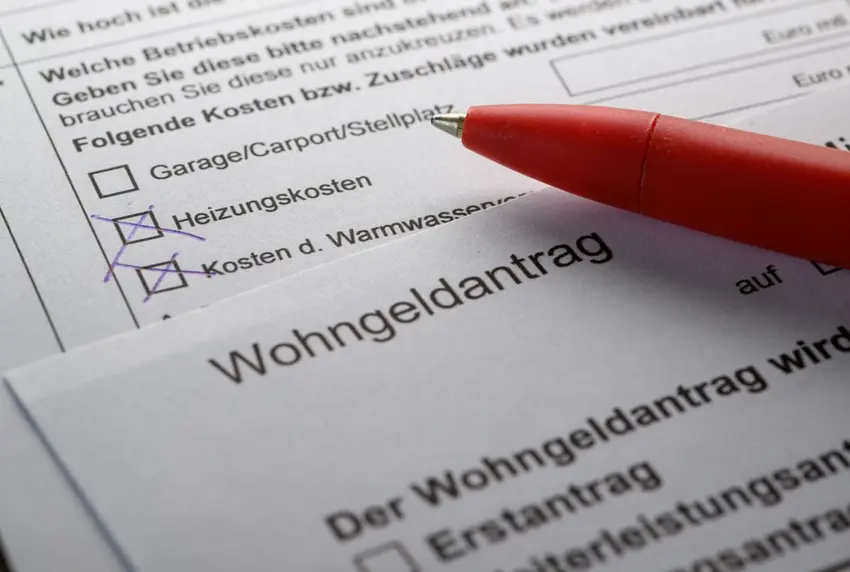
On January 1st, Germany’s housing benefit payment (Wohngeld) will increase by 15 percent to offset rising rents and cost of living.
This equates to an average of €30 more per month for housing benefit recipients.
The rent subsidy is reserved for tenants with low incomes such as pensioners with low pensions or low-income families, for example.
According to the Ministry of Construction, roughly 1.9 million households will be entitled to the subsidy next year, following changes to the eligibility criteria in 2023.
According to reporting by Focus, the average housing benefit pay in Germany is currently around €370 per month. From 2025, it will be €400.
READ ALSO: What you need to know about the German rent brake
The raise is brought by a new ordinance which has been adopted by the Federal Cabinet, the Ministry of Construction in Berlin announced. It still requires the approval of the Bundesrat.
"It's a done deal. From 2025, the Wohngeld will be increased to take into account general price and rent developments," said Federal Building Minister Klara Geywitz (SPD), annoucing the increase on X.
Beschlossene Sache: Ab 2025 wird das #Wohngeld erhöht, um die allgemeine Preis- und Mietenentwicklung zu berücksichtigen. BMin @klara_geywitz: „Damit bleibt #Wohnen für Millionen Rentnerinnen und Rentner, Familien und Arbeitende weiterhin #bezahlbar.“ https://t.co/xdcFOmPOt5
— Bundesbauministerium (@BMWSB_Bund) August 13, 2024
Why increase the housing subsidy?
"People today spend significantly more money on rent, energy and everyday goods,” Geywitz told DPA.
The amount of Wohngeld available to qualified citizens is reviewed every two years based on basic price and rent developments. The ministry had announced that it expected to increase the subsidy in July.
The last reform occurred in 2023. At that time the benefit was also extended to a broader circle of recipients.
The housing benefit is intended to prevent low-income workers and pensioners from needing to apply for citizen's allowance (Bürgergeld) or basic security to pay rent.
Do I qualify for housing allowance?
Virtually any renter in Germany can apply for Wohngeld, but it is only granted to those whose housing costs are both reasonable and shown to be higher than their income level.
The Ministry of Construction suggests that the following groups of people in particular may qualify for the housing benefit:
- Pensioners with a low pension
- Working families with low incomes.
- Low-wage workers.
- Students who are not eligible for BAföG.
- Nursing home residents.
READ ALSO: Wohngeld - How people in Germany can get help with rising living costs
Principally, a few factors determine your eligibility for housing allowance: the rent price, the size and location of the property, your income, and the number of people living in the rented household.
There is also an income cap for the benefit, which depends on where you live.
To get an idea of whether or not you might qualify for Wohngeld, you can use this calculator provided by Germany’s Ministry of Housing, Urban Development and Building (BMWSB).
Comments