
As Germany's three-party coalition continues to struggle with plummeting poll numbers, one of the parties appears to be defining itself increasingly in opposition to its own government: the Free Democrats.
In recent weeks, the economically liberal party has spoken out forcefully against the Social Democrats' welfare policies, arguing for cuts to unemployment benefits and more stringent sanctions for claimants.
Then, on Monday, the party released a position paper seemingly designed to set it at loggerheads with the Greens: a 'pro-car programme' to shore up the rights of drivers over cyclists and pedestrians.
Though the FDP's proposals are unlikely to be enacted in their entirety, the pro-car manifesto was a clear statement of intent for the party that currently heads up the Ministry of Transport.
"We don't need anti-car policies," FDP Secretary General Bijan Djir-Sarai said in a statement released on Monday, adding that his party opposed the "nanny-state politics" promoted by the Greens.
Meanwhile, Zyon Braun, the FDP's chairman in Brandenburg, argued that the party was placing itself not just on the side of drivers, but on the side of rural and suburban regions more generally.
READ ALSO: Will Germany’s motorists and cyclists ever learn to live with each other?
"A cultural battle against cars is a cultural battle against the realities of people's lives, especially in rural regions like Brandenburg," Braun said.
So, what policies are the FDP proposing, and could they garner widespread support? Here's what you need to know.
What's in the 'pro-car programme'?
In the FDP's so-called "roadmap for the future", the party sets out a number of ideas designed to make driving more attractive - particular in the inner cities.
Key points from the programme include:
- Free parking in city centres: The FDP wants to offer free parking wherever possible, claiming that the move would boost local economies. The party is also proposing a "flat rate" parking fee for motorists that would apply across the country, modelled on the popular €49 ticket. This would simplify parking fees and eliminate the "jungle of parking tariffs", the party argues.
- Better accessibility for motorists: In line with the party's pro-digitalisation stance, the FDP wants to use technological solutions to make driving and parking less stressful overall. The liberal party is fiercely against reducing parking spaces and wants to use intelligent parking guidance systems to help drivers find available spots. They also propose using digital and AI solutions to create "green waves" to ease traffic flow, reduce congestion, and lower emissions.
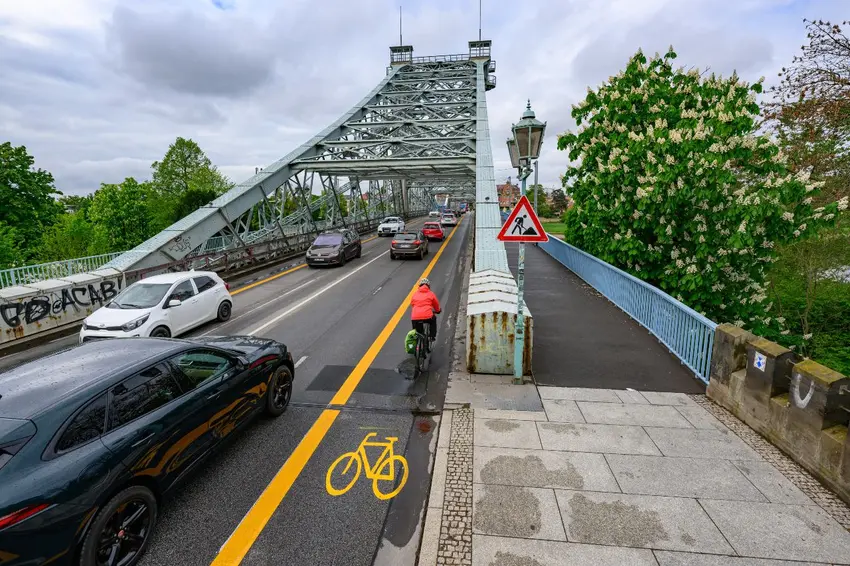
- Scrapping cycle paths and pedestrian zones: The FDP's plan calls for fewer bike lanes and pedestrian zones, stating that business owners and the public should have a direct say whenever these are introduced. According to the party, road closures are "ideological" and only shift traffic rather than reducing it. If closures are necessary for construction works, building should take place on weekends and evenings to ensure that the road is accessible again as soon as possible.
- No motorway speed limits or car bans: The FDP strongly opposes the EU's planned ban on combustion engines by 2035 and rejects a general speed limit on Germany's Autobahn. Instead of restrictions, better traffic management and infrastructure is needed, the party states, adding that the road network should be expanded.
- Driving from the age of 16: The FDP also proposes allowing supervised driving from the age of 16, emphasising the role of cars in helping people in rural areas live more independently.
- Supporting and subsidising motorsports: The pro-car plan also extends to motorsports like Formula 1, which the FDP argues is a driver of innovation and tourism. To promote the sport further, the party wants to make Germany a more attractive location for private investment in this field.
- Embracing autonomous driving: "To what extent can autonomous cars or public transport shuttles provide better connections to the nearest town or railway station?," the FDP asks in its policy programme. Towns and cities should be encouraged to start setting up trials in this area, the party adds.
READ ALSO: Is Germany really such a car-obsessed country?
What are people saying?
While the FDP clearly believes its policies will find a sympathetic ear among disaffected voters, many stakeholders - including the German motorists' association (ADAC) - have already come out against the plans.
Speaking to taz on Monday, a spokesperson for ADAC said that the FDP's free parking policy could actually make life more difficult for drivers.
"Pull effects for cars should be avoided so as not to exacerbate existing traffic problems," she added.
Transport policies should be designed with three goals in mind: climate protection, better mobility, and road safety, the spokesperson said.
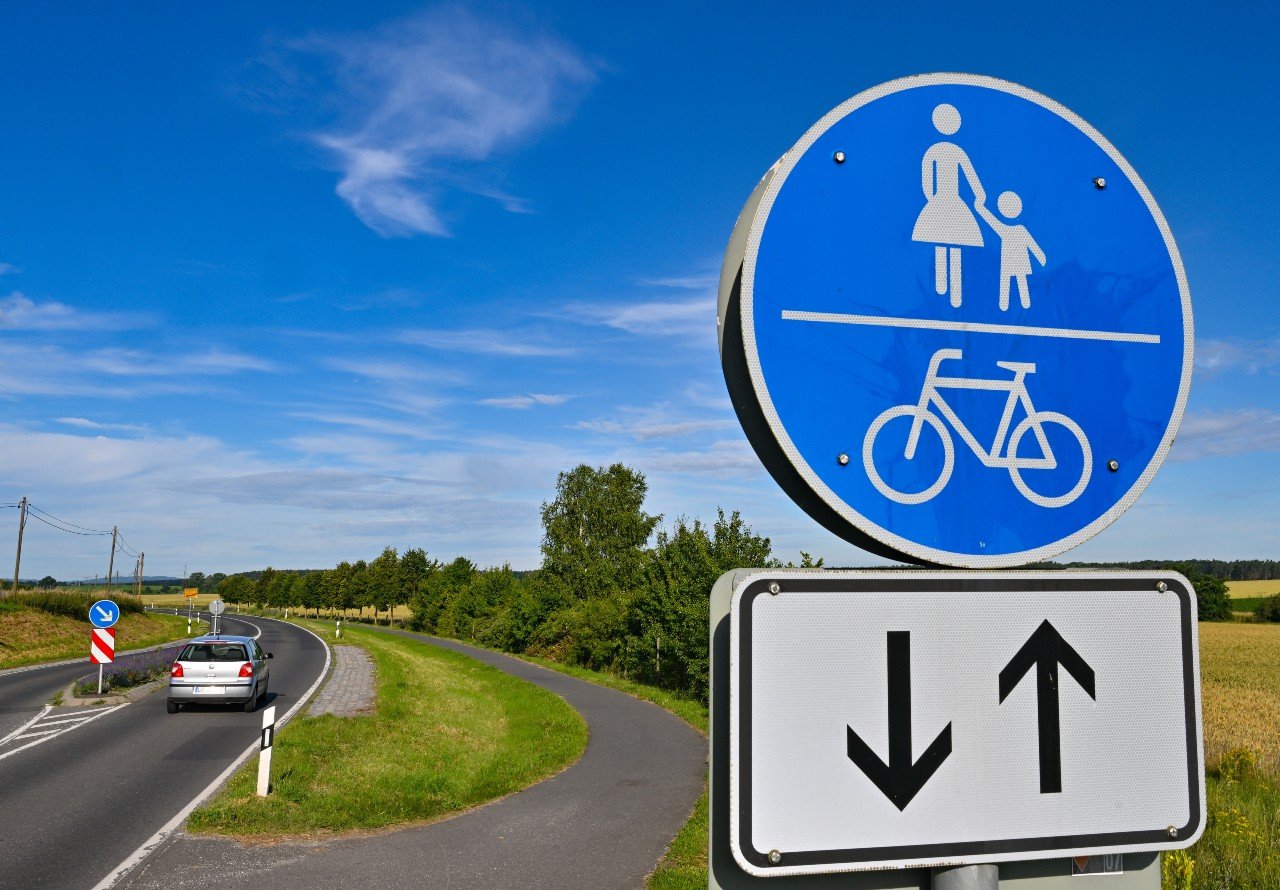
In this sense, the FDP's plans to get rid of cycle lanes could be counterproductive, since "bicycle lanes make a good contribution to separating traffic more strongly and thus increasing the safety of all road users".
However, ADAC did support the liberal party's plans to allow people to drive from the age of 16 - provided they're supervised by an experienced driver.
Unsuprisingly, prominent advocates of green mobility also came out strongly against the FDP's pro-car "roadmap".
In a statement released on Monday, Michael Müller-Görnert, transport policy spokesman for green mobility group VCD, slammed the proposals as "absurd" and "backward-looking".
READ ALSO: How Berlin Friedrichstraße ended up at the centre of the car-free debate
"Nobody wants more cars in the city anymore, not even the most loyal FDP supporters," Müller-Görnert said. "Local residents have had enough of traffic jams, noise and exhaust fumes."
Germany is moving towards more liveable and walkable cities rather than cities dominated by cars, he explained.
"The FDP's proposal therefore belongs where it came from: in the dustbin."
Though not entirely scientific, an initial poll carried out by Spiegel suggests that the pro-car programme may be just as unpopular as VCD suggests.
Asked whether they supported plans to make driving easier in the city centre, an astounding 93 percent responded with "no" while just seven percent responded with "yes".
However, opinion on these issues is often divided between those in the inner cities and those on the outskirts: in the 2023 re-run of Berlin's botched regional elections, maps at the time showed a stark contrast between pro-car, suburban CDU voters and residents of more central areas who persistently voted for the Greens.
Comments