
German politics divided over LGBTQ+ rights constitutional question
Political division is growing about whether or not the German constitution should be amended to include reference to LGBTQ+ rights. According to recent media reports, the German government intends to move forward with the inclusion of protections on sexual identity in the constitution, but conservative parties do not back the move.
Constitutional recognition was one of the main demands by protestors at the recent Christopher Street Day, otherwise known as Pride. In Germany, changes to the constitution must be backed by a two-thirds majority in both the Bundestag, the lower house, and the Bundesrat, which represents the states.
In its current form, the constitution does not make express reference to sexual orientation. Article 3 of the German constitution states: "No person shall be favoured or disfavoured because of gender, parentage, race, language, homeland and origin, faith or religious or political opinions."
The coalition agreement signed in 2021 by government partners Social Democratic Party (SPD), the Greens and the neoliberal Free Democratic Party (FDP) have hinted previously at their intention to reword the article to include reference to sexual orientation.
READ ALSO: How Germany's 'self-determination law' will make it easier for people to change their gender
The government coalition does not have a two-thirds majority in parliament, however, meaning that any amendment will require the support opposition parties, namely the conservative Christian Democratic Union (CDU) and Christian Social Union (CSU), both of which are unlikely to support the move.
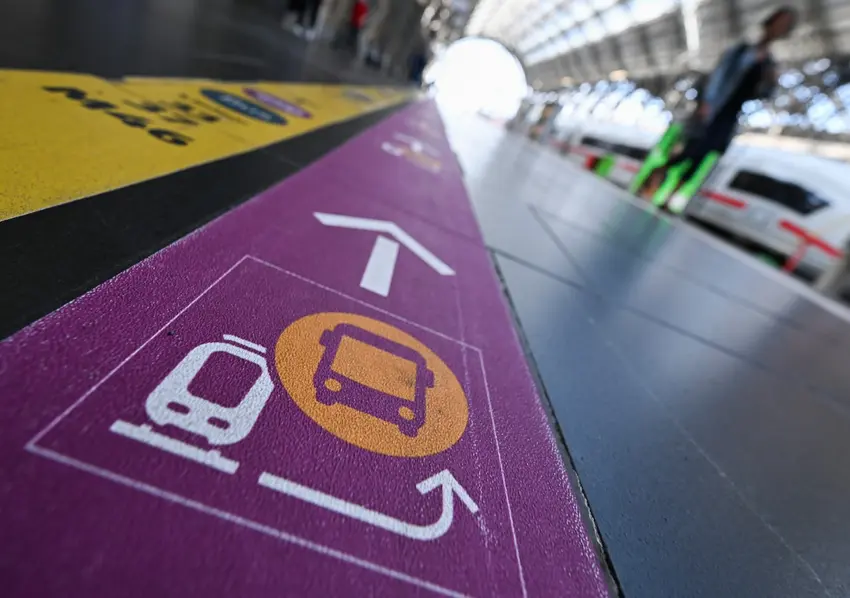
Replacement service running on the Riedbahn
According to Deutsche Bahn, the replacement service on the closed Riedbahn between Frankfurt and Mannheim is running smoothly so far.
The service has been well received, with up to 16,000 people using the pink-coloured buses every day, the company told DPA. Initial problems with individual digital display panels on the buses, which did not display the correct information, have been resolved.
"Overall, we are very satisfied with the first few days and weeks," explained a spokesperson. The busy Frankfurt-Mannheim railway line is closed for five months for refurbishment.
READ ALSO: How Germany's high-traffic 'Riedbahn' train route closure will hit travellers
During the five months of construction work until December 2024, regional trains and suburban trains will be replaced by replacement bus services, while long-distance and goods trains will continue to run on diversion routes.
Buses will run every 5-15 minutes on 12 different routes, completing over 1,000 journeys per day.
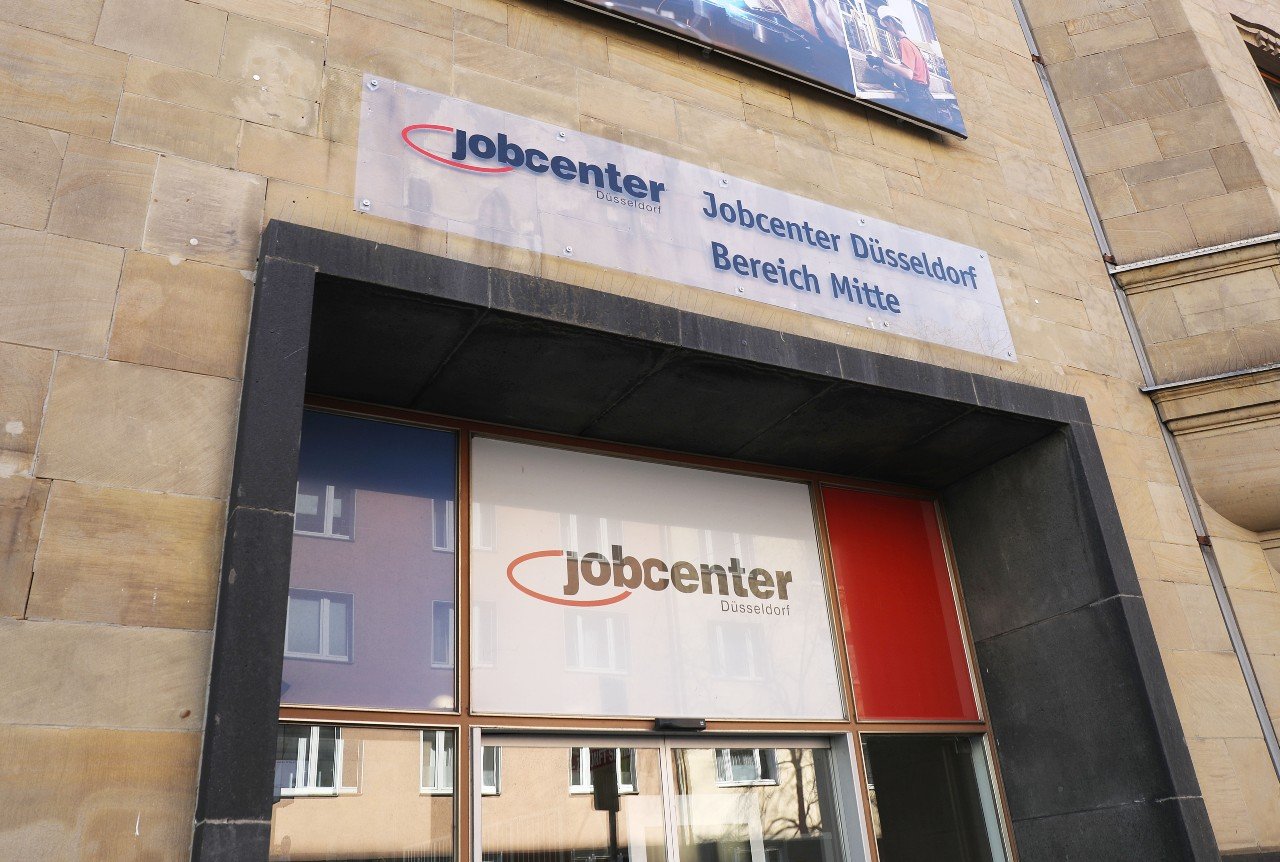
FDP calls for cuts to unemployment benefits
As politicians continue to debate the 2025 budget, FDP parliamentary leader Christian Dürr has spoken out in favour of cuts to Burgergeld unemployment benefits.
With inflation stabilising over the previous months, the monthly allowance is "currently €14 to €20 too high", Dürr told the Bild newspaper. "My proposal would be a downward adjustment, because the last calculation estimated inflation to be higher than it actually was. This would both relieve taxpayers of up to €850 million and increase incentives to work."
At the start of 2024, recipients of Burgergeld - Germany's long-term unemployment benefit - saw their monthly allowance increase by 12 percent to €563. This was largely designed to compensate to the steep rise in the cost of living. In 2025, recipients must be prepared for a possible zero increase.
However, with inflation rates normalising this year, both Finance Minister Christian Lindner (FDP) and the Ministry for Labour have suggested that the increase next year could be zero. "At the moment, we expect that in view of the current decline in inflation rates, there will probably be no increase as of 1st January 2025," a spokesperson for the Labour Ministry told DPA.
Last year, Germany spent around €42.6 billion on Burgergeld, compared to €36.6 billion in the previous year. Any cuts to unemployment allowance must still conform to the constitution, which states that the government must provide a decent standard of living for those who cannot cover their living expenses from their own income and assets.
READ ALSO: How the German government wants to toughen up rules on unemployment benefits
Gaza ceasefire would be 'decisive step' towards Middle East de-escalation, says Scholz
German Chancellor Olaf Scholz expressed concern about a regional escalation of the Gaza war in a phone call with Israeli Prime Minister Benjamin Netanyahu on Sunday, his spokesman Wolfgang Büchner said in a statement.
Scholz "emphasised that now was the time to finalise the agreement on the release of the hostages and a ceasefire" and stressed that "an end to the war in Gaza would be a decisive step towards a regional de-escalation", Büchner said.
As Israel wages an increasingly bloody war on Gaza in the wake of the October 7th terrorist attacks, Germany has consistently placed itself firmly on the side of Middle Eastern power.
However, the tone of some German politicians has shifted in recent months amid a spiralling death toll and questions over harm to civilians and attacks on journalists and aid workers.
According to the Gaza health ministry, which is run by Hamas, around 40,000 people have now lost their lives in the conflict - many of them women and children.
There are also fears that the conflict could spread out into the wider region after clashes between Israel and Iran-backed Hezbollah intensified in recent weeks.
With reporting by AFP and Imogen Goodman
Comments