

Basketball champion set to carry German flag at Paris Olympics
Basketball world champion Dennis Schröder and two-time judo world champion Anna-Maria Wagner will carry the German flag at the opening ceremony of the Olympic Games in Paris.
The duo were chosen by fans and the German Olympic team and will take over the role at the ceremony on Friday, the German Olympic Sports Confederation (DOSB) confirmed.
Schröder was chosen by fans and the German Olympic team over tennis pro Alexander Zverev and marksman Christian Reitz, while Wagner saw off competition from footballer Alexandra Popp and dressage champion Jessica von Bredow-Werndl.
The German Olympic Sports Confederation will officially present the German flag bearers for the opening ceremony on the Seine at a press conference on Wednesday.
For Schröder, the topic of flag bearers at the Olympics has been of enormous importance for months. Just a few weeks after the completely unexpected World Cup title in Manila, the Brooklyn Nets centre said in a public statement: "I have to carry the flag! If not now, then when?"
The basketball player said it would make a "a statement" for a black man with a mother from Gambia to receive the honour.
German govt sets out plan to safeguard highest court
Germany's centre-left government and centre-right opposition together presented a plan on Tuesday to protect the independence of the country's constitutional court from possible future threats from authoritarian or extremist parties.
The plan comes against the backdrop of growing electoral success for the far-right Alternative for Germany (AfD) and controversial reforms by populists in countries such as Poland and Hungary which critics say undermined their judiciaries.
Justice Minister Marco Buschmann from the liberal Free Democrats (FDP) said at a press conference that the plan would see Germany's Basic Law - which acts as a constitution - changed to fix the number of judges on the court at 16, their term to 12 years and their retirement age at 68.
At the moment, the upper and lower houses of parliament each elect eight judges by a two-thirds majority.
Under the new plans, if a "blocking minority" prevents the appointment of a judge in one house, the other can elect them instead.
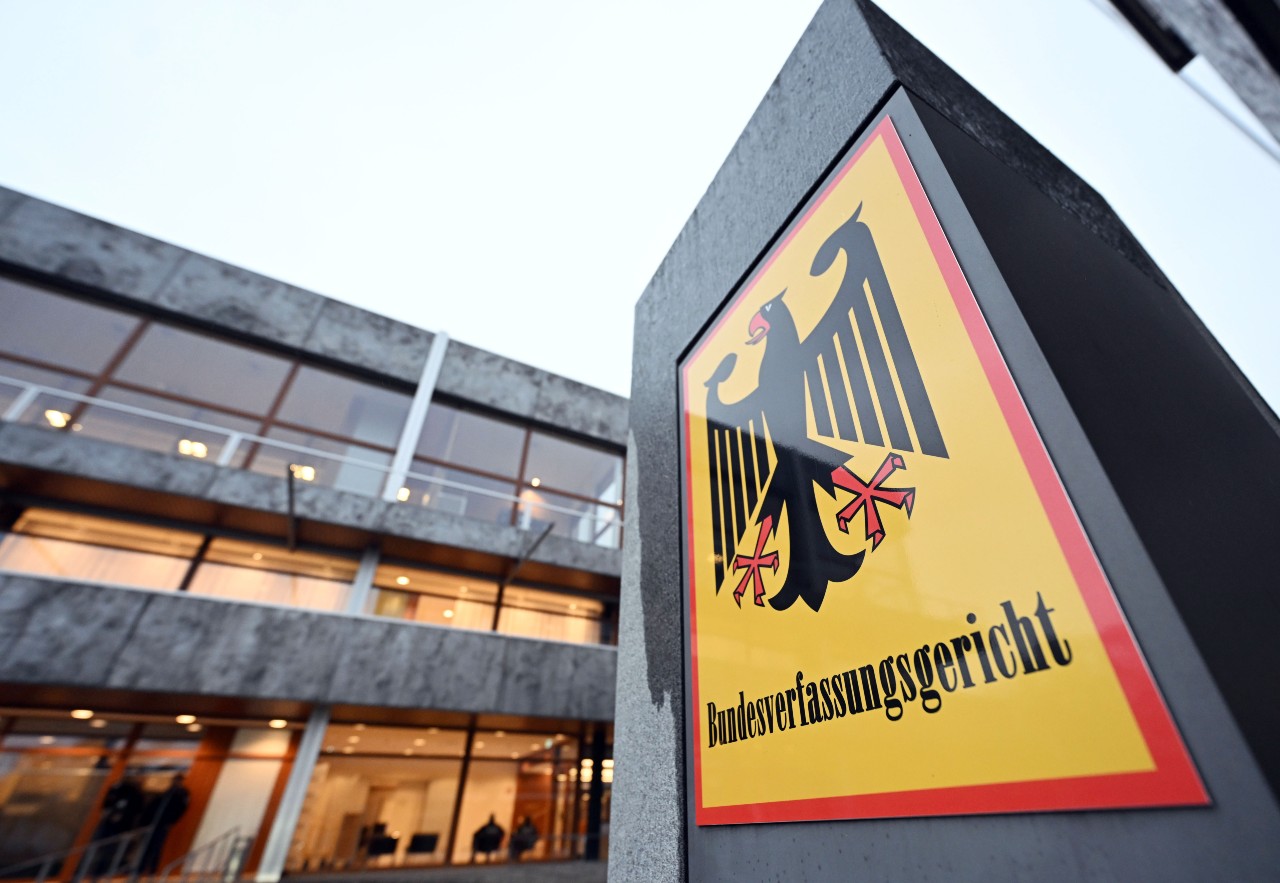
The measures would help protect the court from any party who might try to "throw sand in the gears of our constitution", Buschmann said.
The plan was devised by a committee of MPs from the three governing parties (the centre-left Social Democrats, the Greens and the FDP) as well as the centre-right CDU.
The measures are set to be voted on by MPs by the end of the year.
READ ALSO: Germany's far-right AfD sees strong gains in local eastern elections
Two injured in knife attack in Munich
Two people were injured in a knife attack in Munich that took place on Tuesday afternoon.
A suspect has been arrested, a police spokesman told DPA.
The victims were not believed to be critically injured and were taken to hospital after medical workers arrived on the scene. No further details about the course of events or motive were initially known.
There had previously been an emergency call about a knife attack, prompting the authorities to send out ten police patrols. The arrest was made just a few minutes later.
Germany bans 'Hezbollah-linked' Islamist group
Germany on Wednesday banned the Hamburg Islamic Centre, a Muslim religious association that has been under investigation for several months over its alleged support for Lebanon's Hezbollah group, which is backed by Iran.
The Interior Ministry said in a statement that it "banned the Hamburg Islamic Centre and its affiliated organisations throughout Germany to date, as it is an Islamist extremist organisation pursuing anti-constitutional objectives".
Accusing the group of being a "direct representative of the Iranian 'revolutionary leader'", the ministry said the centre also spreads Tehran's ideology "in an aggressive and militant manner".
The group is believed to propagate anti-Semitism, something that Germany has been battlng to stem amid a jump in cases following Israel's war on Gaza in response to the deadly attack by Hamas militants on Israeli soil.
READ ALSO: What is Germany's Islam conference and why is it controversial?
Investigators raided 53 properties believed linked to the centre across Germany on Wednesday.
Germany considers Hezbollah a "Shiite terrorist organisation" and in 2020 banned Hezbollah from carrying out activities on its soil.
The Hamburg Islamic Centre runs the Imam Ali Mosque, also known as the Blue Mosque, and calls have been growing in recent years for authorities to close it down because of its alleged links to Iran.
Founded by Iranian immigrants in 1953, the Hamburg Islamic Centre had already been under surveillance by domestic intelligence for some time.
Court decision puts Syrian refugee status in doubt
A landmark ruling by Münster's higher administrative court has found that Syrian asylum seekers aren't at general risk of civil war in their home country. Using this reasoning, they rejected the asylum claim of a Syrian who had entered the country in 2014.
The decision cuts against the longstanding position of the German Ministry of Migration and Refugees, which has offered protection to Syrians as a general rule since war broke out in the country.
Responding to the decision, Justice Minister Marco Buschmann (FDP) said it was important to take a "closer look" at which regions Syrians could now be deported to.

"You can no longer make a generalised statement that the security situation is the same everywhere in the country, but you have to take a closer look," he explained.
"One assumes there are now regions in this country that are very dangerous, but there are also other regions where there is not necessarily a danger to life and limb."
However, civil rights group Pro Asyl slammed the decision to ignore the "considerable conflict situation" in Syria.
"Practically no one is safe from the torture regime of the dictator Assad," a spokesperson told Tagesschau.
READ ALSO: German chancellor backs deportations to Afghanistan after policeman killed
In the case heard by the court on Tuesday, a Syrian national from the province of Hasaka was told he did not mean the conditions for protection either in his home region in the north-east or in Syria in general.
Although there are still armed conflicts and occasional attacks in the province of Hasaka, these no longer reach such a level that civilians must expect to be killed or injured, the court said.
With reporting by Imogen Goodman and DPA
Comments