
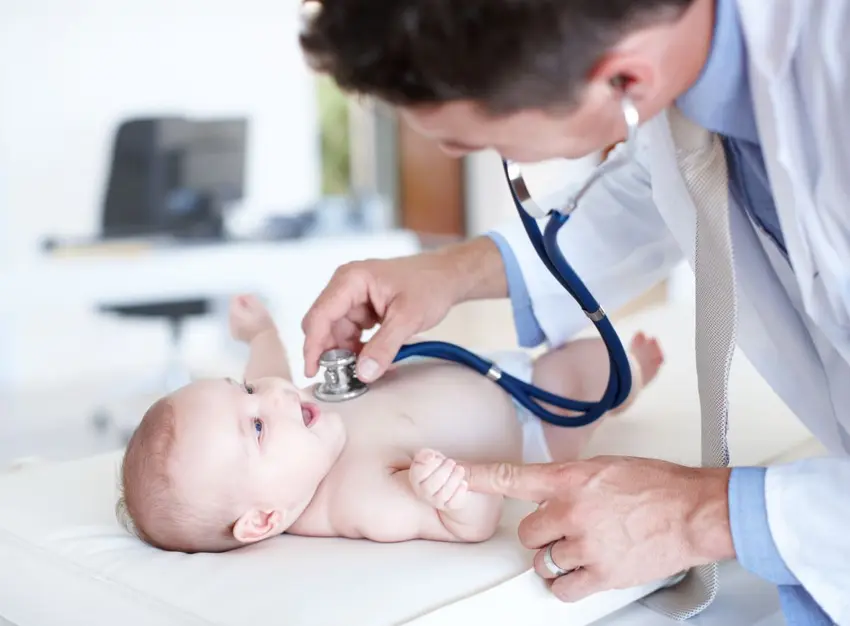
For new-borns and infants, protection against the respiratory disease RSV is to be covered by health insurance going forward.
A draft ordinance from the Federal Ministry of Health clarifies that regularly insured patients will be entitled to immunisation with the antibody active ingredient nirsevimab during their first year of life, regardless of risk factors.
This comes following a recommendation by the Standing Committee on Vaccination (Stiko) at the end of June.
What is RSV?
Respiratory syncytial virus (RSV) infection is the most common cause of lower respiratory tract disease in infants and children.
According to data from the Robert Koch Institute (RKI), about 25,000 infants are hospitalised every year with RSV infections.
Around 200,000 infants with RSV are treated on an outpatient basis.
The virus is transmitted via droplets.
In children, the first symptoms of an RSV infection is usually a runny nose and lack of appetite.
The throat can also become inflamed.
"Coughing and sneezing follow, and then often a fever," writes the Federal Center for Health Education on its website.
This can further develop into bronchitis and pneumonia, and in severe cases, artificial respiration may be necessary.
Vaccines prevent severe cases
As explained by the health ministry’s draft law, providing comprehensive entitlement to RSV protection for everyone with statutory health insurance is intended to prevent severe cases of the disease, which can result in treatment in intensive care units or even deaths in newborns and infants.
It will also help to mitigate bottlenecks and overloads in paediatric practices and clinics, which were recently reported during RSV waves.
Comments