
Among Germany’s plans to address its shortage of skilled workers is a proposed plan to introduce tax incentives for new arrivals.
The idea was explained again by Federal Finance Minister Christian Lindner, of the Free Democrats, (FDP) last week: He imagines that skilled worker immigrants could receive a tax rebate during their first three years in Germany.
The rebate would be set at 30 percent of gross salary during a worker's first year, then 20 percent during their second year and ten percent for their third year.
The rebate would also be limited to salaries within a set range. After five years, the policy would be re-examined.
The tax rebate plan is not yet approved. It comes as part of a package of planned measures included in the 2025 budget plans that the federal government hopes will boost economic growth.
READ ALSO: How Germany's planned 2025 budget could affect you
Germany’s growing shortage of skilled workers - especially in critical sectors like healthcare or IT - is increasingly worrying for the nation’s economy. It is getting worse as many of the baby boomer generation head into retirement.
The only immediate solutions involve encouraging more people to work, improving integration and education opportunities for immigrants and refugees, and attracting more skilled workers from abroad.
READ ALSO: Hit by worker shortage, German city gets students to drive trams
In their efforts to deal with the same problem, the Netherlands and Austria already offer tax relief to skilled workers from abroad.
What do German leaders say about it?
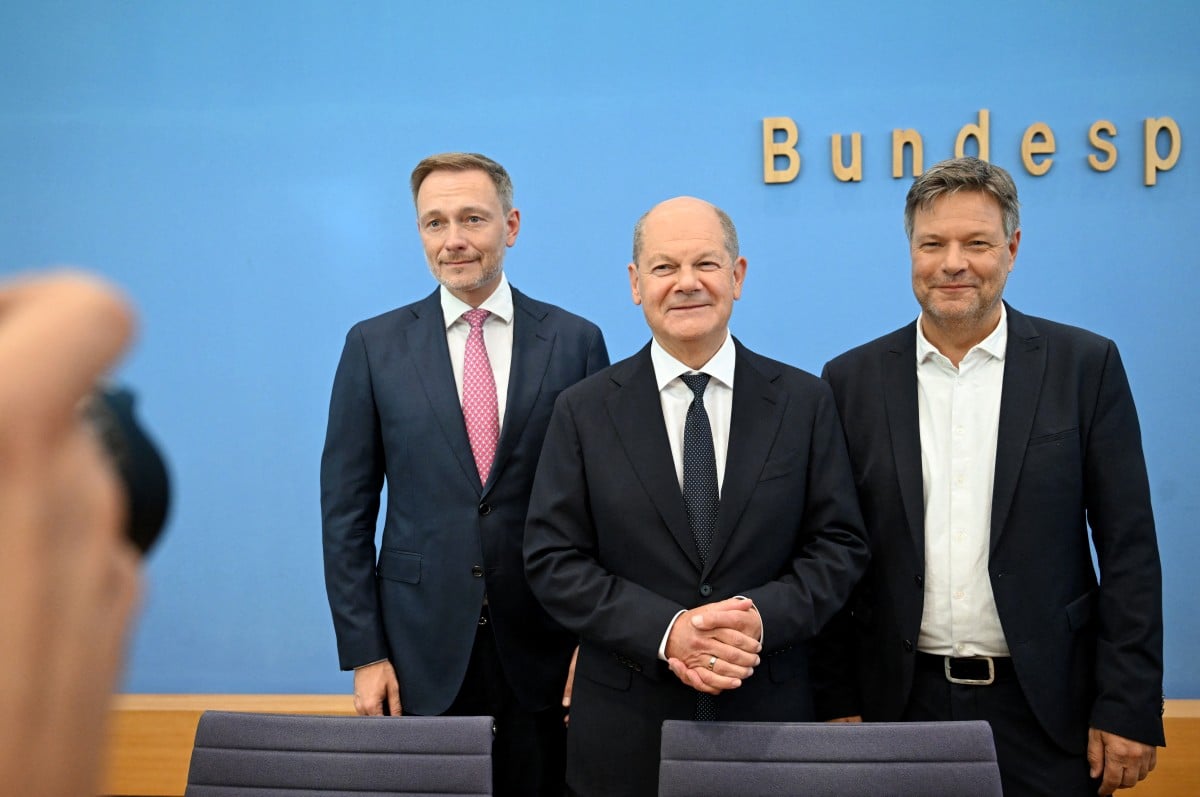
The three heads of the traffic light coalition government - including Lindner as well as Chancellor Olaf Scholz (SPD) and Economy Minister Robert Habeck (Greens) - all supported the idea initially as it was included in their 2025 budget plan announced last week.
For his part, Habeck said that the measure could close a "large gap in skilled workers".
According to reporting by DPA, during Habeck’s previous visits to Scandinavian countries he saw that better tax conditions there have incentivised foreign workers to move there.
He also emphasised that other European countries have implemented similar measures.
“It’s worth a try, and in the end it’s also good for German companies," Habeck added.
'Discrimination' against Germans
Politicians from opposition parties have been critical of the plan.
Economic policy spokeswoman for the CDU parliamentary group, Julia Klöckner, told German newspaper Die Welt that the plan amounted to "discrimination against nationals".
Of course some German nationals (and previously settled foreign workers), who would be left to pay their income taxes in full, may feel that way.
The far-right Alternative for Germany (AfD) and the Left Party (Die Linke) were also against the proposed tax rebate plan.
Some German trade unions also joined in the criticism. Yasmin Fahimi, head of the German Trade Union Confederation (DGB), called the proposal "socially explosive".
Instead, Fahimi thought clearer signals for improved childcare and healthcare benefits would be a better way to mobilise skilled workers.
The Organisation for Economic Co-operation and Development's (OECD) keeps track of which countries are seen as most or least attractive to foreign workers.
Of the 38 OECD countries, Germany slipped from 12th place in 2019 to 15th as of 2023. According to the OECD, "income and tax" are rated as the second most important "indicator of talent attractiveness", after "quality of opportunities".
Although the coalition leaders are pushing for this change, it's worth noting that the proposals have not yet been finalised and approved. It looks like there will still be plenty of negotiations before that is due to happen in the coming weeks.
Comments