
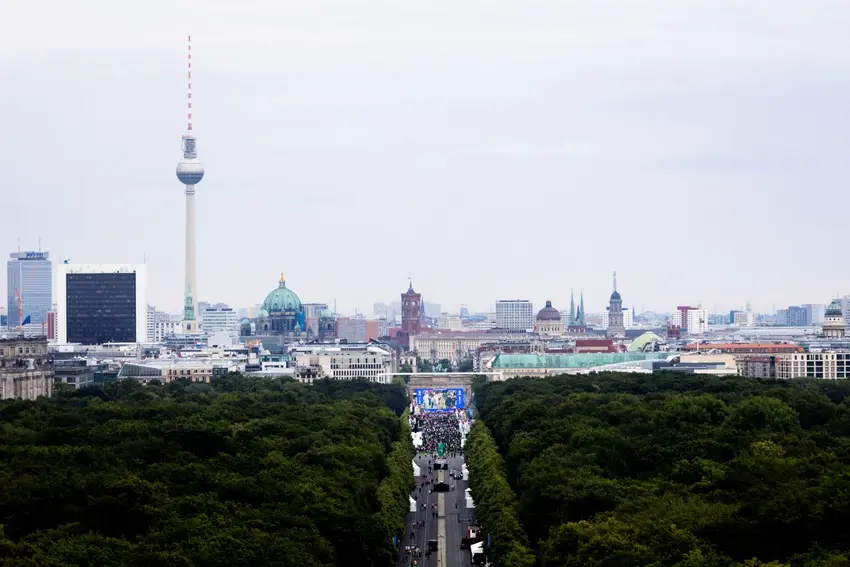
Berlin was rated the third happiest city in the world according to the “Happy City Index 2024”.
Other particularly happy cities in Germany are Munich and Cologne, which also qualified for the index's “Gold” standard.
Leipzig also ranked among the top 100 happiest cities. Düsseldorf, Stuttgart, Hamburg, and Frankfurt all ranked in the top 250.
According to the Institute of Quality of Life, the Happy City Index ranks cities across the world according to “thousands of indicators…that directly relate to the quality of life and the sense of happiness” of city residents.
Cities in the index are given a score in five categories: citizens, governance, environment, economy and mobility. The citizens category, for example, looks at a city’s education system, its level of social inclusion and library resources.
Berlin received its highest scores in the citizens and economy categories, followed by mobility.
The city with the highest overall score was Aarhus, Denmark followed by Zurich, Switzerland.
In light of Berlin’s high score for happiness, The Local takes a look at what makes Germany’s capital a great place to live, as well as some things that residents often complain about.
A capital of accessible mobility
One thing that a lot of Berlin residents appreciate is how easy the city is to navigate without a car.
Thanks to an interconnected network of trains, trams and buses, you can get anywhere on public transportation – and often in roughly the same amount of time it would take to drive.
Berlin’s 190 kilometre tram network happens to be among the oldest in the world.
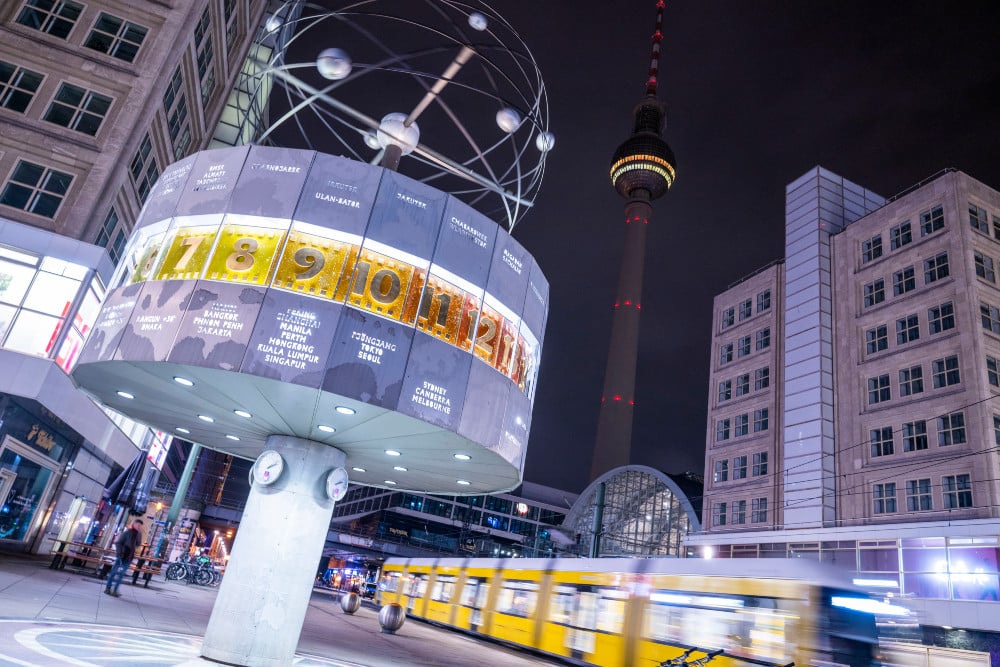
Additionally, the city has a fair amount of bicycle infrastructure. It’s no Danish city, but there are enough bike lanes to make commuting across the city by bike an appealing option when weather allows.
Whether by train, bike or foot, visitors and residents alike tend to find that Berlin is a nice city for just wandering around.
Paul Sullivan, founder of Slow Travel Berlin who has lived in Berlin for 16 years, told The Local that as a “committed urban hiker”, he finds the city “incredibly laid-back and accessible, fascinating and full of interesting people”.
For urban hiking in particular, Sullivan added that it helps that the city is pleasingly flat.
Affordable living (despite rising costs)
In the Happy City Index, Berlin’s second highest score was in the economy category – which feels a bit ironic for a city long known for being “poor but sexy”.
But despite wages in Berlin being notoriously low compared to other major German cities, the city remains affordable overall.
Asked what he likes about living in Berlin, content creator and tour guide Jonny Whitlam, told The Local, “The best part is the relative affordability.”
“Despite rising rents and groceries in recent years, average German wages are higher than many European neighbours, but cost of living isn't significantly more, meaning that living, eating, and saving are a distinct possibility and attraction,” he added.
Affordable mobility is a factor here too, with Berlin residents being able to access all of the city’s public transportation for €49 per month with the Deutschlandtiket. Starting in July, residents could even opt for a local €29 Berlin-abo ticket instead.
Of course, as Whitlam mentioned, rising rents and living costs have delivered some blows to Berlin’s affordability in recent years.
Berlin has become the second most expensive German city to rent in, and rents continue to rise rapidly in the city despite rental price protections in place.
READ ALSO: Why are Berlin rents soaring by 20 percent when there's a rent brake?
For now, however, Berlin rents are still cheap compared to many other big European cities. According to Statista, average rents in Berlin in 2023 were still well below those in Amsterdam, Lisbon, Rome, Paris, and Munich.
A playground full of culture and history
Mobility and affordability make Berlin a great place to stay for those who reside here, but arguably what draws newcomers to the city is its culture.
For Whitlam, Berlin’s “hedonistic bent” is among the city's draws. Residents and visitors alike often find a taste of that hedonistic culture at one of the city’s many world-renowned techno clubs.
READ ALSO: Berlin's techno scene added to UNESCO World Heritage list
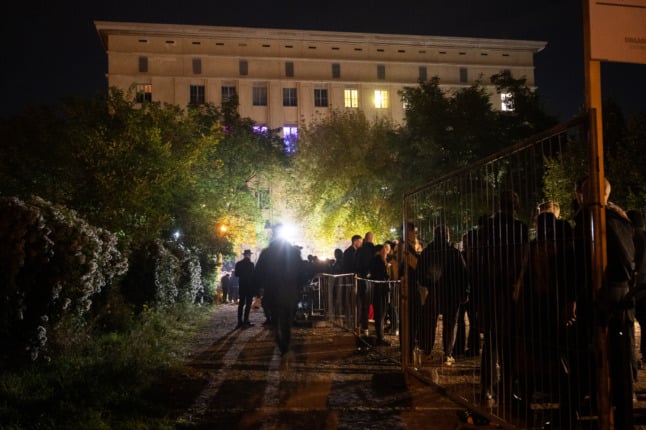
Whitlam notes that Berlin’s rich and well-documented history also makes the city ripe for exploration. Between “Prussian, Imperial, Third Reich, or Cold War locations…you're never far from something historically interesting and deeply significant,” he said.
For Sullivan, Berlin offers a “sense that life can be lived differently…a willingness to embrace the alternative and quirky”.
For some, an alternative life might mean attending FKK (nudist) events or sex-positive parties and for others it might mean growing vegetables in a community garden or living on a boat in the Spree.
Whatever it is you are into, you can probably find a community of people who share your interests in Berlin.
It’s not all wine and roses
There are many reasons why Berlin has earned its place on the Happy City Index, but it demands to be said that there are plenty of things that local residents take issue with.
"I find it amusing that Berlin has landed in the ‘happiest cities’ category given the heavy weight of its history, the way Berliners have a reputation for routine grumpiness, and that residents complain endlessly about the long, miserable winters,” said Sullivan, putting his finger on a couple common complaints.
Beside grumpy locals and bad weather, the other most common complaint is having to deal with bureaucratic nightmare scenarios.
“Bureaucracy, and the glacial pace of it, is one of the worst things about living in Berlin,” said Whitlam.
He added: “I have sat before government officials that have asked me to come back with this or that piece of paper, and then been amazed that I have scanned it and saved it in the cloud…This reticence towards technology isn't just annoying, it will leave this country left in the dust as everyone else moves forward.”
Thankfully, for Berlin residents, after you’ve spent some time doing battle with bureaucracy, you can go for a walk through the park, and have a modestly priced drink by the Spree.
Comments