
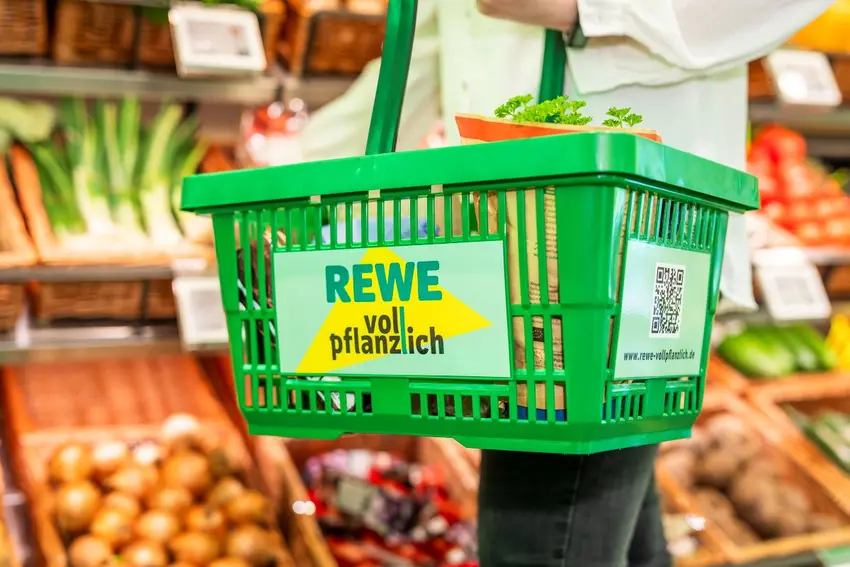
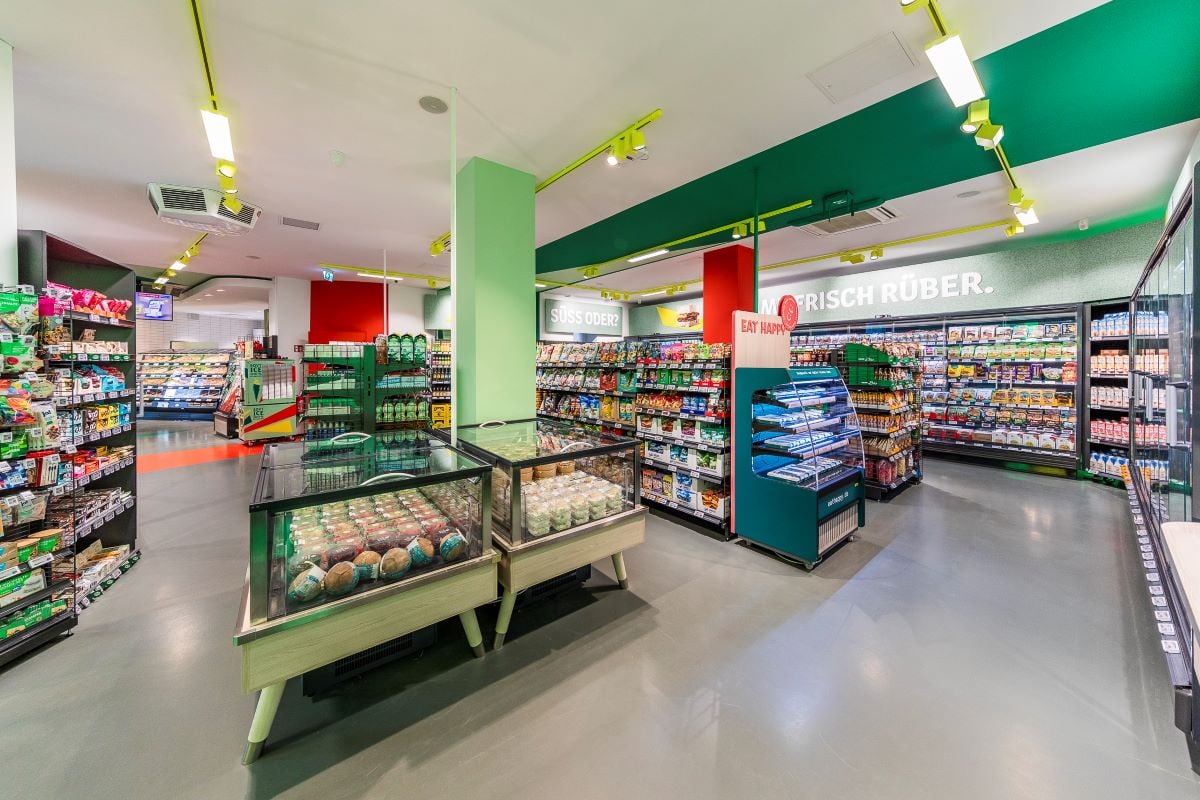
German grocer REWE opened its first vegan store on Warshauer Bridge in Berlin’s Friedrichshain neighbourhood last week.
‘REWE voll pflanzlich’ (wholly plant-based) is a relatively small store, but it offers more than 2,700 vegan products, according to information provided by the company. Unlike the REWE’s roughly 3,800 other locations, no meat, dairy or other animal products will be sold there.
In comparison, a regular REWE location often carries up to 1,400 vegan items – a selection that has grown in recent years. Milk alternatives and fresh convenience products in particular have proven to be popular items.
REWE Group has previously seen success with plant-based franchises. Its Austrian subsidiary Billa, launched Billa ‘Pflanzilla‘ in September 2022.
At Warschauer Straße 33, the first ‘REWE voll pflanzlich’ is planted in established vegan territory. The location was previously home to a Veganz store, which had been Europe’s first vegan supermarket chain. Veganz sold its retail business in 2023, saying it planned to focus on product development.
How is the neighbourhood reacting?
Berlin resident, Leona, stopped by the store with her friend on their way to the East Side Gallery.
“I think it’s great,” she told The Local. “Here I can find things that they don’t carry at a normal REWE store.”
She added that the location in Friedrichshain makes sense, because the neighbourhood is home to a lot of vegan restaurants and veggie-friendly residents.
Lilla Fufavi, founder of Berlin Fashion Tours, stopped by the store while leading a street tour focused on sustainable commerce.
Bringing a tour group to REWE was perhaps a bold move, as it was Fufavi’s first time visiting the store herself, but she told The Local that her guests enjoyed the quick stop.
“They loved the idea that you just go in, and without any effort you can be vegan. There is no other option,” Fufavi said.
She added that, as one of the biggest players in the industry, the fact that REWE is promoting more plant-based options shows how the industry is taking steps toward sustainability.
READ ALSO: EXPLAINED - Why and how to start a zero-waste lifestyle in Germany
Is Germany ready to leave Die Wurst behind?
Traditional German faire is known for its focus on Fleisch, like sausages, meaty stews or pork shoulder. While local favourites like Thüringer Bratwurst certainly wont be going anywhere anytime soon, meat consumption per capita in the Bundesrepublik has been falling in recent years.
According to preliminary data from Germany’s Information Centre for Agriculture (BZL), the per capita consumption of meat fell by 430 grams in 2023, to 51.6 kilograms – the lowest value recorded since the beginning of the survey.
The same cannot be said of the US, where meat consumption continues to grow. In the UK, meat consumption is falling, but not nearly as dramatically as in Germany.
Interestingly, Germany’s previous fixation on meat has arguably positioned the country to be more willing to embrace plant-based options going forward.
Many younger Germans have seen their elder relatives suffer diet-related illnesses, such as heart disease or cancer. Meanwhile research confirming the positive effects of more plant-based diets has gotten more attention.
The German society for nutrition (DGE) recommends a diet that consists of three-quarters plant-based foods.
“Roughly speaking, people eat too much meat and drink too much alcohol, too few whole grains, too few fruits and vegetables, and too few legumes and nuts,” Astrid Donalie, press speaker for the DGE told The Local.
READ ALSO: Deutsche Bahn 'goes green' with vegan menu and porcelain coffee cups
Vegan or vegetarian diets tend to be more common among Germany’s younger generations, which suggests that the country’s meat consumption per capita may continue to fall for some time.
Considering the trend, REWE’s first fully vegan store may prove to be an early sign of a looming market shift as Germany’s food manufacturers and retailers ramp up efforts to capitalise on growing demand for plant-based foods.
"When it comes to their diet, Germans pay more attention to their health, the impact on the environment or the welfare of animals,” said Minister of Food and Agriculture, Cem Özdemir, of the Greens. “Today, many people are eating less meat, but more consciously – and all the figures suggest that the trend will continue.”
He added that this presents opportunities to make Germany’s food supply chains more sustainable, humane and equitable: “We should take advantage of the new market opportunities. Keeping fewer animals better…At the same time, we are counting on farmers being able to make good money with plant-based alternatives in addition to animal products.”
Comments