

Karfreitag (Easter Friday) is a controversial holiday in Germany. For many it is one of the most important days of the year, commemorating the suffering and death of Jesus.
For others, it is a day of outdated bans - after all, less than half of Germany's population is Christian. And among those who are, it's questionable just how religious they are.
In Germany, Sundays and public holidays are protected by law as “days of rest and spiritual elevation”. Hence, most shops remain closed.
READ ALSO: German word of the day: Karfreitag
But then there are also "silent holidays" such as Good Friday, for which there are usually strict regulations. What exactly applies on Easter Friday is defined by the laws of the different states.
Patchwork of rules
In Bavaria, for example, sporting events and musical events in rooms with bars are prohibited - meaning most concerts and gigs will be out.
Public entertainment events are only permitted “if the serious character appropriate to [the holy day] is maintained”. Holiday peace and quiet should not be disturbed in other ways, especially near churches.
Many states have similar rules, but they differ significantly in the details.
For example, breaking a rule in Bavaria can result in a fine of up to €10,000. In Berlin, violations are punished with a maximum fine of €1,000, but in most cases it is significantly less.
There are also big differences when it comes to the ban on dancing. In Bavaria, this applies from Gründonnerstag (Maundy Thursday) to Holy Saturday. In Berlin the rules are handled more loosely: the dancing ban only applies from 4 am to 9 pm on Easter Friday.
In Hamburg, the dancing ban was relaxed last year. While the city-state previous had a 24-hour ban on dancing starting from 2 am on Karfreitag, it now only applies from 5 am on Friday to midnight.
READ ALSO: What's open and closed over Easter weekend in Germany
Residents of North-Rhine Westphalia can expect much tougher rules: here, the ban comes in at midnight on Friday and runs into 6 am the following day.
In Hesse, the ban on dancing even spills into Thursday, with the rules kicking off at 4 am that day and lasting until the weekend.
Dancing bans affect many discos
Dance bans generally affect many clubs.
So it comes as little surprise that the Association of German Discotheques (BDT) is fundamentally against dance bans: "A dance ban encroaches on the entrepreneurial freedom of the discotheque industry and forces it to restrict operations or shut down completely, even though there is demand," the association previously told DPA.
The BDT added that the lack of nationwide uniform regulations is unfair to businesses in certain regions: “It should not be the case that some companies have to record massive losses in sales due to the dancing ban and others benefit from it.”
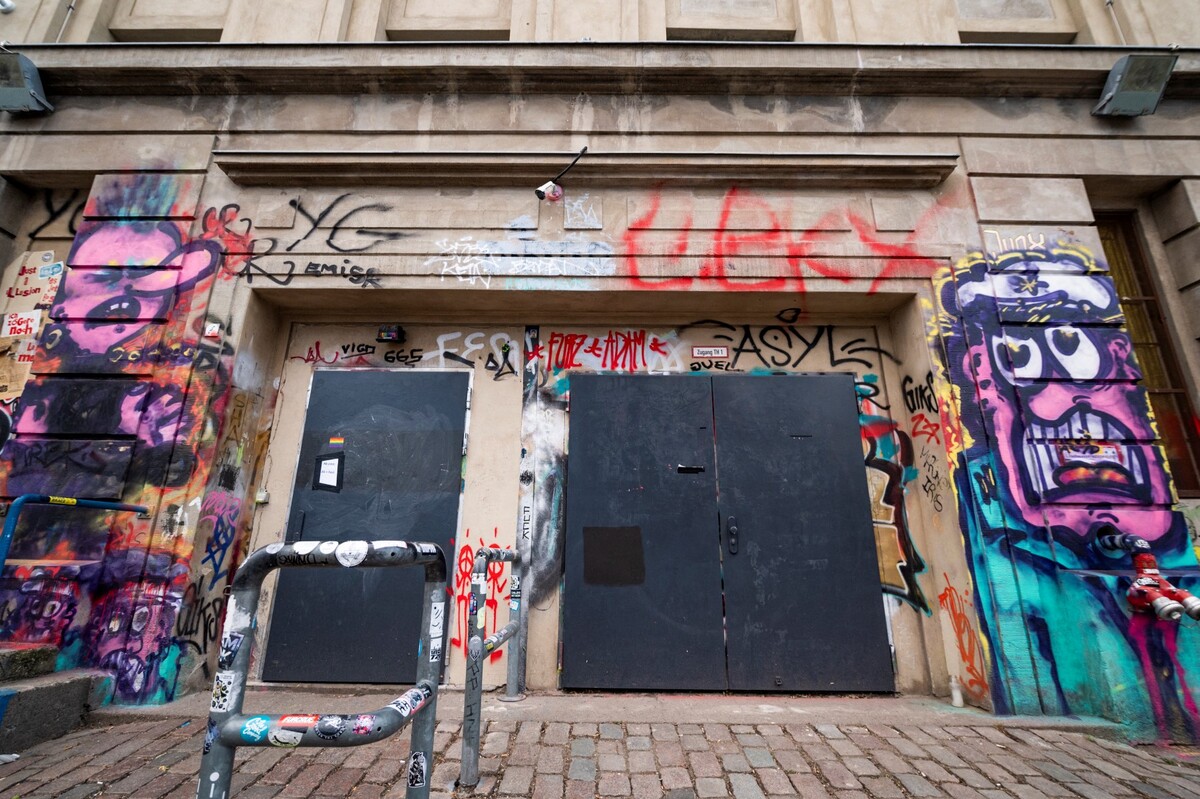
The Berlin Club Commission also suggests that dance bans are a “disproportionate restriction on freedom as cultural institutions”.
The BDT reports that the dance ban is enforced through random checks by the public order offices.
Private celebrations are not generally subject to the ban, but depending on the volume - and depending on the state regulations - they can ultimately be considered a violation of the holiday rules.
Bans on cinema
Additionally, certain films are not allowed to be shown in cinemas on silent holidays. However, there are no restrictions for television and streaming services, according to the Self-Regulatory Body of the Film Industry (FSK).
The FSK decides which film does not receive a so-called holiday release. “The regulations in the state laws go back to provisions from the Weimar Republic, so they come from a time when films could only be seen in cinemas,” said the FSK.
However, a lot has changed since then - in the films and the specifications. While in the 1950s, 1960s and 1970s over half of all feature films were classified as “non-holiday-free”, the percentage fell continuously to a third in the 1980s and only 3.8 percent in the 1990s.
As of 2000, the proportion of feature films not released on public holidays was one percent or less.
“So far in 2024 there has not been a cinema film without a public holiday release,” said the FSK. In 2023, out of 643 films tested, only one (“Evil Dead Rise”) did not receive a holiday release.
Prominent examples of films that were not released include “The Life of Brian” (1980) and “The Knights of the Coconut” (1976).
Respectful or outdated?
There are many Easter Friday rules and, different ones from state to state. Are so many complicated and unequal regulations still in keeping with the times, especially in view of the continuing decline in church membership?
For the Berlin Interior Senate administration, apparently yes: the rules correspond to a fundamentally Christian character, they say. In addition, the interests of different population groups are taken into account by limiting the duration of the bans and the possibility of exceptions.
In heavily Christian Bavaria, where the crucifix is mandatory in public buildings, the Interior Ministry underlines the relevance of the rules: “Protection on Sundays and public holidays is a very important concern for the Bavarian state government.”
The discotheque association sees it differently, dubbing the rules as “outdated and unfair”.
The FSK also considers film bans to be outdated: “From today’s perspective, the legal restrictions on films in cinemas on silent holidays are hardly understandable.”
So what's on for Friday?
Quiet holiday or not, in some places Germans are defiant against dancing bans, even scheduling publicly promoted dance parties.
Many of Berlin's clubs, for example, see the four-day Easter weekend as a chance to host parties for up to 96 hours.
According to posts on Resident Advisor, a number of parties will kick on Thursday night, including parties at Hoppetosse and Badeschiff in the district of Kreuzberg-Friedrichshain.
Meanwhile, Berlin's infamous Berghain/Panorama Bar will be opening at Friday night at 10pm -- as will KitKatClub for a queer kink rave.
READ ALSO: What's on over the Easter holidays in Germany in 2025
In Frankfurt, a party is due to kick off at Pracht from 10 pm on Friday, running through until 6 am on Saturday morning.
Perhaps due to the tougher restrictions, there are currently no parties posted on Resident Advisor for Friday in the major cities in North Rhine-Westphalia, including Cologne and Düsseldorf - cities which have previously slapped fines on residents for breaking the ban. But in each city a handful of parties are planned for Saturday.
But even here, you can probably find a private party to dance at if you ask around.
Comments (1)