
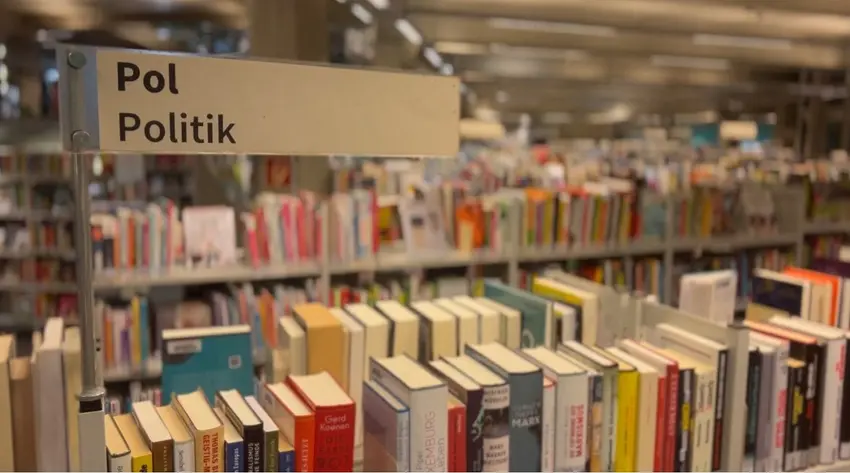
Living in Germany is our weekly look at some of the news and talking points in Germany that you might not have heard about. Members can receive it directly to their inbox on Saturday.
Why is there so much discussion about preparing for war?
It’s a topic that likely never crossed the minds of most younger people living in modern-day, peacetime Germany: preparing for war.
But coming up to the two-year mark of the war in Ukraine, and following Donald Trump’s comments that he would ‘encourage’ Russia to attack NATO countries that didn’t contribute enough, German politicians have been asking how the Bundesrepublik can be better prepared in the event that a conflict comes to their own country.
They’ve also been scrambling to figure out how to create a military alliance that does not depend on the US should Trump, now a top contender to be the Republicans’ presidential nominee, take up a second term in office.
German General Carsten Breuer estimated this week that Germany has five years before Russia can rearm itself from its losses in Ukraine and attack a member state of NATO – including Germany. Some states which share borders with Russia say that this calculation is way off, and that it could be only a couple years before Russia could test NATO’s Article Five by attacking a European NATO state like Estonia, Finland, or even Germany.
In any event, Germany has been bolstering its military - it exceeded its NATO spending for the first time in 30 years this week - ramping up arms production, and calling for other EU countries to do the same.
Tweet of the week
If you're still disappointed that the special German in your life didn't get you flowers on February 14th, rest assured that they celebrated in their own way: fighting against the man.
Instead of a simple “I love you”, Germans would rather say, “I won’t support this market-created consumer-oriented trend of capitalism,” writes X user Hazel Bruggel. And to her, that’s also beautiful.
— Slow Travel Berlin (@slowberlin) February 14, 2024
Germany in Focus podcast
In this week’s episode, we take a deeper look into how Germany is looking to bolster its military to give greater assistance in Ukraine - and be prepared should a war come to its own territory. We also touch on if Germany’s car culture is changing and Berlin’s new centralised office for citizenship applications.
Check it out here or wherever you get your podcasts. Please leave a review and a rating or let us know your feedback. You can email the team directly at germanyinfocus@thelocal.com.
Where is this?
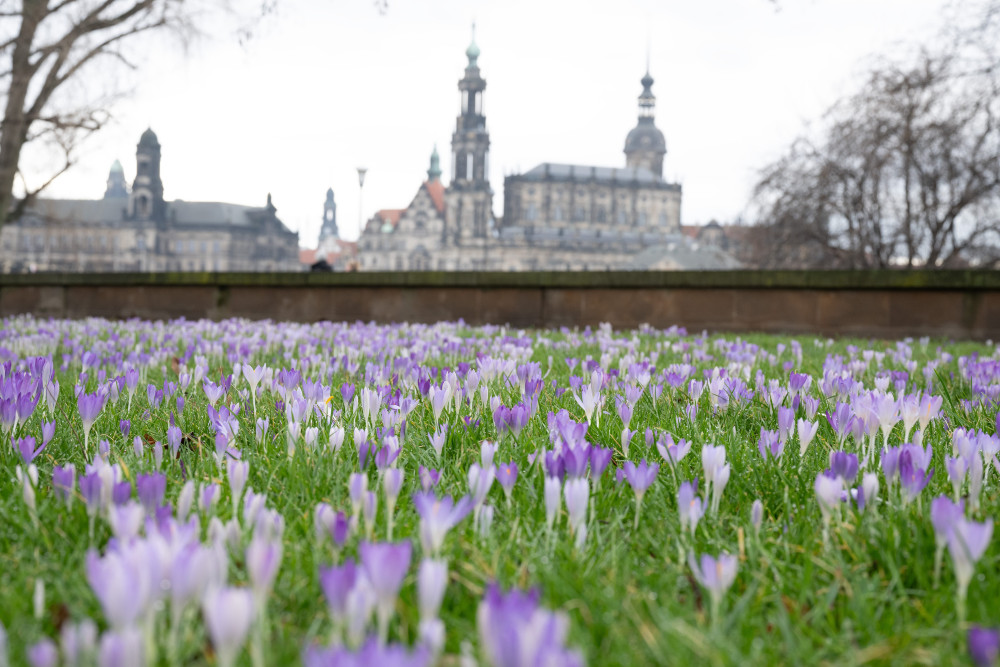
Photo: picture alliance/dpa | Sebastian Kahnert
Save for the cloudy sky and leafless trees, this photo taken Thursday on the edge of Dreden’s charming Altstadt shows that spring is not too far away.
So does the weekend weather: temperatures as high as 16C came to the Bundesrepublik on Friday, and are expected to stay in the low double digits over the weekend and into the next week. So you can slowly start to pack those puffy jackets away, and think about bringing out an Übergangsjacken - literally ‘transition jacket’, or between-the-seasons jacket - for when it’s still a big crisp but getting warmer.
Did you know?
German may be the 12th most widely spoken language in the world, but it’s the number three publishing language, beaten only by English and Mandarin. The country’s longtime reputation as the land of “Dichter und Denker” (poets and thinkers) still holds true, as the thousands of original books are published in die deutsche Sprache show each year, not to mention all those in translation.
Contemporary German-language literature runs the gamut in terms of popular authors genres and genres, ranging from science-fiction (such as The Swarm by Frank Schätzing) to historical novels (such as The Reader by Bernhard Schlink).
It’s little wonder that the largest book fair in the world takes place each autumn in Frankfurt. But Germany is also home to several regional Buchmessen: literature lovers can look forward to next month’s in Leipzig, whose much-awaited book fair is hosting an international line up of all sorts of up-and-coming authors in the Bundesrepublik and beyond.
Comments