
Germany urges citizens to leave Lebanon swiftly
Germany has urged its citizens to leave Lebanon quickly, warning that an expansion of the Israel-Hamas war could not be ruled out after a drone strike in Beirut killed a senior Hamas leader.
"All German citizens, who are still in Lebanon, are asked to register on the ELEFAND crisis preparedness list and to leave the country as quickly as possible," wrote the German foreign ministry on X, formerly known as Twitter.
The warning came after a meeting Wednesday of the German government's crisis unit.
"A further deterioration of the situation and expansion of the conflict cannot be ruled out, especially given the killing of Saleh al-Aruri", the political number two of Hamas in Beirut on Tuesday, the ministry wrote.
"This applies above all to the southern part of Lebanon, up to and including the southern urban areas of Beirut."
Although Israel has made no claim, Hamas, Hezbollah and Lebanese security sources blamed it for the assassination of al-Aruri, 57, one of the founders of Hamas' military wing.
Lebanon's Iran-backed armed group Hezbollah has vowed to retaliate against Israel for the drone strike in its Shiite Muslim stronghold of southern Beirut.
Germany had already issued a warning against travel to Lebanon in October, in the wake of the outbreak of the Israel-Hamas war.
Number of unemployed people in Germany goes up in December
The number of people registered as unemployed in Germany increased last month, according to new figures.
In the last month of the year, the Federal Employment Agency (BA) said there were 2.637 million more people in Germany registered as unemployed - 31,000 more than in November. The rate increased by 0.1 points to 5.7 percent.
Compared to the same time last year, the number of unemployed people rose by around 183,000, according to the figures.
The Federal Agency based its statistics on data available up to December 13th.
German government sticking to debt brake for now despite flooding
As parts of Germany grapple with severe flooding after days of rain, some Social Democrat politicians have been pushing for a budget emergency to be declared.
But the federal government says it will stick to the debt brake for the time being, meaning there will be no extra spending.
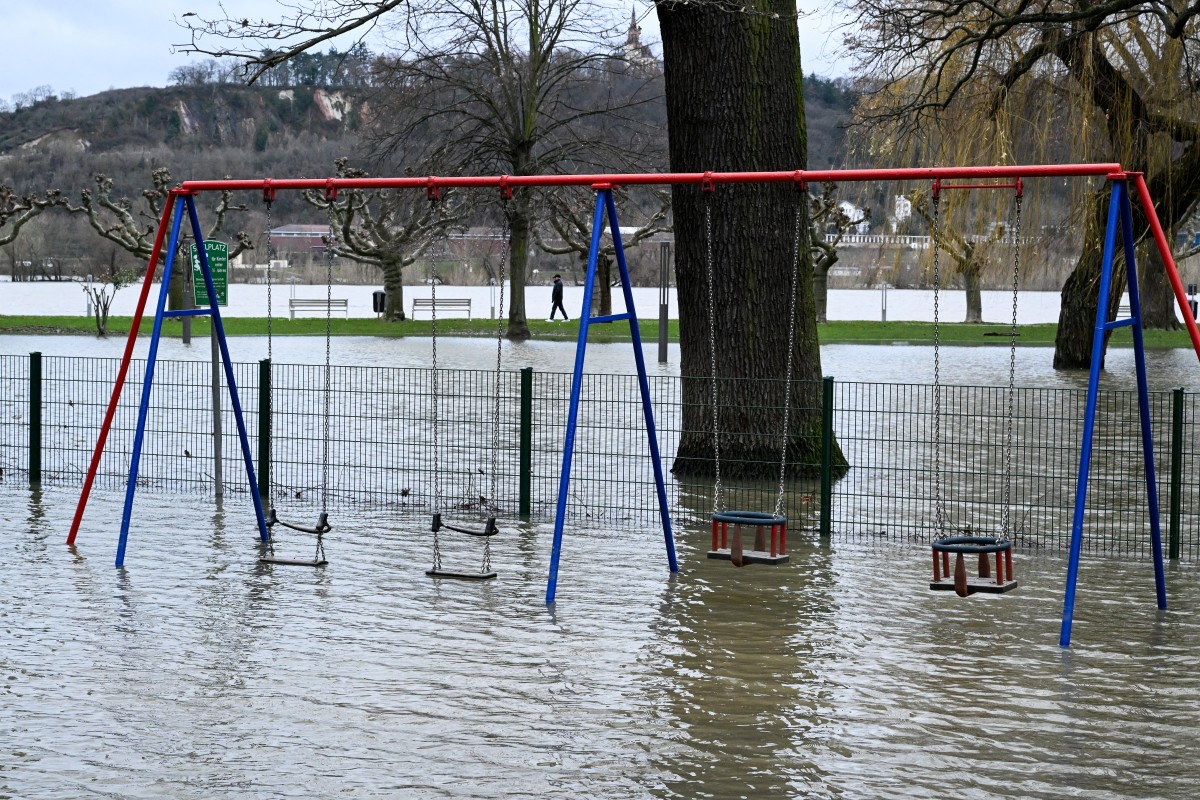
The time has not yet come to talk about easing the debt brake, said government spokesman Steffen Hebestreit on Wednesday.
He said the full picture of the damage caused by flooding was not clear at the moment.
However, Hebestreit said the government "will not shirk its responsibility", and will move to suspend the debt brake if needed.
Known as the Schuldenbremse in German, the debt brake is a cap on government borrowing that's enshrined in Germany's constitution. It states that the federal government can only take on a certain amount of new debt in each fiscal year.
READ ALSO: How deep does the German fear of debt go?
Worries over flood areas turning to ice as Germany braces for cold front
Even though parts of Germany are still battling flooding, the country is bracing for another weather shock - meteorologists are expecting temperatures to plummet from Friday onwards. This could be particularly dangerous for flood areas, where the water could turn into ice.
High water and flooding is affecting several regions, including Lower Saxony, North Rhine-Westphalia and southern Germany.
Temperatures are expected to dip below zero across the country during the day from Friday, with lows of up to -12C or even -15C at night in some places such as Munich next week.
Meteorologist Dominik Jung of Wetter.net told German daily Bild: "It's going to be freezing cold all over Germany with temperatures as low as -15 at night. For the flood areas, this means that the water surfaces could turn into huge ice landscapes."
Jung warned people against walking or skating on any ice that forms.
"If a large area of grass or plants suddenly freezes over, but the water on the ground is still running off, cavities can form at the bottom. And anyone who steps on it will see it collapse," he said.
German emissions at 70-year low as coal use drops
German emissions were at their lowest point in around 70 years, as Europe's largest economy managed to reduce its dependence on coal faster than expected, a study published Thursday showed.
The nation emitted 673 million tonnes of the greenhouse gases last year, 73 million tonnes fewer than in 2022, according to the energy think tank Agora Energiewende.
The figure was at its lowest point "since the 1950s", Agora said in a statement, while warning that Germany had work to do to further reduce its emissions
The drop was "largely attributable to a strong decrease in coal power generation", Agora said.
Germany had resorted to the fuel in the wake of the Russian invasion of Ukraine, when Moscow cut off gas supplies to the European giant. But since then, Germany has pared down its use of the fossil fuel significantly.
Electricity generation from renewable sources was over 50 percent of the total in 2023 for the first time, while coal's share dropped to 26 percent from 34 percent, according to the federal network agency.
The cut in coal use accounted for a reduction of 46 million tonnes in CO2 emissions, the think tank estimated.
Comments