
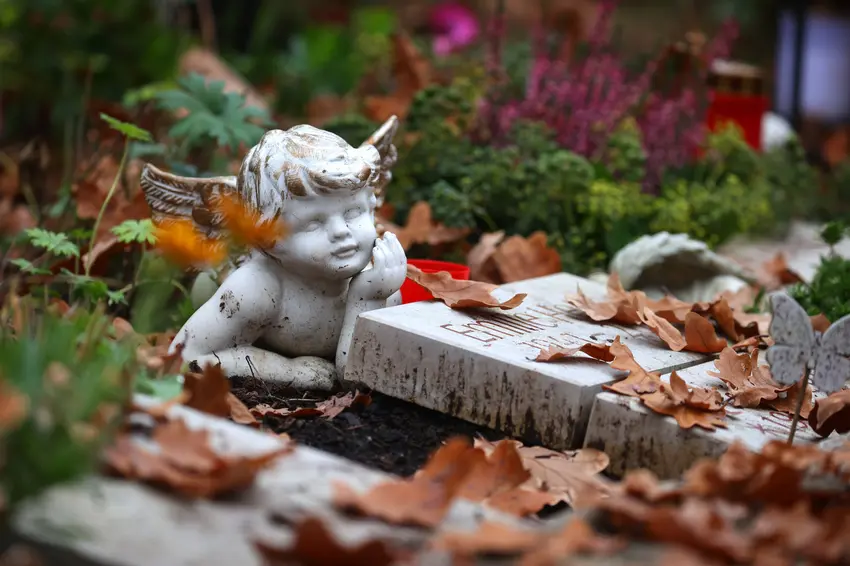
On November 1st, All Saints' Day is marked with a national holiday in several European countries, including Italy, France, Austria, Spain and parts of Switzerland.
But it's only a holiday in certain states in Germany.
The day is also a public holiday in Baden-Württemberg, Bavaria, North Rhine-Westphalia, Rhineland-Palatinate, and Saarland.
In these states, businesses, schools, and public institutions are typically closed for the day.
What is All Saint's Day?
All Saints' Day, known as Allerheiligen in German, traces its origins back to the early days of Christianity.
It was introduced in the 4th century primarily as a day to commemorate martyrs who had sacrificed their lives for their Christian beliefs. But with the spread and evolution of Christianity, the number of recognised saints increased, making it a challenge to dedicate individual days for each one.
READ ALSO: How to make the most of Germany's 2024 public holidays
This challenge led the early Christian communities to designate a single day to honour all of the saints, both known and unknown. Originally observed on the first Sunday after Pentecost, it wasn't until the eighth century that the date shifted to November 1st. This change was initiated by Pope Gregory III when he dedicated a chapel in Rome to all the Christian saints. The tradition was solidified by Pope Gregory IV in 835, mandating the Western Church to universally celebrate All Saints' Day on this date.
Nowadays, in Germany, the feast day is celebrated every year on November 1st, with masses and remembrance services in cemeteries to remember the dead.
Today, All Saints' Day in Germany is not only about celebrating saints but also commemorating the deceased.
It has become customary to visit cemeteries and decorate the graves of loved ones with flowers, candles, and even offerings of food and drink. The essence of the day is about solemnity, reflection, and reconnecting with those who've passed on.
Why is All Saints' Day not celebrated in every state?
Historically, most German states have been home either large Catholic or Protestant populations.
The idea that German states can be divided into either Catholic (Katholisch) or Protestant (Evangelisch) states continues to this day.
All Saints' Day is celebrated more in the Catholic tradition, so only the traditionally Catholic German states of Baden-Württemberg, Bavaria, North Rhine-Westphalia, Rhineland-Palatinate, and Saarland have adopted the day as a business holiday.
In the traditionally Protestant states of Brandenburg, Mecklenburg-Vorpommern, Saxony, Saxony-Anhalt, and Thuringia, Reformation day (Reformationstag) is celebrated the day before, on October 31st, instead.
READ ALSO: What is Germany's Reformation Day and where is it a public holiday?
Comments