
"The report finds no evidence of deliberate or targeted external interference," said property owner Union Investment, which commissioned the report.
Specific findings on what caused the rupture of the 16-metre-high plastic cylinder will be disclosed in October, the statement continued.
The report is not yet available in written form. Once ready, it will be analysed and legally assessed before being made public. The report will also be provided to the prosecutor's office, which is conducting an investigation into negligent bodily harm. Reports at the time said two people were hospitalised for injuries caused by shards from the shattered aquarium.
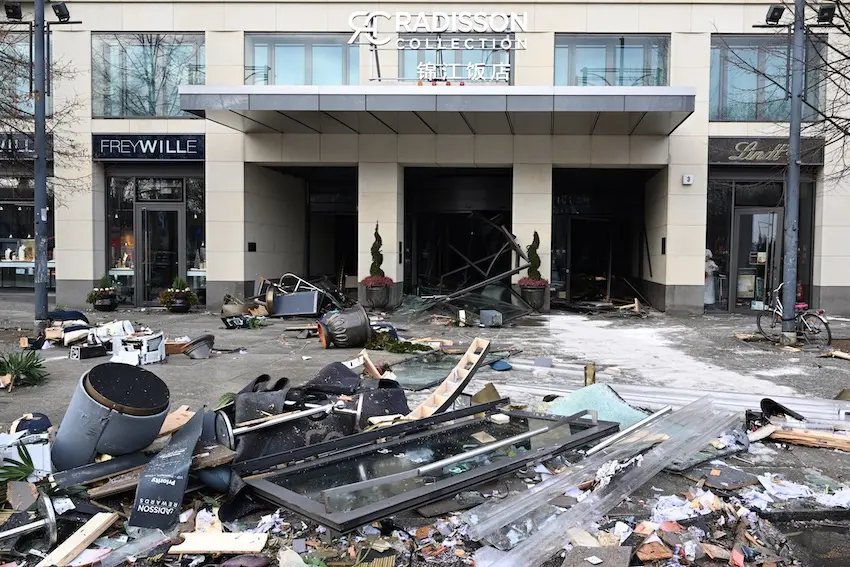
The aquarium burst in the lobby of the Radisson Blu hotel near Alexanderplatz in Berlin in the early hours of December 16th 2022. One million litres of water flooded into the hotel and onto the street, resulting in the death of almost all of the 1,500 fish.
READ ALSO: 'Tsunami': Hundreds of fish die as giant aquarium bursts open in Berlin hotel complex
Numerous potential causes have been cited for the accident: faulty construction, defective materials, material fatigue, surface cracks, and temperature fluctuations. For the purpose of the report, a team of engineers attempted to reconstruct over 700 fragments as faithfully as possible in a warehouse in Brandenburg. The cause of the damage will be taken into consideration when determining insurance coverage.
The tank had a clear-walled elevator built inside to be used by visitors to the Sea Life leisure complex. According to Sea Life, the AquaDom was the largest cylindrical, freestanding aquarium in the world.
Comments