
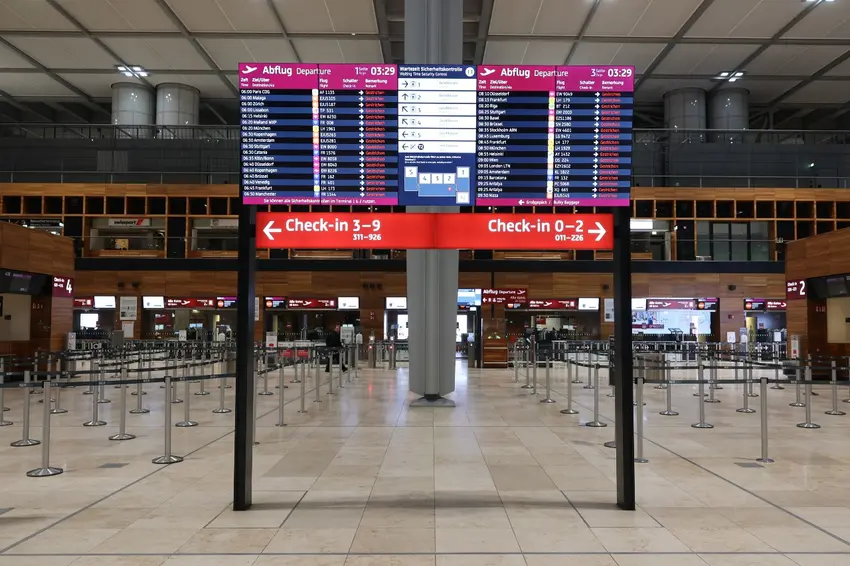
Warning strikes began at Berlin and Hamburg airports on Monday morning, causing hundreds of flights to be struck off the schedule for the day.
At the capital's airport BER, numerous workers in security, passenger control and customs downed tools at 3.30am, meaning passengers were unable to be checked in or processed for morning travel.
After services union Verdi announced the strike on Saturday, all flights out of BER on Monday were cancelled. On an average day, around 450-500 flights fly out of the capital's airport.
An announcement on the BER website on Monday morning informed passengers of the disruption and advised them to contact their airline or travel agent to arrange refunds or make alternative travel plans.
But it's not just outgoing passengers who are expected to have their plans scuppered: due to the staffing shortages, numerous landings at the airport could also be delayed or cancelled. Verdi has called on the workers to strike until midnight.
READ ALSO: What are your rights in Germany if a flight is delayed or cancelled?
At Hamburg Airport, the impact of the strikes is expected to be less severe, though an early morning announcement revealed that at least 31 out of 160 departures had been struck from the schedule. The airport also warned customers to expect long delays and further cancellations throughout the day.
In Hamburg, it was the employees of handling service provider Aviation Handling Services Hamburg GmbH (AHS) who were called on to strike. AHS employees are primarily responsible for check-in and boarding, among other passenger-related tasks.
The late-notice strikes are related to an ongoing dispute over pay rates for employers who work inconvenient or unsociable hours. Verdi has been calling for more generous overtime pay - particularly for shifts worked at night, on weekends or on public holidays - but claims airport employers have refused to improve their offer.
Meanwhile, the German Airport Association (BDLS) hit out at the action by union Verdi.
"Once again, the airports are the main ones affected, although they are not involved in the negotiations and are not a bargaining party," they said.
Last week alone, tens of thousands of passengers couldn't be processed and hundreds of flights were cancelled due to the lack of agreement between Verdi and the companies, they added.
'Threat of further strikes'
The action at the capital's airport follows numerous transport strikes that have been bringing Germany to a standstill in recent weeks. Most recently, airports such as Cologne/Bonn and Düsseldorf went on strike at the end of last week and rail union EVG instigated a national train strike on Friday.
BER itself is on strike for the third time this year, and on other days the airport has been indirectly affected by work stoppages at other transport hubs. During the strike in mid-March - as on Monday - all passenger flights were cancelled, and during the warning strike at the end of January no aircraft were able to land at BER.
READ ALSO: German airport strike hits thousands of passengers Friday
Verdi will be back around the negotiating table on Thursday and Friday and has warned the further strikes could take place if a deal can't be reached.
"We once again urge the BDLS to present a negotiable offer on April 27th and 28th and not to continue to play for time, otherwise there is a threat of further strikes in air traffic in May and at Whitsun," said Verdi's Wolfgang Pieper.
Comments