
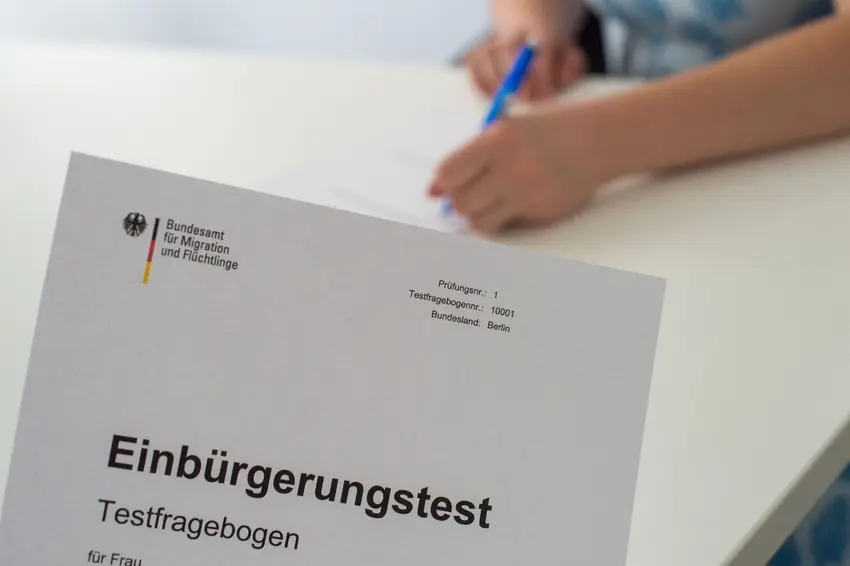
For many internationals in Germany, the wait can’t be over soon enough. Upon taking office just over a year ago, Germany’s federal traffic light coalition promised to liberalise citizenship laws—including allowing dual citizenship. But even now, with the draft law circulating, it’s still not clear precisely when the new law will talk effect. Here’s what we know so far:
January-March 2023: Scholz Cabinet to review citizenship bill
The federal Interior Ministry has released the draft law, rumoured at some 48 pages, to the rest of Chancellor Olaf Scholz’s Cabinet. Each minister—from foreign to finance, will now review the bill and give any feedback.
At the moment, the Interior Ministry is saying little about the specifics of the draft. We do know that it will allow dual citizenship, reduce the standard time someone needs to have been resident in Germany from eight years to five, and allow fast-track citizenship for well-integrated residents after three years.
The Interior Ministry has also informed the federal states as a courtesy. It’s also informed parliamentary rapporteurs for the bill, with the FDP’s Stephan Thomae telling The Local he sees “no surprises” in the draft law.
Once the government Cabinet agrees on the bill, the draft law will go to the Bundestag for passage.
READ ALSO: KEY POINTS: What’s in Germany’s draft law on dual citizenship?
April-June 2023: Bundestag and Bundesrat to debate draft citizenship law
The Interior Ministry originally planned to put the draft law before the Bundestag in December. Our sources now tell us Germany’s parliament will probably see this law in April. At that point, the bill will be open to more public scrutiny, so expect more clashes between the new law’s supporters and opposition conservatives in particular.
Despite the delay though, parliamentary rapporteurs for the draft law tell The Local they expect the bill to pass the Bundestag by the time it adjourns for the summer—so by the end of June.
After passing the Bundestag, the draft law will have to pass the Bundesrat—Germany’s upper chamber that represents the federal states.
Despite some fears that conservative Christian Democrats could hobble the draft law within the Bundesrat, parliamentarians tell The Local they expect easy passage, as the opposition doesn’t have enough votes in either the Bundestag or Bundesrat to kill the bill.
The Bundesrat is also likely to consider this new bill before adjourning for the summer in June, at the same time as the Bundestag.
READ ALSO: INTERVIEW: Germany on track to pass dual citizenship despite opposition
July 2023-January 2024: When will dual citizenship come into effect?
This is still an open question.
Although many parliamentarians intend to push for the new rules to come into effect as soon as the new law is passed, German bureaucracy often requires, and gets, time to adjust procedures and train staff on implementing recently passed laws.
Even on a long wait, however, it’s likely Germany’s liberalised citizenship law will be in effect no later than January 1st, 2024.
READ ALSO: ‘I hope it happens soon’: How Germany is anticipating dual citizenship law
Tune in to The Local's Germany in Focus upcoming podcast for more on this topic - and keep an eye out for more stories on our site.
Comments