
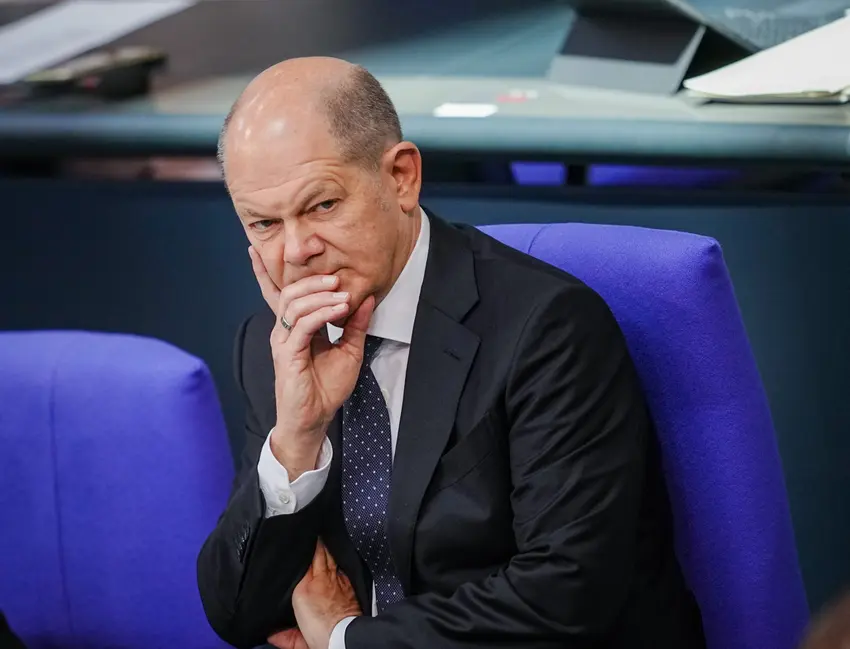
A price ceiling "carries the risk that producers will then sell their gas elsewhere, and we Europeans will end up with less gas instead of more," Scholz told lawmakers ahead of an EU summit on the controversial topic.
"That is why the EU must coordinate closely with other gas consumers, for example with Japan and Korea, so that we do not compete with each other."
The bloc's 27 members have been squabbling for months over how best to tackle skyrocketing heating bills for households and businesses as the colder winter months near.
Countries such as Italy are pushing hard for a swift and ambitious cap on prices, but have faced push-back from Germany, Europe's biggest economy, which fears the bloc putting itself at a competitive disadvantage.
READ ALSO: Germany to spend €200 billion to cap soaring energy costs
Russia's decision to shut down the key Nord Stream 1 pipeline in the wake of the Ukraine war has hit Germany hard, leaving the country scrambling to find alternative supplies.
Scholz's government has in part made up the shortfall by importing more liquefied natural gas (LNG), but it has increasingly balked at the high prices being charged by some allies.
Economy Minister Robert Habeck recently accused the United States of seeking "astronomical prices" for its LNG deliveries.
Scholz hinted at the same discontent when he said he was "convinced" that "countries like the US, Canada or Norway, which stand in solidarity with us at Ukraine's side, have an interest in ensuring that energy in Europe does not become unaffordable".
Comments