
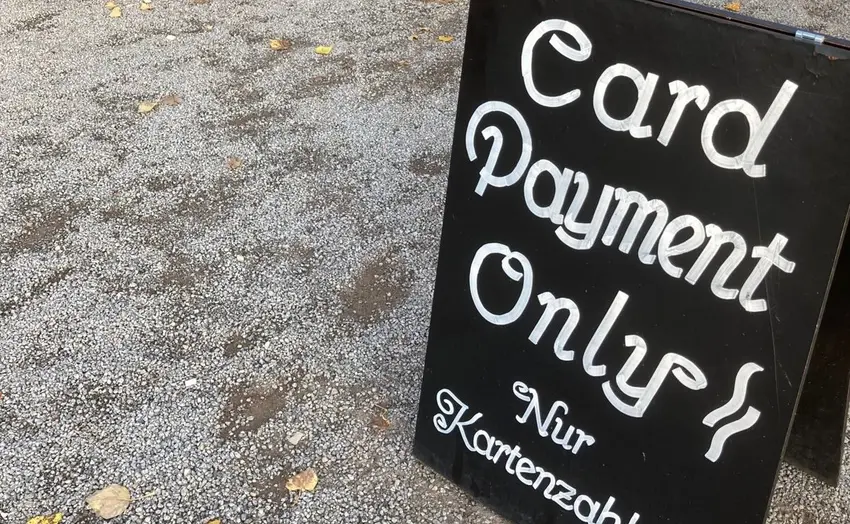
In Sweden or Estonia, you might well see a “Card Payment Only” sign before you’ve had your first Tuesday morning coffee.
In Germany though, seeing one still feels like looking at a piece of rare abstract art—wondering if you’ve stumbled into the future, or perhaps an alternate universe of a Germany that embraces highly advanced technology.
Given how common cash-only establishments are in Germany, I thought it a quaint curiosity when I chanced upon its polar opposite—a “Card Payment Only” sign in Berlin’s Gleisdreieck park. I snapped and tweeted a photo.
I have found it. The rarest German sign. pic.twitter.com/7LXv3lkX9G
— Aaron Gasch Burnett (@AaronGBurnett) October 17, 2022
My Twitter notifications blew up for three days. For some, the picture was amusing. For others it was downright unbelievable. A fair few people, often in jest but some perhaps seriously, suggested the picture was doctored in Photoshop.
Another suggested the picture was actually taken in Denmark near the southern border with Germany and that’s why the sign was in both German and English. There was, of course, no written Danish.
Ultimately, seeing a “Card Payment Only” sign that would be perfectly unremarkable somewhere else is a novelty big enough to gawk, laugh, and gasp at here. My favourite reply joked: “I will fax this to my German friends ASAP.”
READ ALSO: 'They though it was witchcraft': The verdict on paying with card in Germany
The Dreaded “Sorry Cash Only” Experience
If we really think about it, we probably shouldn’t be surprised at the conversation and debate this simple picture stirred up. Almost everyone who has lived in Germany—or even just visited—has had the dreaded “I don’t have enough cash” experience.
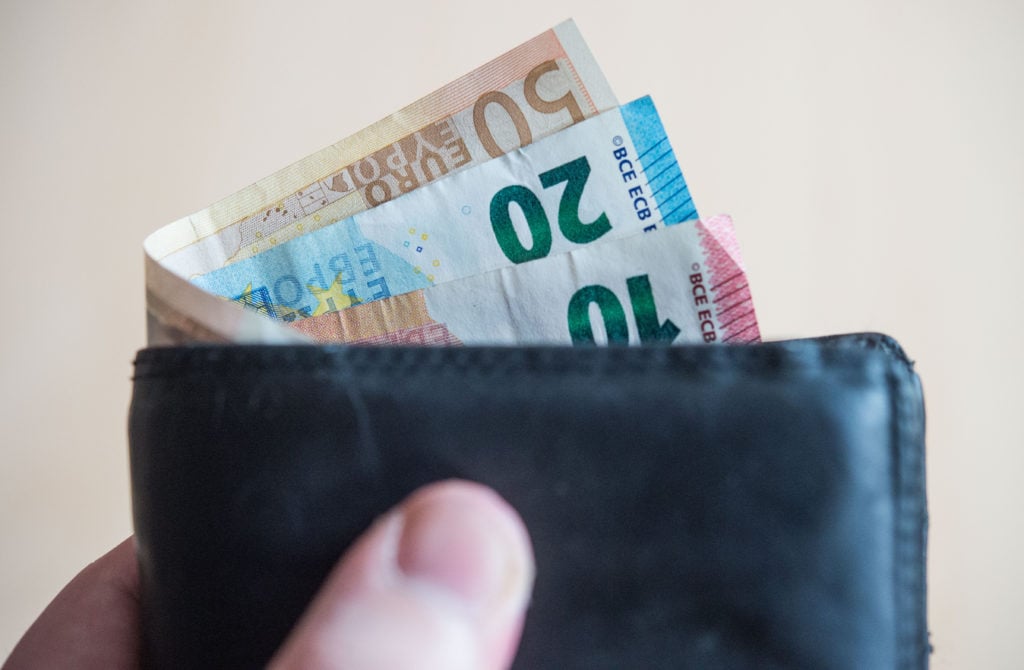
You know the one. The fear washes over you when your waiter, shopkeeper, or bartender says “cash only” and you hope you’re carrying a small fortune in your wallet—just waiting for the right pickpocket to swipe it off you.
You gasp in relief as you see a single €50 note, only to be told they can’t change it. Fear gives way to incredulity. Seriously. What is up with that?
We may soon be having fewer of these though, with the pandemic having (finally) spurred on a sharp increase in German card use at the expense of cash withdrawals.
2021 saw 27 billion card transactions in Germany, up five percent from the previous year. The value of those transactions went up by 8 percent—for a total of €65 trillion exchanged through German cards.
According to a Bundesbank report, cash withdrawals at German ATMs using German cards declined by 10 percent over the same period.
The numbers don’t lie—German account holders really are slowly migrating from cash to card.
READ ALSO: Ask and expert: Why is cash still so popular in Germany - and is it changing?
“Overwhelming” card demand pushing German businesses
The increasing demand for card payment options is also pushing more cash only holdouts to offer card terminals—with some consequences.
Gemma Nugent, a bar manager in Berlin, says her chain of bars will likely look into adding card terminals sometime next year.
“We’ve held on to being old-school for so long, but there’s just overwhelming demand now,” she says. “More and more customers are blown away when we say ‘cash only,’ especially tourists.”
Nugent says the bar will probably make more money if customers can simply tap and pay in various states of intoxication. However, one of the biggest concerns is whether bar staff will see fewer tips. She says they’ll make sure to get card terminals that prompt customers to tip to hopefully help.
However, having options for both card and cash payment requires more administrative manpower to keep up with the paperwork.
“You can cut the administration by being either cash only or completely cashless—but if you have both cash and card, it’s a lot more work as a business,” Nugent says.
Going cashless in Germany
According to a 2021 survey conducted over a year into the pandemic, almost half of Germans still prefer paying with cash than with card. That contrasts with about nine percent in Sweden.
With numbers like that, going cashless as a business in Germany seems brave. Yet more are doing just that.
Manja Engel, Head of Events and Marketing at Supersupply Berlin GmbH, which runs three bars and cafes in the city, says customers have been very accepting of their decision to go completely cashless during the pandemic—and stay that way.
“With card payment, we have a better overview of income and expenses. Both us as the employer and our team have a bit more security and peace of mind, since you cannot lose any money,” she says. “With cash, sometimes mistakes can get made in stressful situations and you can miscount. With card only, we don’t have that.”
Engel also says the team is able to save time by not having to count cash in the morning, at shift change, and at close. Tipping has also not gone down, although they have a terminal that specifically prompts customers if they would like to tip.
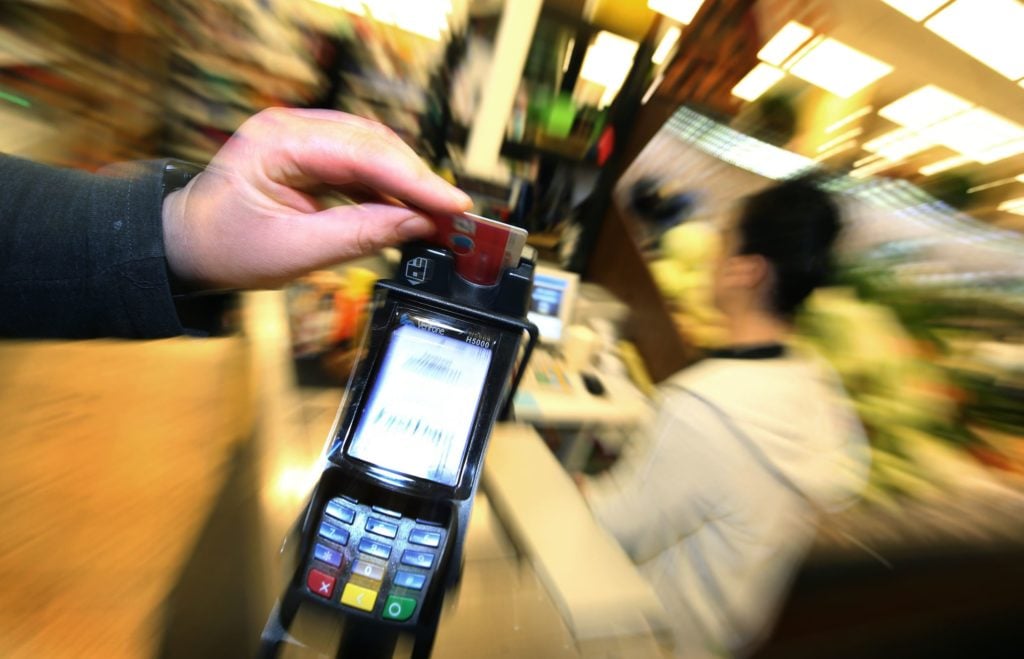
Enno Lenze, Museum Director at the Berlin Story Bunker, says handling cash was costing the museum 20 hours a week in manpower and over €500 a month in expenses before they went completely cashless six months ago.
“That’s half a full-time job. Ordering coins, getting bills to the bank, managing our inventory of coins, listing what’s missing—every single day,” he says. “We had 400,000 visitors in 2019, who paid with bills and received coins in change. Every day we’d have too many coins or too few. There’s always mistakes, which you then have to explain to the tax office.”
Lenze says the cashless transition has mostly been smooth. They began accepting American Express when they found that it was the card most American tourists were carrying. Complaints though, mainly came from Germans—some of whom would lock their cards in their hotel safe and bring only cash with them, because they were worried about their cards getting stolen.
Other German guests even asked if the museum could see into their accounts if they used their cards.
But DKB, an online bank in Germany, contends that card payment is a much more secure option for allaying German security concerns.
“Card payment reduces the risk of counterfeit money and is thus very secure,” says spokesperson Hauke Kramm. “With modern banking apps, payments can automatically be assigned to categories. Thus, users directly gain an overview of all expenses and opportunities to save money.”
As the reaction to my tweet might suggest, it might be hard to believe—but Germany is indeed going increasingly cashless—even if it's being dragged there.
Comments