
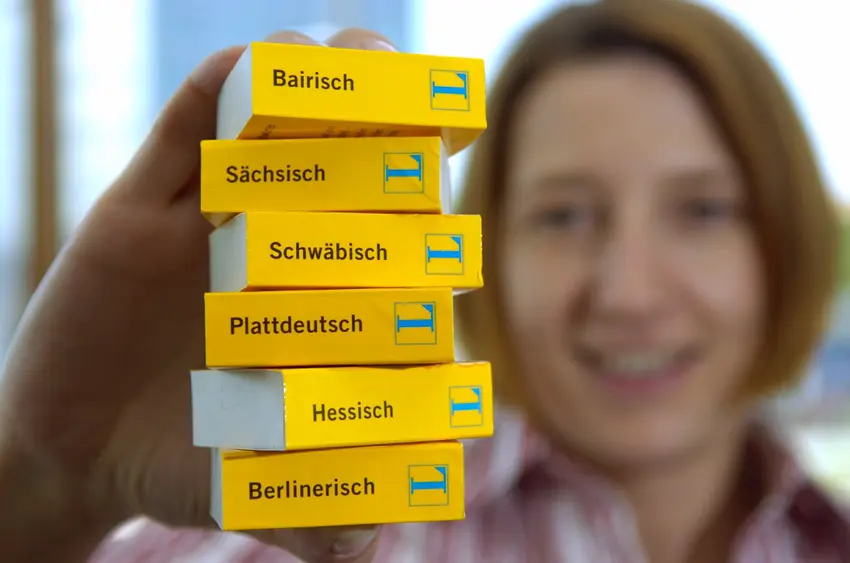
With standard, high German - or Hochdeutsch - taught in schools and used in universities, in workplaces, and in politics, fewer German speakers regularly converse in local or regional dialects. But there are some notable exceptions.
Swiss German, Austrian German, and Bavarian Bayrisch are in wider use and therefore might often be more easily understood by non-locals. Yet overall, only about a third of eastern Germans still speak in dialect regularly. That’s down from about 40 percent in 1991.
The declining use of local dialects has even led to concerns in Bavarian schools about preserving local dialects for future generations.
We asked around for people’s favourite words in German dialects and added in a few of our own.
Whether it’s food, greetings, or even a way of walking—here are some of our top picks.
READ ALSO: EXPLAINED: What to know about languages and dialects in Germany
Pott: It’s getting harder to find people in Berlin who speak the Berlinerisch dialect, but some coffee shops in the capital still offer a Pott of coffee. And no, that doesn’t refer to a full brewed pot—but a very large cup of coffee. While a Tasse is the high German word for a single cup, a Pott typically combines two Tassen—for when you really need a proper shot of caffeine in the morning.
Ä Schälchn Heeßn: There are plenty of great German dialect words for coffee. But Sächsisch (Saxon) boasts this particularly cute term for it.
In Sächsisch a cup of coffee is, for reasons I never really got to the bottom of, ä Schälchn Heeßn (“a little bowl of the hot stuff”?) pic.twitter.com/P8x8J3Nwn0
— Oliver Moody (@olivernmoody) October 12, 2022
Saxon dialect also has a term for a particularly weak cup of coffee that looks more like coloured water. That’s a Blümchenkaffee - literally "a flower coffee".
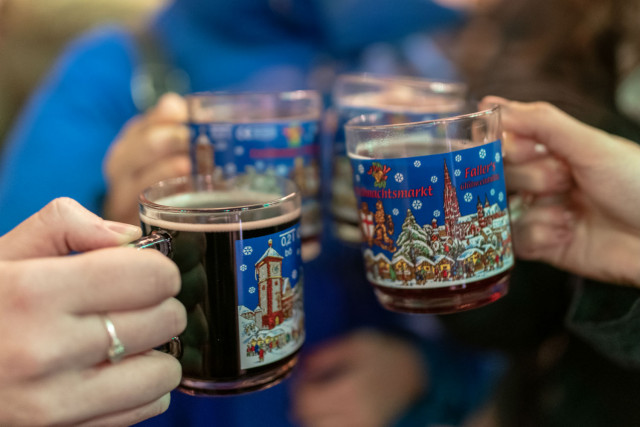
Gliehwoi or Gliewoi: In something that seems terrifically on brand for Germany’s wine-producing Rheinland-Palatinate region, Pfälzisch (Palatine) has its own word for Glühwein, the hot mulled wine typically served at German Christmas markets.
Grombier or Bodabiera: Straying into slightly healthier food items, the Swabian dialect has these nice terms meaning “ground pear” and “potatoes” respectively.
Halve Hahn: This one can even confuse native German speakers who don’t come from Cologne. While non-locals may assume it means a “half chicken,” a Halve Hahn is actually Kölsch (Cologne dialect) for a plate containing a half slice of bread with gouda cheese. Making this perhaps even more confusing, Cologne dialect uses the word Röggelche to describe the half piece of bread and Kies for the gouda slice.
READ ALSO: How German dialects are battling back against ‘Hochdeutsch’
Weckle: Alemmanisch (Alemmanic), spoken in Baden-Württemberg, uses the suffix -le as a diminutive rather than the high German -chen. So as Brötchen is a “little piece of bread” in high German, Alemmanic refers to it as a Weckle. In the same spirit, the Franconian dialect (Fränkisch) uses the term Weggla for the same thing.
Kappes: Rounding off the food items is this Cologne dialect word for “cabbage,” although it is also sometimes used in emphatic tones to mean “nonsense!”
Fregger: Franconian has this simple word for a particularly cheeky person, often a child.
Mutschekiepchen: Saxon dialect has this particularly cute term for a ladybug, while Bavarian dialect uses Haferl.
Mutschekiepchen - sächsisch for Marienkäfer / ladybird. pic.twitter.com/xjYuxuizP7
— Katja Hoyer (@hoyer_kat) October 13, 2022
Zefix: Similar to the high German verdammt ("damn") – this Bavarian curse will help you say “damn it!” to your Bavarian friends.
Muggeseggele or Muckenseckel: A humourous Swabian or Alemmanic term that literally means “a housefly’s scrotum.” Fittingly, it's used to emphasise when something is very small.
Gaungstackn: Coming from the region straddling the Czech border, this Erzgebirgisch (Ore Mountains dialect) insult means a naughty or unpleasant person. In English, its closest equivalent would be “sewage stick”.
Plietsch: On the more complementary side, this word in north Frisian Platt (low German), spoken in Germany’s far north and even in the eastern part of the Netherlands, means “clever.”
Moin: Used in Hamburg, Schleswig-Holstein, Lower Saxony, and even southern Denmark as a friendly greeting.
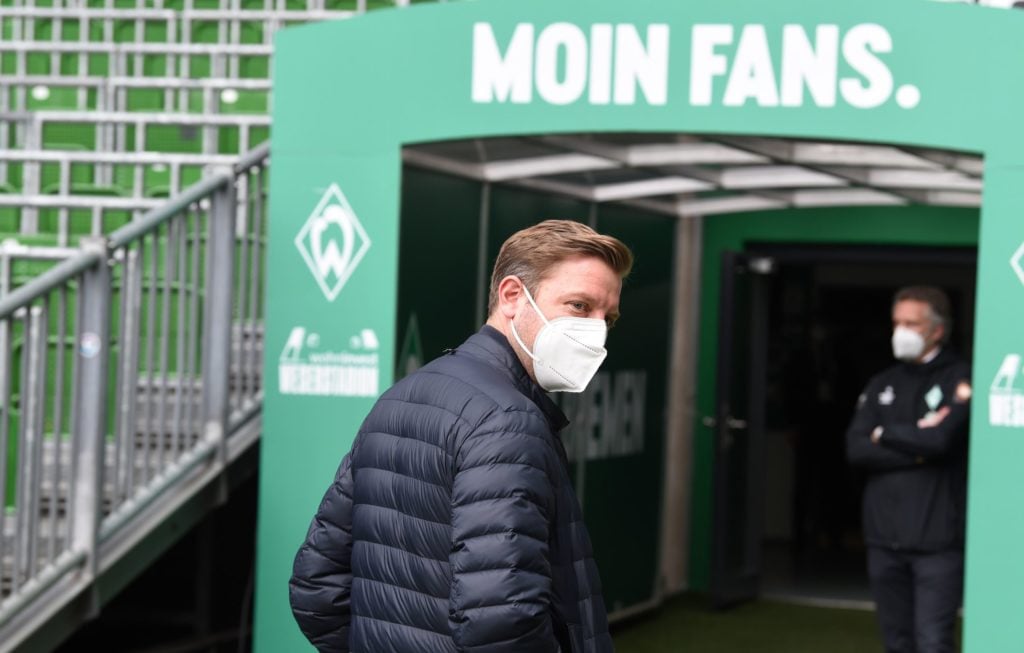
Um die Pudding: Not, in fact, a delicious treat, um die Pudding is used in and around Bremen to refer to a short walk—like the one you might take around the block of your home.
Austrian and Swiss German dialect essentials
As separate countries with their own rich histories, cultures, politics, and accents, Austrian and Swiss German have many of their own linguistic oddities and treats that represent a whole new level for German language learners to master. Here are a few of our specific favourites.
Baba: Much like some northern Germans have moin as a friendly way of saying hello, Austrians sometimes use baba as a friendly way of saying goodbye. Baba is typically only used with family and friends you know quite well.
Swiss German, by contrast, has many ways of saying a friendly hello, including but not limited to: Grüezi, Sali, Grussach, Tag Wohl, and Guete Daag.
Eine Jause: Austrian German for “a snack.” You can also use it as a verb jausen.
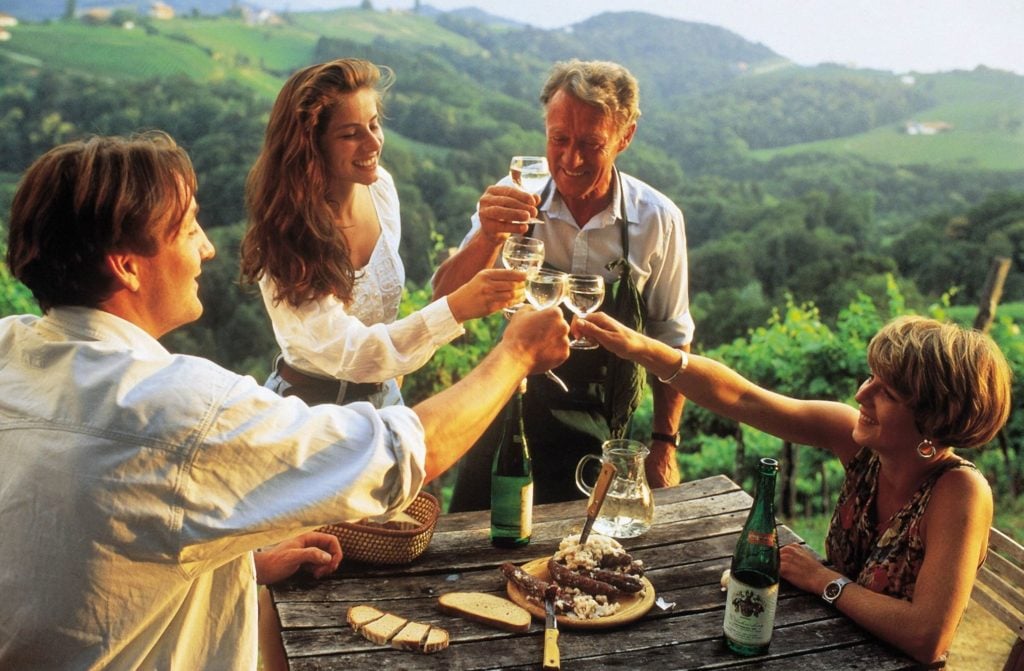
Eine Stange: Swiss Germans use this term to refer to a small beer. At a Swiss German bar, you can say: Eine Stange bitte!
Bims: Austrians in Vienna sometimes refer to their tram cars by this cute nickname.
Comments