
Germany sets gas levy and pledges to slash VAT
Households in Germany got a little bit of much-needed clarity this week as the rate of the upcoming gas levy was announced. According to Trading Hub Europe, the surcharge will be set at 2.419 cents per kilowatt hour of energy, which should cover up to 90 percent of the additional costs gas companies have had to bear since Russia’s invasion of Ukraine. We took a look at how much this could cost different types of households in Germany, from single-person flats to big family homes. The latter is likely to pay upwards of €500 for the levy alone, as well as potential price hikes from suppliers. But there is some good news on the horizon: on Thursday, Chancellor Olaf Scholz (SPD) revealed that the government plans to slash VAT on gas bills to just seven percent, rather than the usual 19 percent. The VAT cut will run for the duration of the levy and according to Scholz, the relief it offers will be “significantly larger than the extra burden imposed by the surcharges”. In addition, he reiterated promises for new relief measures in autumn. With energy prices continuing to soar, they can’t come soon enough.
Tweet of the week
If you’re learning German, you may be familiar with the phrases “Ich mache” (I do) and “Ich werde machen” (I will do) - but did you know that there’s an even more important phrase to learn if you want to get by? In fact, “Aber wir haben das immer so gemacht” (But we’ve always done it that way!) is the one you’re likely to hear most often in Germany.
https://twitter.com/katjaberlin/status/1560609633563136007?s=20&t=IP_BtO0-LE2sE58Yxv_7IA
Where is this?
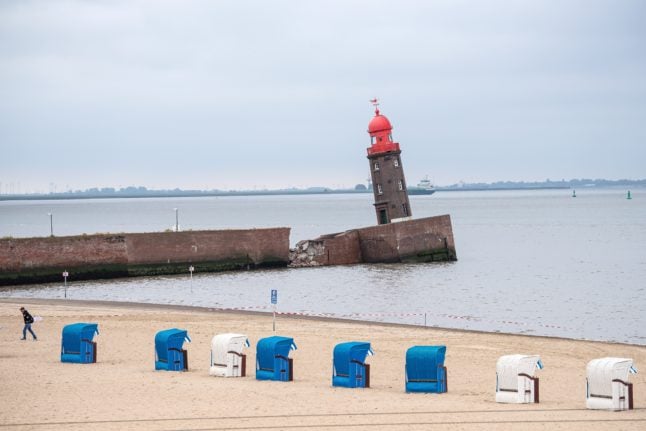
No, this isn’t the leaning tower of Pisa, but rather the leaning Mole Tower of Bremerhaven in northern Germany. The little lighthouse ended up tilted towards the sea last Thursday night when part of the north pier caved in. On Friday, coastal workers used special sonar equipment to check whether the tower, which was built way back in 1914, was stable enough to approach.
Did you know?
Anyone who’s ever raised their voice a little too loudly on their Balkon at night will be familiar with the German attitude to noise, but you may not be aware that this particular aversion has led to some interesting innovations over the years.
In fact, way back in 1907, as industrialisation was creating ever more noise in urban areas, a plucky pharmacist by the name of Max Negwer decided to create a special device that would allow people to experience blissful silence even in the busiest of areas. His Ohrpax - named after the German word for ‘ear’ and the Latin word for ‘peace’ - were the first modern earplugs to be invented and Newger quickly started flogging them to factory workers around the country. When the First World War broke out, Ohrpax came into their own even more, helping soldiers to avoid going deaf through their proximity to explosions on the front line.
READ ALSO: Ruhezeit - what you need to know about 'quiet time' in Germany
Years later, in 2012, a revamp of Berlin’s Nauener Platz - a bustling spot in the district of Wedding - saw new devices installed to drown out the traffic noise with the sound of birds and running water.
Though it’s not always fun to have to keep the noise down, part of settling into German life is definitely learning to relish some peace and quiet once in a while. Especially on Sunday, the day of Sonntagsruhe (Sunday quiet), we’re learning to embrace the sound of silence.
Comments