
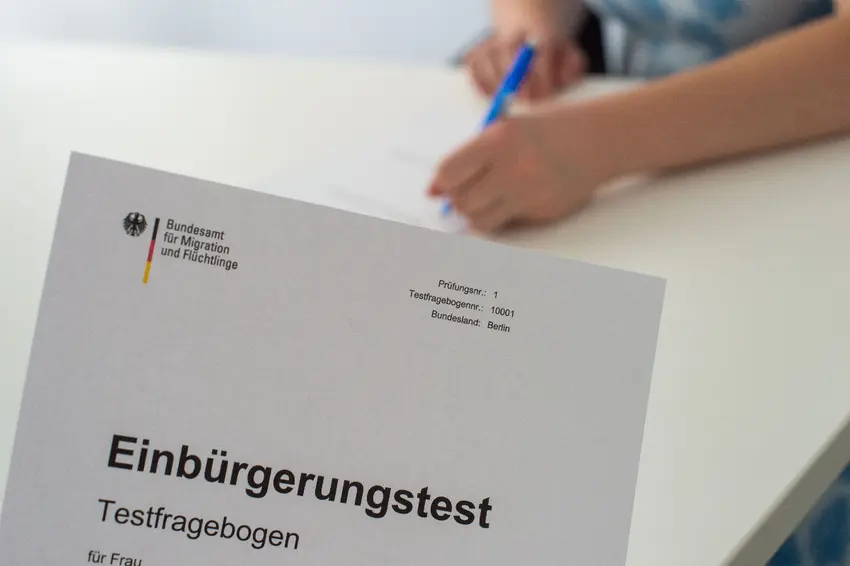
The German passport is one of the most powerful in the world - but getting your hands on one is no mean feat.
Alongside strict residency and language requirements, people who want to become a naturalised German citizenship will have to sit an exam known as the Einbürgerungstest (Citizenship Test).
The exam is designed to ensure that foreign residents understand important aspects of Germany's political system, like the rights enshrined in the constitution, and can deal with aspects of day to day life and culture in the Bundesrepublik.
READ ALSO: TEST: Is your German good enough for citizenship or permanent residency?
Additionally, there are usually questions on important milestones in German history such as the Second World War and the GDR, and you may encounter some geography questions and questions on the European Union as well.
The test is in German and consists of 33 questions: 30 questions on Germany in general, and three related to the specific federal state you live in.
It's all in German, so people sitting the exam need to be fairly confident with their reading skills - but since it's multiple choice, writing skills thankfully aren't required.
Though this may sound daunting, people are given a full hour to complete the test - and, anecdotally, most tend to finish much more quickly than that. You also only need to score 17 out of 33 (so just over 50 percent) to pass.
In addition, there are only a set number of questions that the Citizenship Test alternates between. You can find a list of all of them (in German) here, and also take a German-language practice test here.
READ ALSO:
- What I was asked about in my German citizenship test
- REVEALED - The new questions being added to Germany's citizenship test
If you'd like to test your knowledge in English, however, we've put together a list of 18 questions to get you started, with the answers written underneath the picture. Viel Glück! (Good luck!)
1. Germany holds free elections. What does that mean?
a) You are allowed to accept money if you vote for a certain candidate.
b) Only people who have never been in prison are allowed to vote.
c) The voter must not be influenced or forced to vote in a particular way and must not suffer any disadvantages as a result of their vote.
d) All eligible voters must cast a vote.
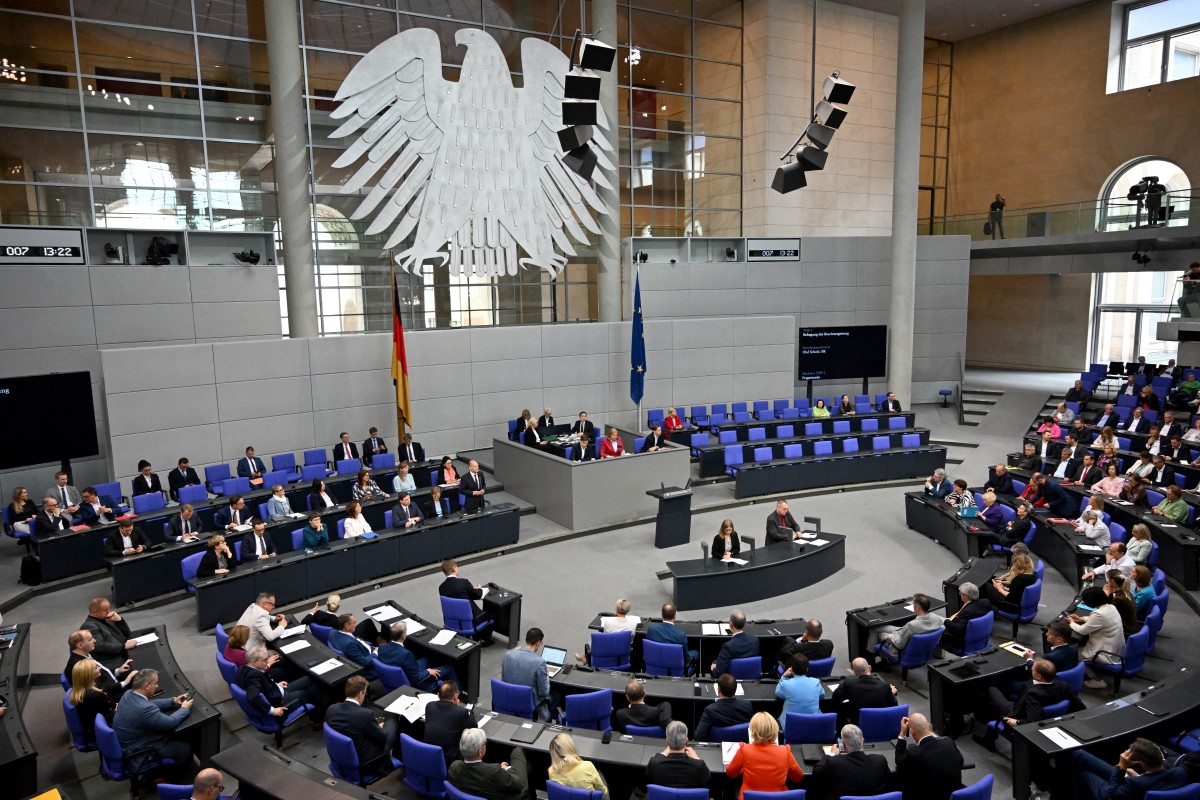
Answer: c) The voter must not be influenced or forced to vote in a particular way and must not suffer any disadvantages as a result of their vote.
Article 38 of Germany's Basic Law states that "Members of the German Bundestag shall be elected in general, direct, free, equal and secret elections." The Bundestag explains on its website that "the election is 'free' because citizens may not be influenced or put under pressure regarding their decision on whom to support. They are meant to reach this decision freely and cast their vote accordingly."
2. Who was the first chancellor of the Federal Republic of Germany?
a) Ludwig Erhard
b) Willy Brandt
c) Konrad Adenauer
d) Gerhard Schröder

Answer: c) Konrad Adenauer
Konrad Adenauer held the role from 1949 to 1963. He was also the first leader of the centre-right CDU, the Christian Democratic Union, a new party at that time.
READ ALSO: Requirements, costs and permits: 6 essential articles for German citizenship
3. In Germany, parents can decide whether their child takes part in which school subject until the child turns 14?
a) Politics
b) History
c) Languages
d) Religious studies
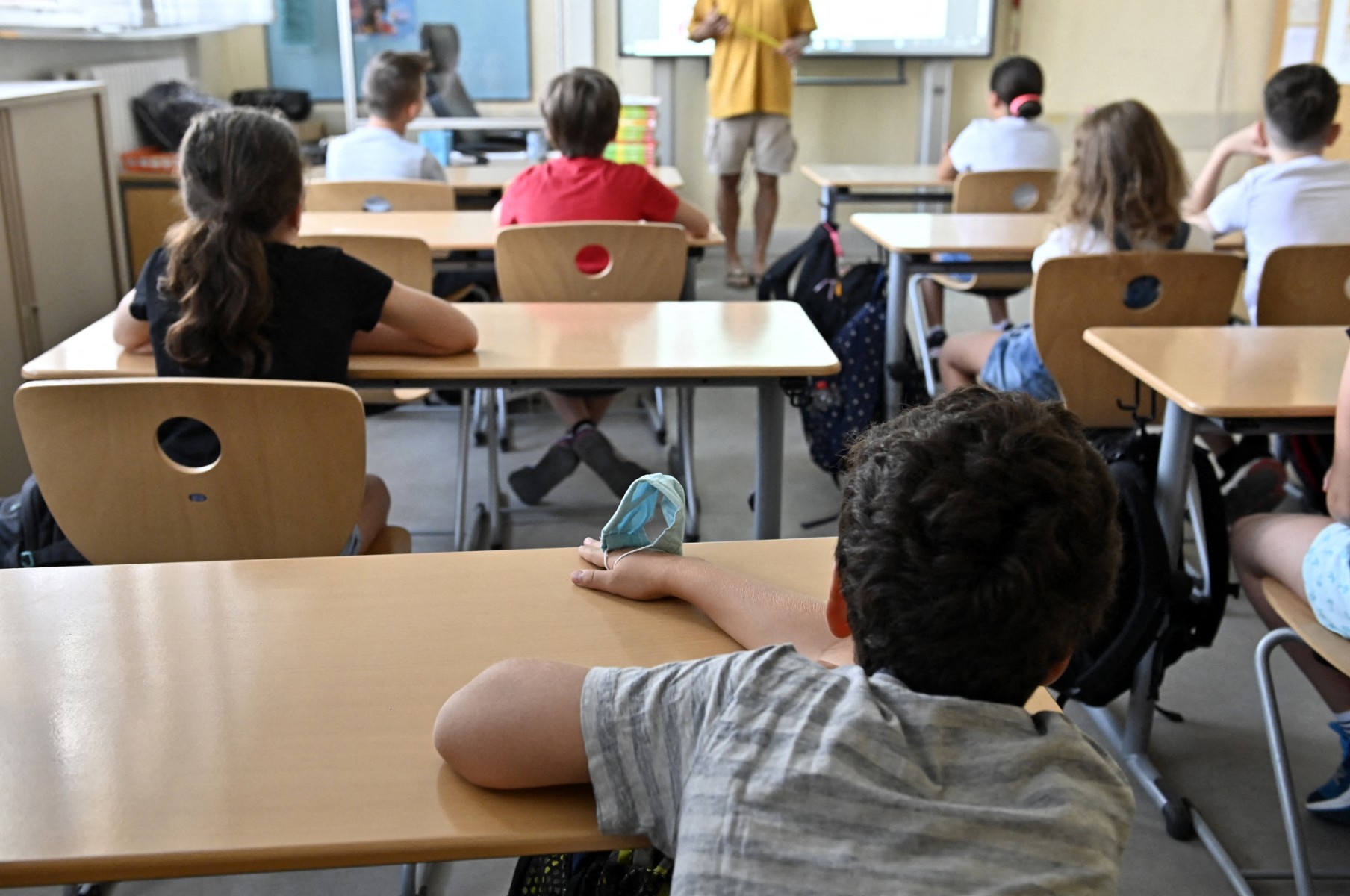
Answer: d) Religious studies
Parents can opt to withdraw their children from religious studies lessons without giving a reason. After the age of 14, most states allow children to decide for themselves.
4. What is the name of the German constitution?
a) Volksgesetz
b) Grundgesetz
c) Bundesgesetz
d) Deutsches Gesetz
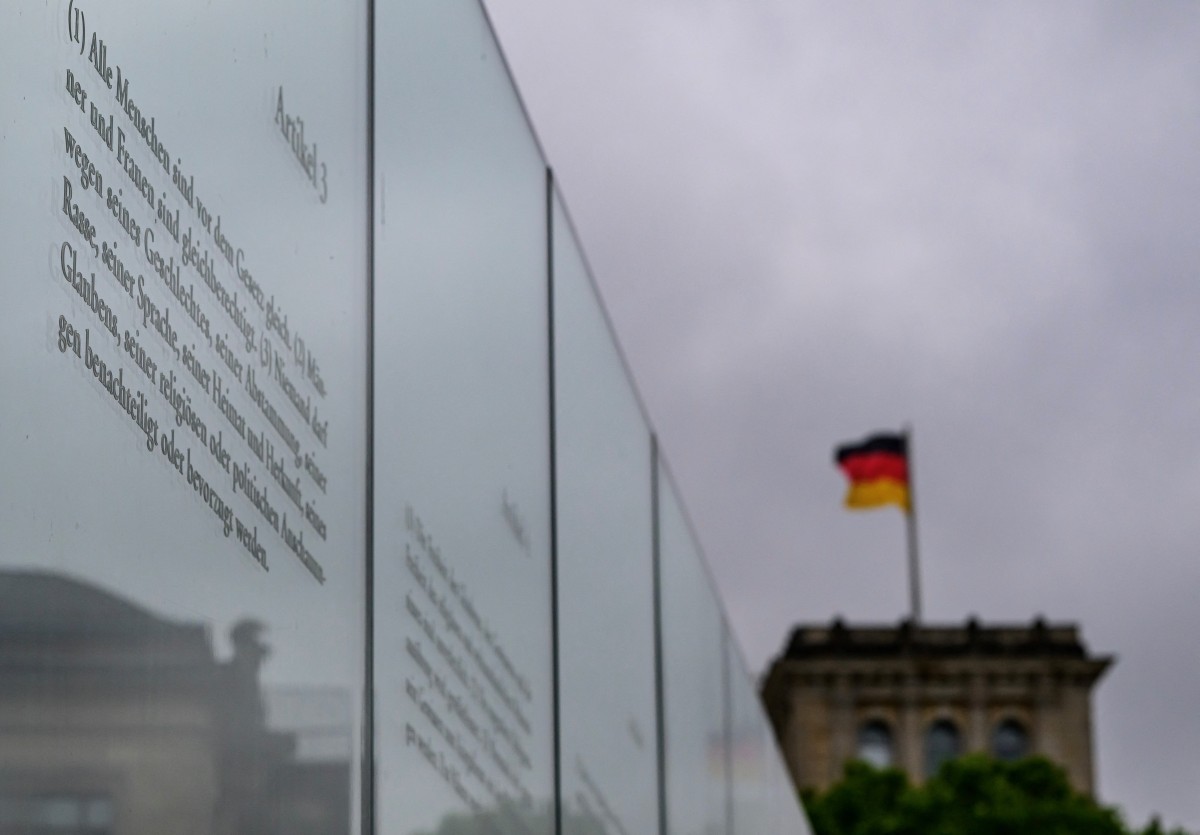
Answer: b) Grundgesetz
The Basic Law came into effect on May 23rd, 1949 in the Federal Republic of Germany (then West Germany). The Volksgesetz is the people's law, the Bundesgesetz is federal law and the Deutsches Gesetz is German law.
5. Who is usually voted in as president of the German Bundestag?
a) The oldest member of parliament
b) The state premier of the largest federal state
c) The former chancellor
d) An MP from the largest party in parliament
Answer: d) An MP from the largest party in parliament
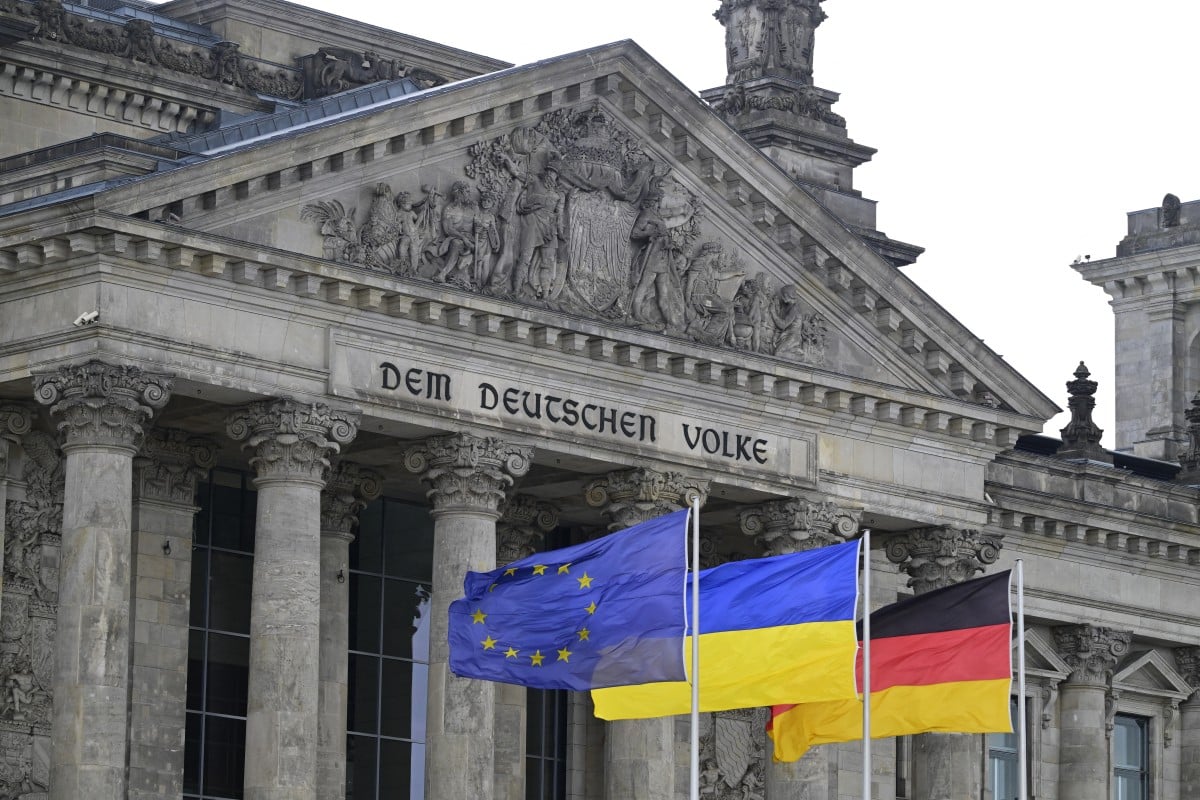
The president has to be a member of the Bundestag and is generally a member of the largest parliamentary party. Bärbel Bas (SPD) has been president of the Bundestag since 2021. Her job as the second-highest ranking administrator role in the country (the chancellor is the third) involves chairing the Bundestag sessions, occupying a similar role to the speaker of the house in the UK.
There is a role called Alterspräsident – the father of the house. This used to be the oldest member of the Bundestag by age, but since 2017, it's been filled by the longest-serving member. They supervise the election of the president of the Bundestag.
6. A party in the German parliament wants to get rid of the freedom of the press. Is that possible?
a) Yes, if more than half of the MPs vote in favour.
b) Yes, but at least two thirds of MPs have to vote in favour.
c) No, because only the Bundesrat (upper house) can do that.
d) No, because freedom of the press is a fundamental right and cannot be removed.
Answer: d) No, because freedom of the press is a fundamental right and cannot be removed.
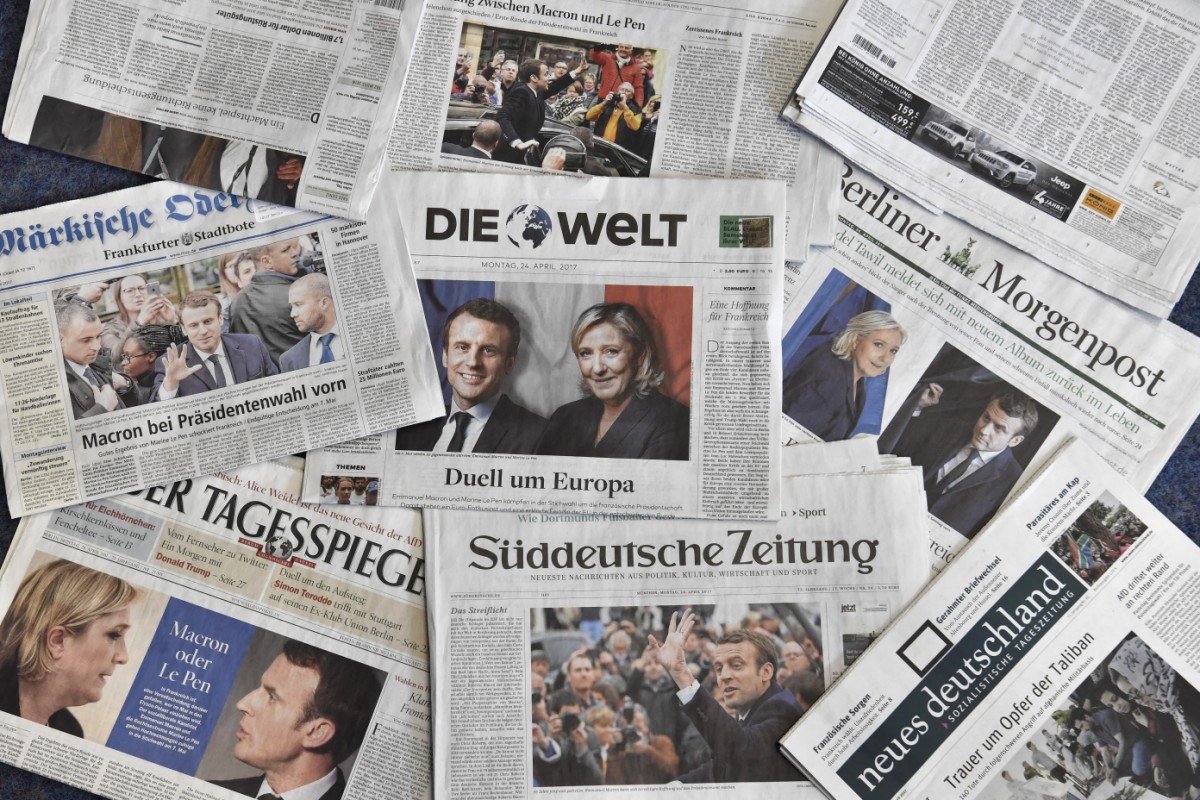
The freedom of press, speech and opinion are enshrined in Germany's constitution (with certain limits, such as hate speech and holocaust denial). Article 5 of the Basic Law, which was passed in 1949, states: "Every person shall have the right freely to express and disseminate his opinions in speech, writing and pictures and to inform himself without hindrance from generally accessible sources. Freedom of the press and freedom of reporting by means of broadcasts and films shall be guaranteed. There shall be no censorship."
7. Which of the following isn’t part of the statutory social security system in Germany?
a) Life insurance
b) Health insurance
c) Unemployment insurance
d) Care insurance
Answer: a) Life insurance
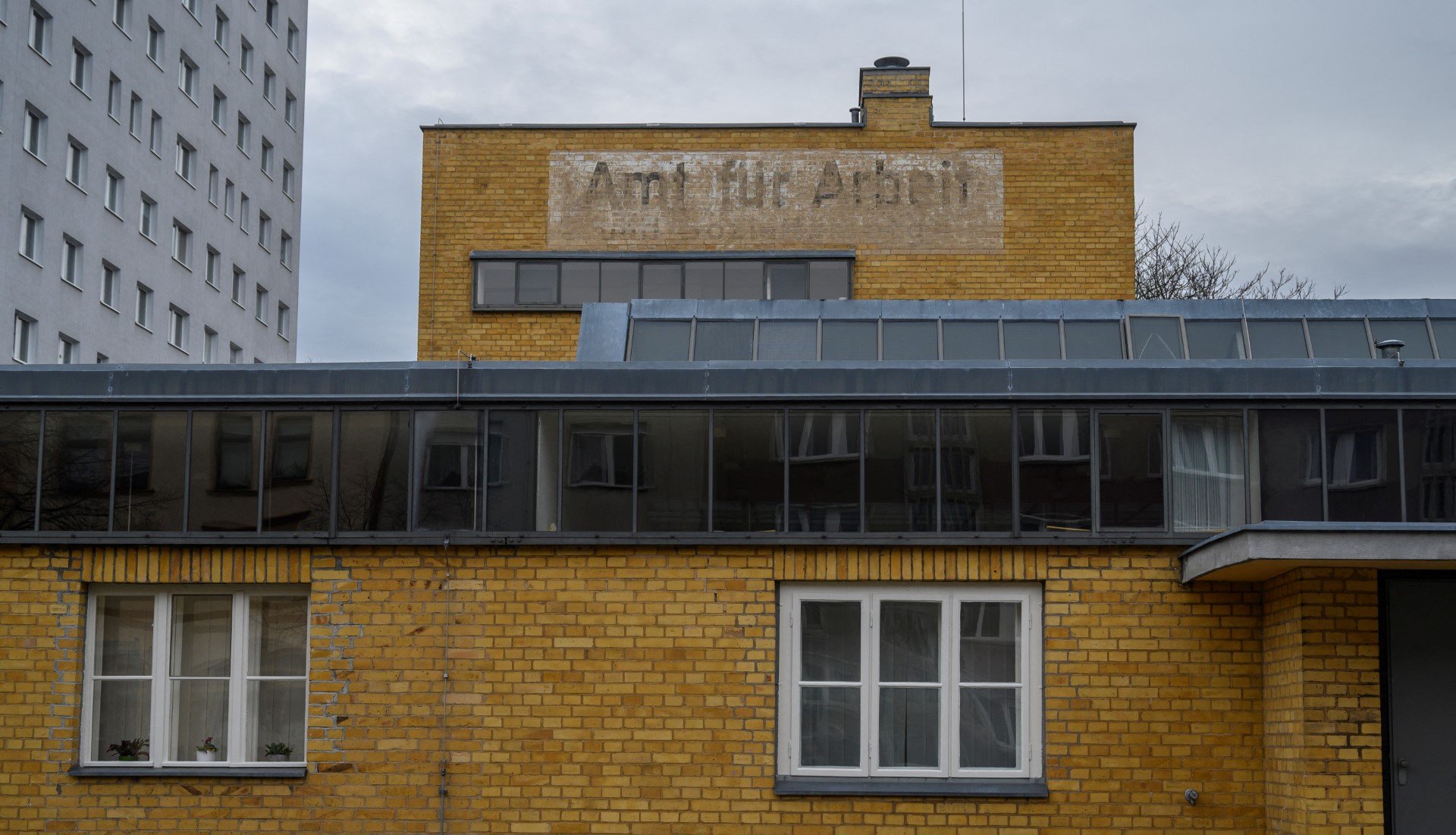
Life insurance (Lebensversicherung) is one of the few insurances that doesn't form part of the statutory system. Health insurance (Krankenversicherung), unemployment insurance (Arbeitslosenversicherung) and care insurance (Pflegeversicherung) are all included in this. There's also pension insurance (Rentenversicherung) and occupational accident insurance (Unfallversicherung).
8. What do Germans mean when they talk about "zero hour"?
a) This refers to the time after the fall of communism in 1989.
b) This denotes the first day of the Second World War.
c) This describes the beginning of the reconstruction efforts at the end of the Second World War.
d) This refers to the hour when the clock is changed from summer time to winter time.
Answer: c) This describes the beginning of the reconstruction efforts at the end of the Second World War.
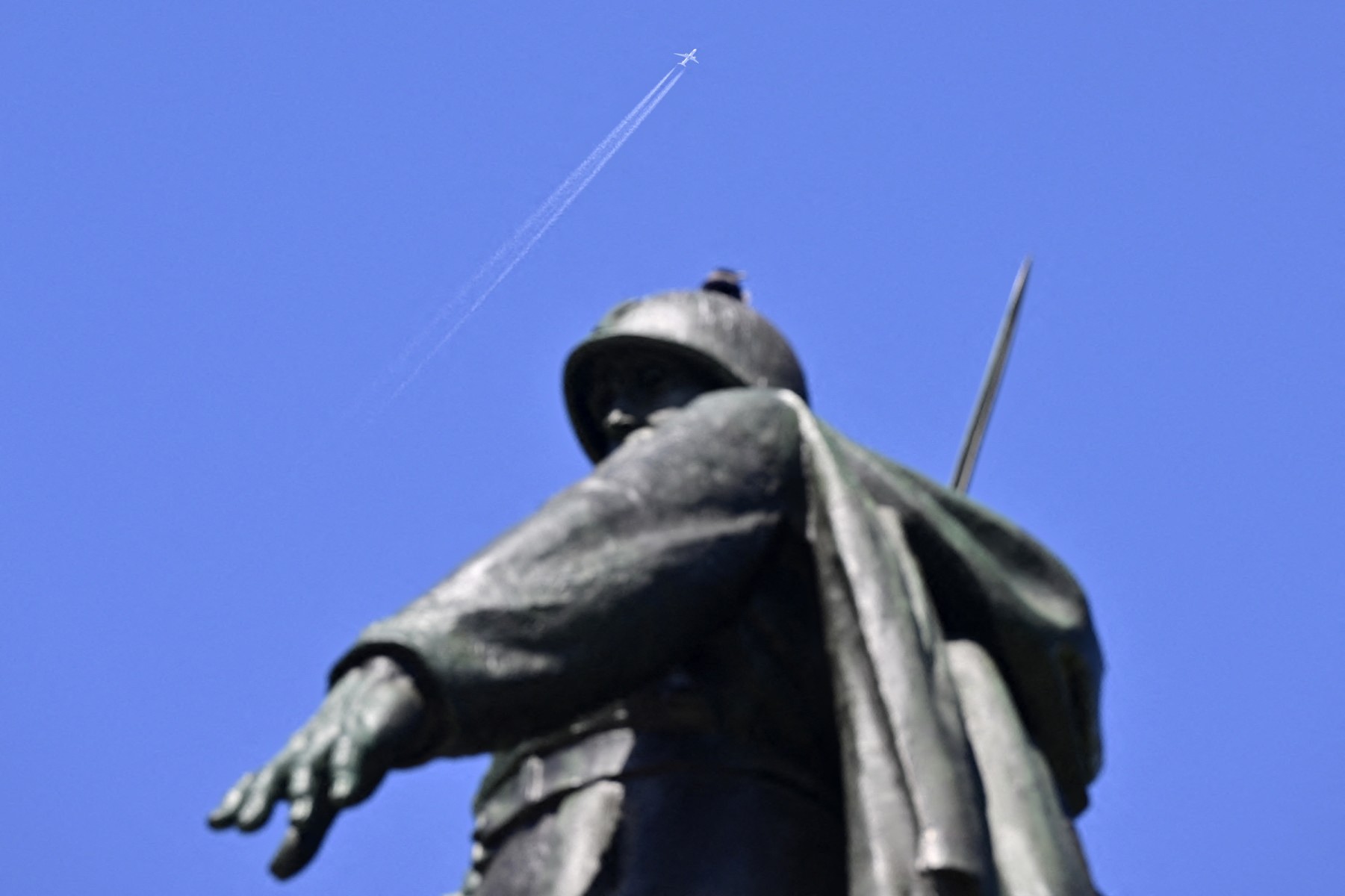
Zero hour or Null Stunde refers to the time at which combat ceased – 11.01pm on May 8th, 1945, marking the official end of the second world war in Europe. It also describes the immediate post-war period when Germany had to rebuild itself from the devastation of war and the start of a new non-Nazi Germany.
9. Which of these rights is enshrined in the German constitution?
a) The right to a home
b) The right to debate
c) The right to own a weapon
d) Freedom of faith and of conscience
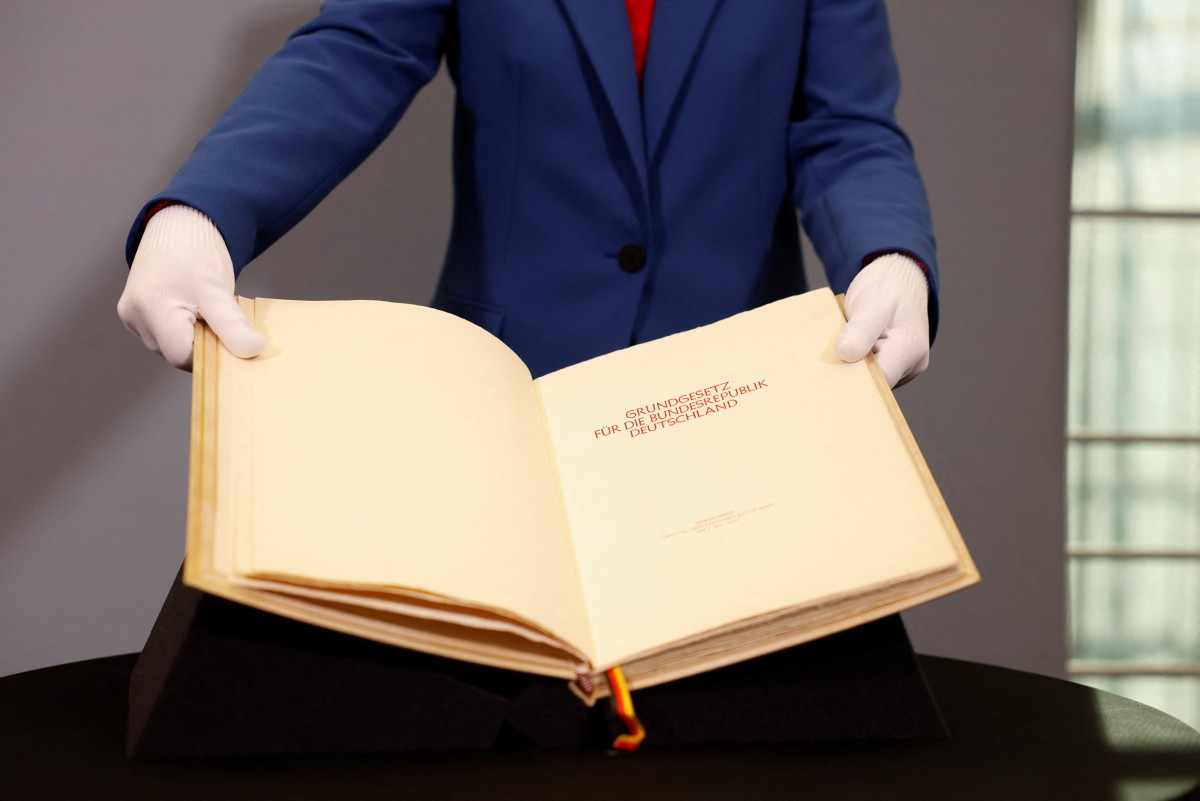
Answer: d) Freedom of faith and of conscience
Article 4 of the Grundgesetz provides that:
- Freedom of faith and of conscience and freedom to profess a religious or philosophical creed shall be inviolable.
- The undisturbed practice of religion shall be guaranteed.
- No person shall be compelled against his conscience to render military service involved the use of arms.
10. Who wrote the lyrics to the German national anthem?
a) Friedrich von Schiller
b) Clemens Brentano
c) Johann Wolfgang von Goethe
d) Heinrich Hoffmann von Fallersleben
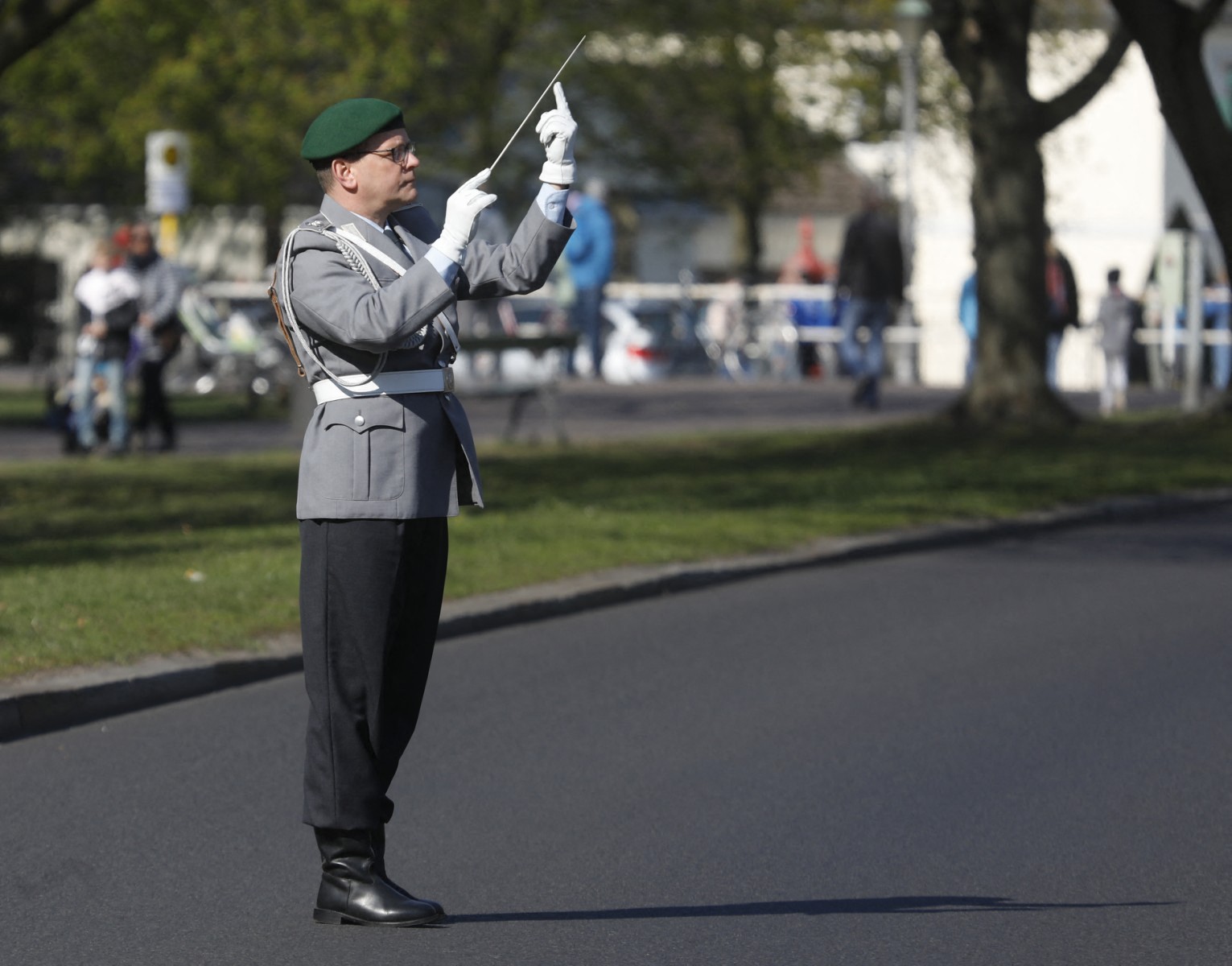
Answer: d) Heinrich Hoffmann von Fallersleben
Von Fallersleben was a German poet who lived from 1798 to 1874. The third stanza of his Das Lied der Deutschen is now the country's national anthem. But he didn't write the music, he set the lyrics to the hymn Gott erhalte Franz den Kaiser, composed by Austria's Joseph Haydn.
The whole 'Song of the Germans' used to be sung, but the first two verses were dropped after the country's reunification, due to their associations with Nazism.
11. In 1953, an uprising took place in the GDR that is still commemorated with a public holiday in Germany. On what date did the uprising happen?
a) May 1st
b) June 17th
c) July 20th
d) November 9th
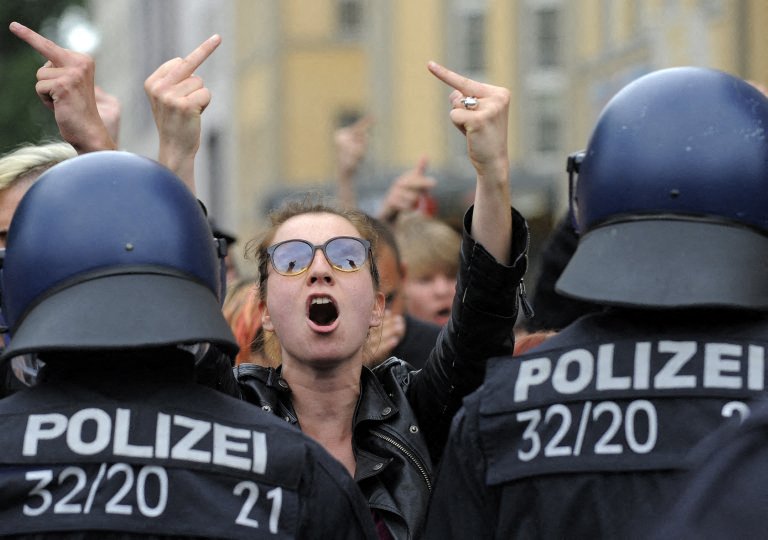
Answer: b) June 17th
On June 17, 1953, in the former east German Democratic Republic (GDR), a strike by East Berlin construction workers provoked a widespread uprising against the regime, which was violently suppressed. The date became a national holiday in West Germany until the reunification of Germany.
12. The Federal Republic of Germany is currently divided into…
a) Federal, state and local governments
b) 16 cantons
c) An eastern and a western state
d) Four occupied territories
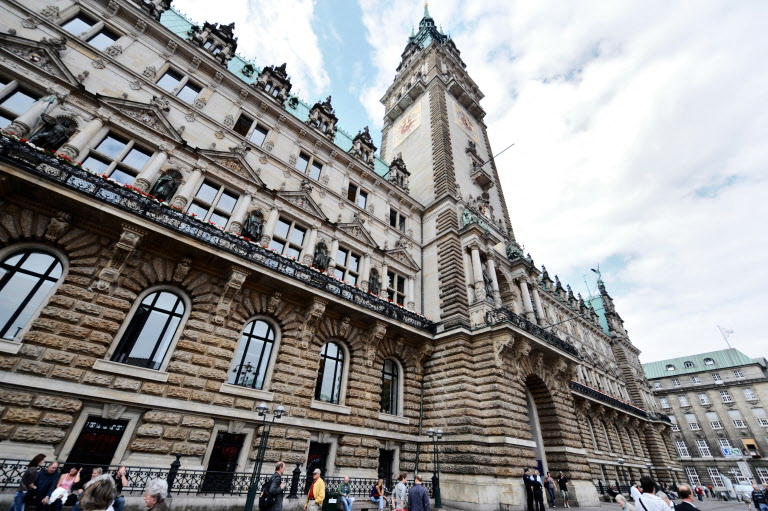
Answer: a) Federal, state and local governments
Germany is a federal state that's made up of 16 states. There are federal laws, which apply at national level, and state laws that are valid in the respective state. Germany also has around 11,000 municipalities, including city states like Berlin and Hamburg and smaller districts and parishes. Municipalities hold regular local elections for the mayor and municipal council, which takes decisions on matters that impact local people.
Germany does have 16 states, but it's Switzerland that has cantons (26 of them).
After the Nazis were defeated and the second world war came to an end, Germany was split into four occupation zones, each ruled by one of the Allies. Later, West and East Germany were established (in 1949) and remained two separate states until reunification in 1990.
13. In what way could a change in government at state level influence politics on a federal level?
a) The majority in the Bundestag could change and make it harder to govern
b) The majority in the Bundesrat could change and make it harder to govern
c) If the state is wealthy, it will be easier to govern
d) New parties could enter the Bundesrat and make it easier to govern
Answer: b) The majority in the Bundesrat could change and make it harder to govern
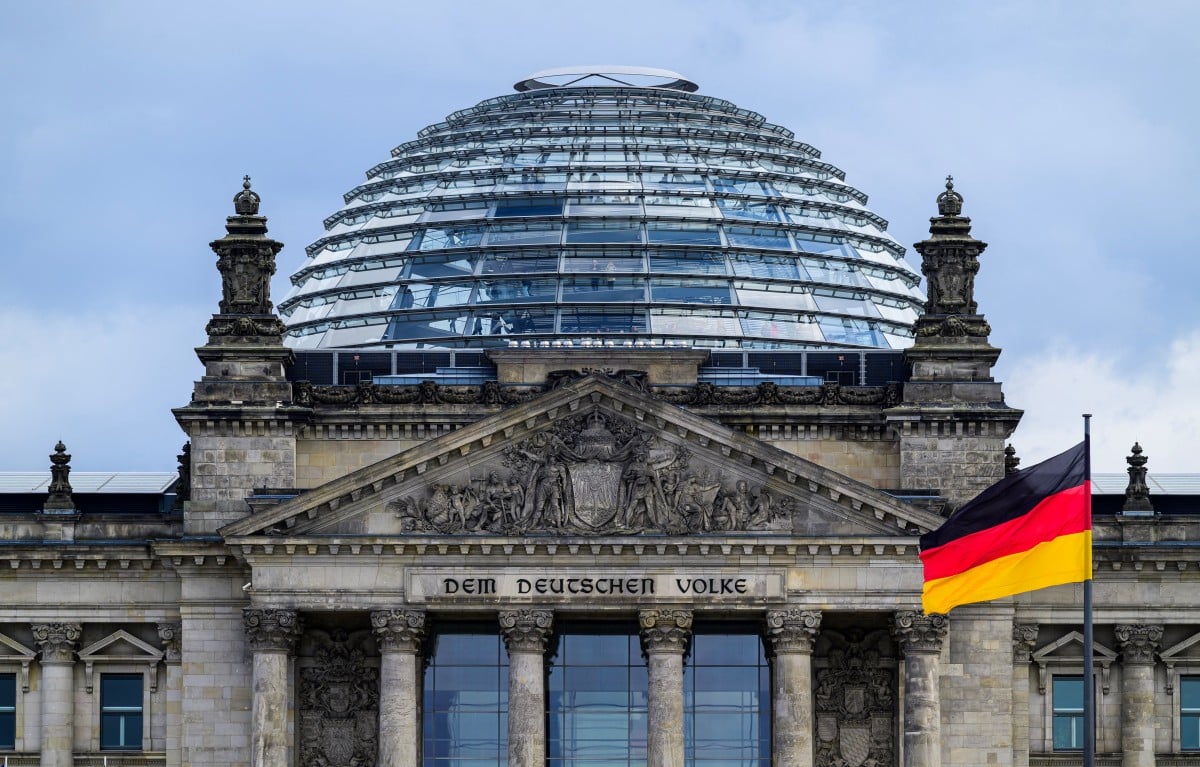
To answer this question, you need to understand the difference between the Bundesrat and the Bundestag. The Bundesrat – or upper house – is made up of delegates from Germany's 16 state governments who represent their respective states' interests at a national level. It's essentially a link between the states and the federal government. Each state has between three to six votes (depending on its size) and because states hold elections at different times, the composition of the Bundesrat often changes.
The Bundestag – or lower house – is Germany's federal parliament. It's made up of ministers who are directly elected by the people. Both the Bundesrat and the Bundestag make Germany's laws together, but not all laws need the Bundesrat's consent.
14. Which of the following federal states was part of the GDR?
a) Hesse
b) North Rhine-Westphalia
c) Saarland
d) Saxony-Anhalt

Answer: d) Saxony-Anhalt
Saxony-Anhalt was a part of the state of East Germany until this was dissolved in 1952. The central German state is bordered by Brandenburg, Saxony, Thuringia and Lower Saxony.
15. A young woman, aged 22, lives with her partner in Germany. Her parents disapprove of the man she is living with. What can they do?
a) They must respect the decision of the adult daughter.
b) They have a right to take their daughter back to the family home.
c) They can go to the police and report their daughter.
d) They can find a new partner for their daughter.

Answer: a) They must respect the decision of the adult daughter.
A person is considered to be an adult at 18 in Germany and do all the things adults in Germany are allowed to (but perhaps shouldn't) do, including get married, drink alcohol, gamble, and, of course, vote. Parental custody ceases at 18, so a 22-year-old is free to make their own decisions independently of their parents.
Interestingly, in the eyes of criminal law, 18- to 21-year-olds are still considered to be "heranwachsender" or adolescents, and could potentially be treated more leniently.
16. Frau Frost is a full-time employee in an office. Which of the following does not get deducted from her salary?
a) Income tax
b) Contributions to unemployment insurance
c) Contributions to health insurance and pensions
d) VAT
Answer: d) VAT
Value-added tax is a bit like a sales tax that's added to goods or services people buy. So while you'll be paying it indirectly when you purchase something, it is isn't something that gets taken off your salary.
Most German companies have to charge VAT at 19 percent on their goods, although there are some exemptions, for smaller businesses, for example.
17. Which cities have the largest Jewish communities in Germany?
a) Berlin and Munich
b) Hamburg and Essen
c) Nuremberg and Stuttgart
d) Worms and Speyer

Answer: a) Berlin and Munich
Berlin has Germany's largest Jewish community with some 12,000 people and eight synagogues. Munich comes second with a population of approximately 10,000 people.
18. What is an example of anti-Semitic behaviour?
a) Attending a Jewish festival
b) Criticising the state of Israel
c) Holocaust denial
d) Playing football against a Jewish team
Answer: c) Holocaust denial
In Germany, it's a crime to deny the Holocaust. This is covered by Section 130 of the German Criminal Code under 'incitement to hatred' and is punishable by a fine or up to five years in prison.
READ ALSO: Why Germany is shaking up citizenship test questions
So how did you do? Let us know in the comments.
With reporting by Imogen Goodman
Comments (2)