
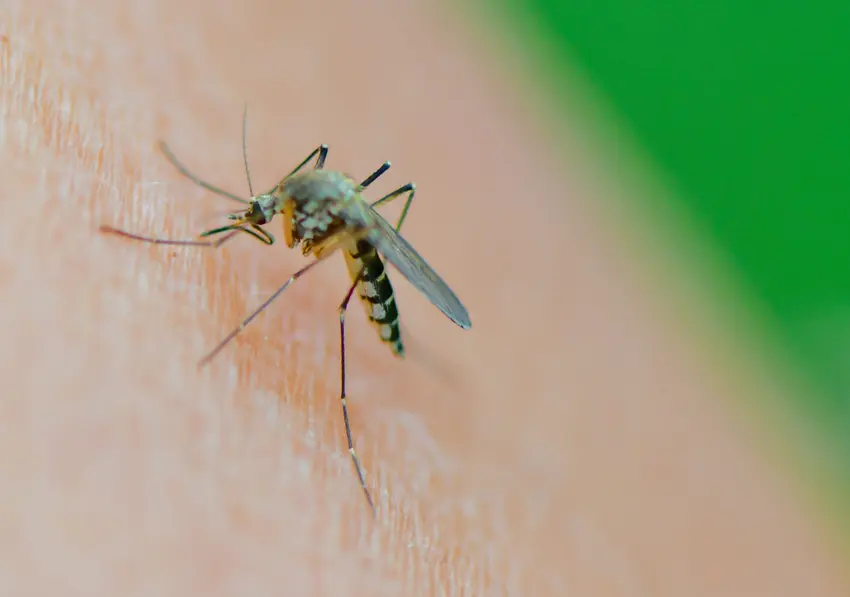
The president of the Robert Koch Institute (RKI), Lothar Wieler, has said that he expects an increase in the spread of tropical diseases in Germany as a result of climate change.
He told the newspapers of the Funke Mediengruppe that climate change is leading to an expansion of the habitats of mosquitoes and ticks in Germany. "Many mosquito and tick species can transmit viral, bacterial and parasitic infectious agents," he said.
The reproduction of viruses in mosquitoes is temperature-dependent, so with higher temperatures over longer periods of time, the probability of infections from mosquito bites increases.
READ ALSO: Ticks in Germany: How to avoid them and what to do if you get bitten
Wieler named Zika, dengue and the West Nile virus, as well as early summer meningoencephalitis (FSME) as examples of viruses that could soon be on the rise in Germany and said there was even a possibility that Malaria could appear in the country.
Therefore, he said, it is crucial to raise awareness of such diseases in the medical profession in this country. "This is also an important concern for the RKI,” he said.
The FDP health politician and physician Andrew Ullmann also expects that, due to the climate-induced spread of tick and mosquito populations, diseases will increasingly appear in Europe and Germany "that were previously unknown in our climatic regions".
READ ALSO: Monkeypox in Germany: Two teens ‘among new infections’
Ullmann called for a government response to the development. What is needed is "further research and innovation initiatives to better understand the effects of climate change on the spread of pathogens and to take effective measures," he said.
Comments