
Gazprom said it was cutting daily gas deliveries via the Nord Stream I pipeline, which runs through Germany, to 33 million cubic metres a day - about 20 percent of the pipeline's capacity - from Wednesday.
The company said in a statement on Monday that it was halting the operation of one of the last two operating turbines due to the "technical condition of the engine".
The supplies from the Portovaya compressor station will be slashed from 7am Moscow time Wednesday, the company said.
However, the German government said there was no technical justification for Gazprom's decision.
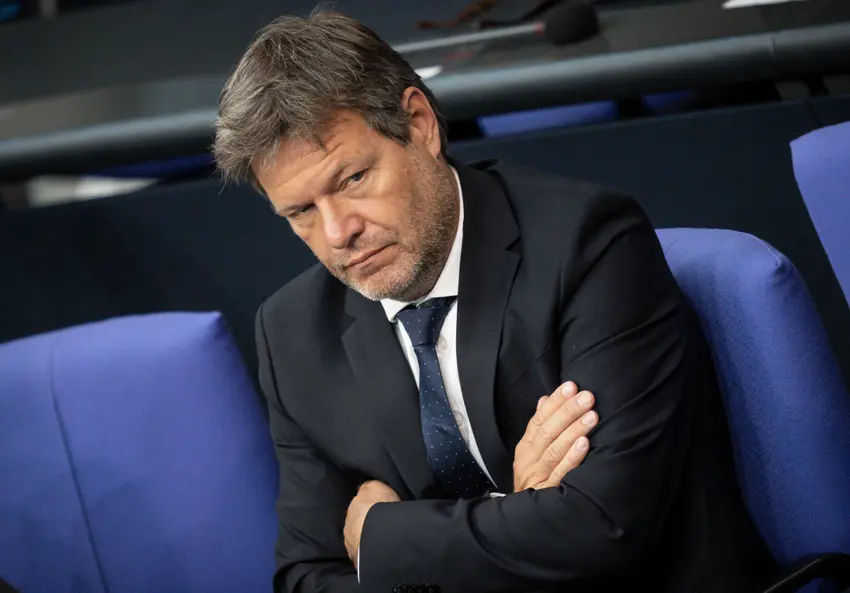
Economy and Climate Minister Robert Habeck said Germany was working on bringing down gas consumption. Last week Habeck revealed a range of measures aimed at cutting energy to save for winter.
"We are in a serious situation. It is about time that everyone understands that," Habeck told German broadcaster ARD.
READ ALSO: 'Difficult winters ahead': Germany sets out emergency energy saving measures
Habeck, of the Greens, said Germany has to stand together and say: "Yes, Putin has the gas, but we have the power."
The news comes just six days Russia resumed supplies through the Nord Stream 1 pipeline after a break, but only at 40 percent of the pipeline's capacity.
The latest curtailment is "no surprise now, although it is always infuriating that Gazprom puts forward other reasons", Habeck said.
He also lamented that "they don't even have the guts to say "we are in an economic war with you'".
Habeck accused Russian President Vladimir Putin of playing a "perfidious game".
He said the Kremlin leader's strategy was transparent: "He is trying to weaken the great support for Ukraine and drive a wedge into our society."
"To do this, he is fuelling uncertainty and driving up prices," added Habeck. "We are countering this with unity and concentrated action. We are taking precautions so that we can get through the winter."
Ukraine's President Volodymyr Zelensky said it was "gas blackmail" against Europe.
In his nightly address, Zelensky said Putin was deliberately making it difficult for Europe to prepare for winter.
Since Russia invaded Ukraine in February the price of wholesale gas has rocketed upwards, resulting in a knock-on impact on consumer energy bills and rising inflation.
Comments (1)