
A chance to explore Germany
Although we’re still in the pandemic, it feels like life in Germany is beginning to feel a bit more like it did before Covid hit us. With many restrictions easing, people have been really enjoying spring and looking forward to summer. So it’s no surprise that many of you have been reading our stories about travel. Our articles on the €9 monthly ticket as well as train travel in Germany and beyond have been particularly popular. The public transport offer will also give many people the chance to explore closer to home. I know I am really looking forward to seeing more of Germany, whether it’s around the Brandenburg area near where I live, or going further afield (Heidelberg, I’m looking at you). I’d love to know if you want to use the €9 ticket or if you have any plans to explore Germany this summer. Please fill in this survey on the €9 ticket (it’s open until Monday) and get in touch with your opinions or other travel plans by emailing news@thelocal.de. Thanks so much to those of you who’ve already been in touch.
Tweet of the week
The German love of cash or Bargeld in 2022 while the rest of the world goes contactless is indeed one of life’s greatest mysteries, as this tweet highlights. We’ll definitely be using our ‘ask a German’ series to try and find out more about this habit…
https://twitter.com/JoeMillerJr/status/1523195453227298816?s=20&t=wcfp6aaX-68fyDam8JlDMg
Where is this?
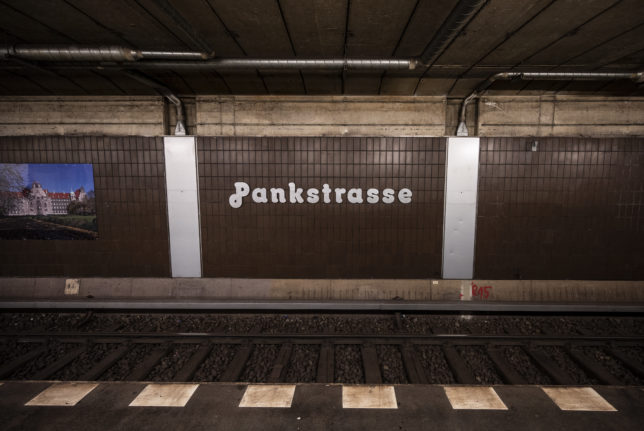 Photo: John MACDOUGALL / AFP
Berliners or those who’ve visited the capital may recognise this U-Bahn station which is situated in the north. The station is actually part of the Pankstrasse nuclear fallout shelter. Built in 1977 during the Cold War, this “multi-purpose” facility was intended to protect the citizens of West Berlin in case of a nuclear conflict. The bunker serves not only as an U-Bahn stop for commuters but also, in an emergency, could have sheltered 3,339 people for up to two weeks. For those interested, we’d recommend checking out a tour like those run by Berliner Untervelten E.V. Due to Vladimir Putin’s invasion of Ukraine, which has led to massive tension between Europe and Russia, the tours have become even more topical.
Did you know?
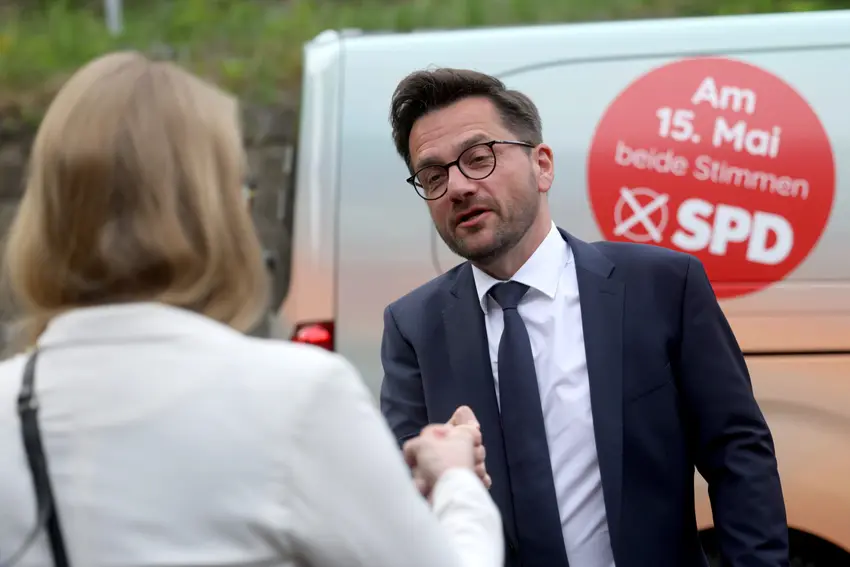
Since people in the state of North Rhine-Westphalia (NRW) or Nordrhein Westfalen are going to the polls this Sunday, we thought we’d look at some facts about this western state. This is Germany’s most populated state with about 17.9 million people. It’s also home to the most foreigners - around 2.5 million non-Germans live in NRW. With cities such as Cologne, Düsseldorf, Dortmund and Essen, the state is a culturally rich and diverse part of Germany. Many people don’t know that Bonn was the capital of the former West Germany all the way up to reunification, before Berlin took the title. Many federal buildings and institutions still have their base there.
The state is led by Christian Democrat Hendrik Wüst who took over last year after Armin Laschet resigned as state premier following his unsuccessful federal election bid. The CDU is currently in a coalition with the Free Democrats. But it looks like change is on the horizon. The CDU and the Social Democrats are both polling at around 30 percent, with the CDU having a slight lead of two to four percentage points. Meanwhile, the FDP appears to have lost support. It’s going to be a tight race - and the Greens party - polling at around 17 percent - will likely be the kingmakers. Important topics for voters include the future of German industry, and how to secure jobs in the move to renewable energy. Many people see this election as a test for the federal government which is led by the SPD’s Olaf Scholz.
Thanks for reading,
Rachel and Imogen @ The Local Germany
This article is also sent out as a weekly newsletter just to members every Saturday. To sign up and get it straight into your inbox just go to your newsletter preferences.
Comments