
As most people agree, German can be a painful language to learn. But some of this pain fades away when you come across a word or phrase that perfectly captures the moment.
As spring finally gets underway and temperatures rise all over Europe, now is the ideal time to get familiar with some of these stunningly apt words and phrases. Some of them are very specific, but all of them are great descriptions of this time of year.
Of course, some idioms shouldn't be literally translated - but we'll do it just for the fun of it. After all, it's fun sometimes to, as the Germans say, only understand train station.*
READ ALSO: These eight words show just how different German and Austrian Deutsch can be
Here are a few expressions and words that you will probably hear, or might even incorporate, in the following months:
Sauheiß or Affenhitze
Sauheiß is literally "pig hot", and Affenhitze would be "monkey heat".
Both can be used for that extreme heat that is becoming ever more common during European summers.
Das Kaiserwetter
Literally, the "Emperor weather", or something like a weather fit for an Emperor. Usually, they use that for those days when the sun is shining bright, and the skies are cloudless blue.
READ ALSO: Frosty German sayings that’ll make you a winter wordsmith
Some say the idiom comes from Austria. Emperor Franz Josef had an August summer birthday and enjoyed celebrating on gorgeous sunny days.
Etwas Sonne tanken
To fill up your tank with the sun.
It is a very typical sentence, especially by the end of summer days, as winter looms closer and Austrians, Germans, and Swiss know that they need to "stock up" in that summer feeling - and vitamin D - to face the cold and dark days (weeks and months) ahead.
Es gibt kein schlechtes Wetter, es gibt nur falsche Kleidung
This is a very typical expression and a life lesson, really. It means "there is no bad weather, only wrong clothes" and it's usually said during winter and cold days.
The life lesson could also be employed during summer - at least to a certain degree, unless you go for the FKK (frei korper kultur), of course.
READ ALSO: Eight unique words and phrases that tell us something about Germany
Die Sonne lacht
Literally means the sun is smiling or laughing, and it's used for when the sun is shining. A less sweet version would be "Die Sonne scheint" (the sun is shining).
Badewetter
When the weather is hot and sunny as well, there are few things Germans like to do more than take a dip in an idyllic lake or even (for the brave) the North or Baltic Sea.
No matter what part of Germany you find yourself in, there are bound to be at least a few beautiful lakes nearby that are perfect for swimming, complete with options of fun waterslides for kids and artificial beaches. The many public pools and parks options also allow for fantastic swimming opportunities for the city dwellers, so don't miss out when it's Badewetter (swimming/beach weather).
READ ALSO: The five best Bavarian lakes for a spring day trip
April April, der macht was er will
Watch out for those days when sun and rain take turns for hours on end, or when it's the middle of April, and it just starts snowing. This is when Austrians will typically shrug and say: April, April, it does what it wants to.
Auf der Sonnenseite des Lebens stehen
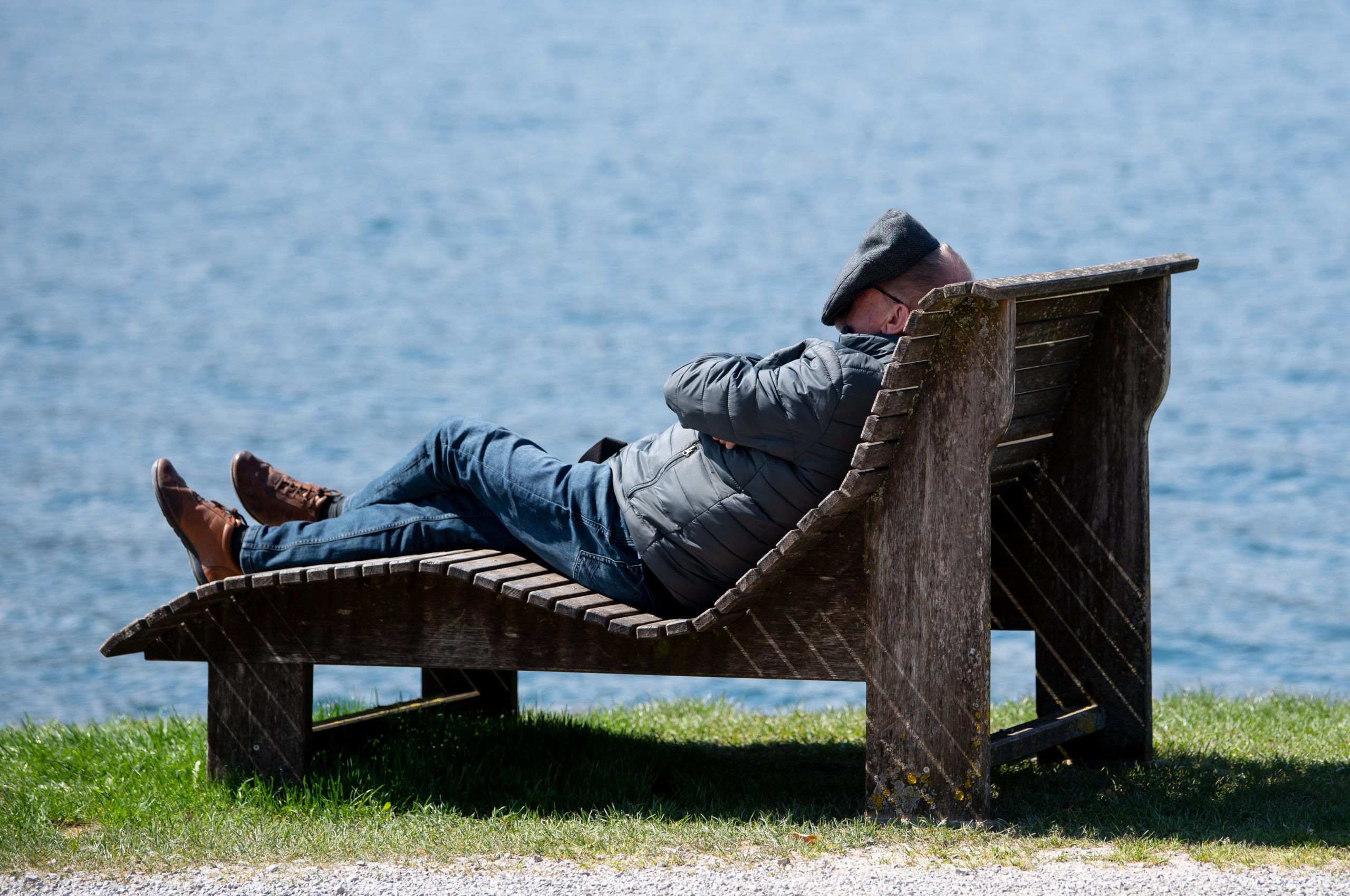
This literally means "to be on the sunny side of life" and is used to say that someone has a nice life - who wouldn't when standing in a sunny place?
Geh mir aus der Sonne!
Finally, a good expression for those tired of being bothered by someone else. After all, nobody wants to share the sun with an annoyance - or find that same annoyance casting a shadow over their sun-lounger. It means something like "get out of my sun" and is used in the same way as "get out of my face".
READ ALSO: Why traditional German names are often used as insults
*Ich verstehe nur Bahnhof is a very famous German idiom that is literally translated as "I understand only train station". It means "I don't understand a single thing".
Comments