
What is duzen?
Duzen is the verb signifying using the informal “you”. Siezen on the other hand is using the formal “you” and is conjugated with the same forms as sie (they, 3rd person plural). But when do you use which form?
In the English language it is never an issue but Germans choose the Sie when addressing people you may not know or to show respect, such as to elders or teachers, and can be both singular and plural. Du on the other hand is used with people you know well, friends and family, or with children.
It is often hard to decide which form of you to use, and it is not rare to ask which “you” one prefers or be given permission to use the informal du. To be on the safe side, Siezen is often recommended.
The Duden dictionary explains that “in principle, the correct form of address in business life or with new contacts is ‘Sie’, and especially in a professional environment this maintains a necessary and useful distance. It is possible that people feel harassed or disrespected if they are addressed as ‘du’ without being asked.”
The decision is not always so straightforward
There are also different mixed forms of formal and informal depending on the region: the “Hamburger Sie” involves addressing a person with “Sie” and their first name, and the “Münchner du” involves addressing with the surname while simultaneously using the informal du.
It is also not uncommon to use the capitalised Du form to indicate formality, without the use of siezen.
READ ALSO: To du or not to du? How to crack Germany's tricky etiquette dilemma
The end of Sie?
Making the leap from Sie to du has historically been a significant moment in any interpersonal relationship in Germany.
In recent years, however, the use of the formal Sie is becoming a lot less common. On social media such as Facebook or Twitter the du form has long been the go-to. The more personal form of address could help break down rigid hierarchies and creates a closeness and familiarity, as opposed to the distant Sie.
Back in 2003, Ikea was the first business in Germany to start addressing their customers as du, citing the traditions of their Swedish origin. Many companies, such as Ikea, Adidas, Apple and Aldi have since followed suit and it seems Germans are getting more on board. In the German cosmopolitan capital Berlin, this is especially true.
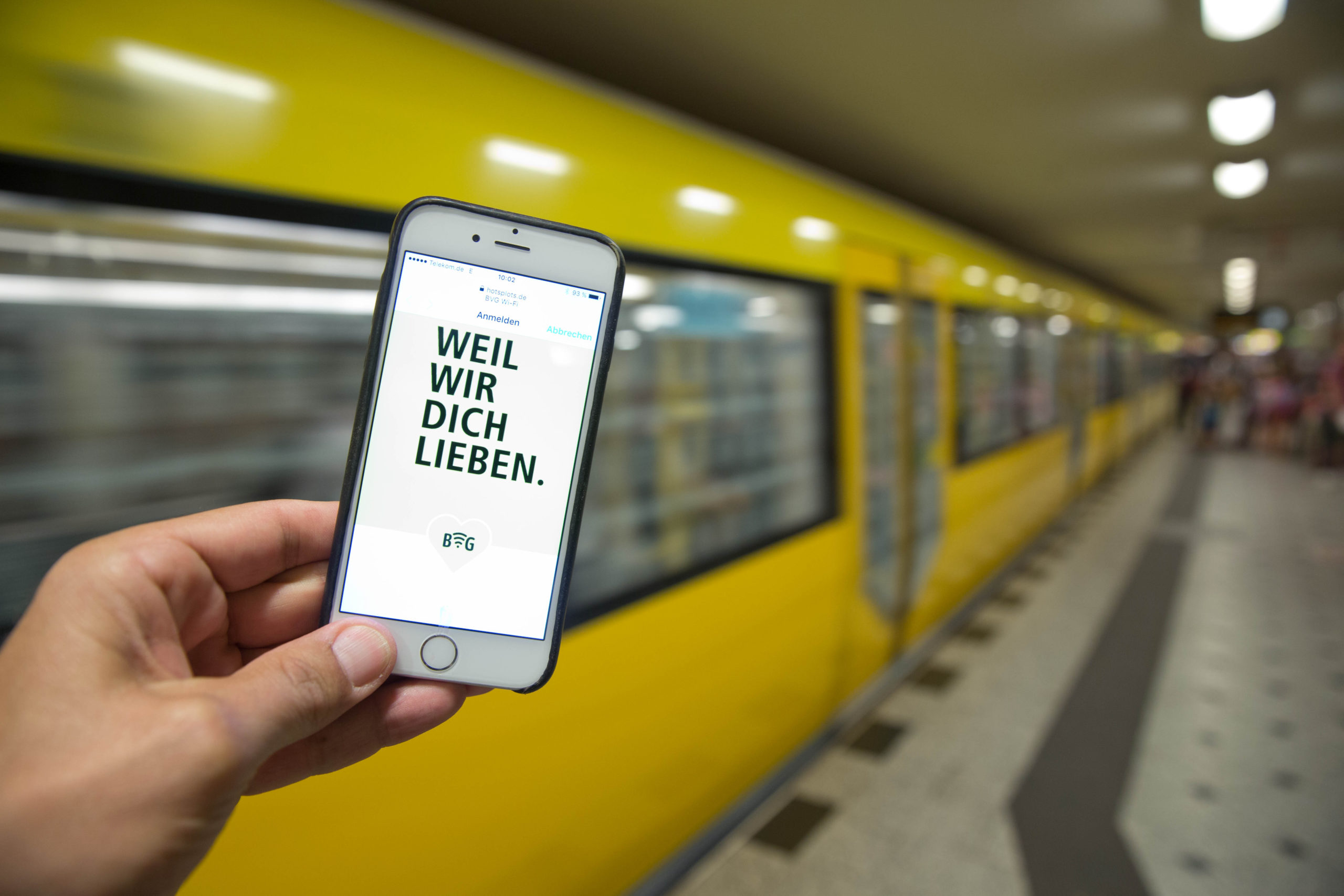
Berlin’s public transport company (BVG) addresses its customers with du – their slogan being “Weil wir dich lieben” (“Because we love you”). Petra Nelken, spokesperson of the BVG, explained that the duzen in their campaigns worked because the company does not take themselves too seriously. She also added that the BVG was dealing with a new generation, in which the du is becoming more natural.
Germany’s career network Xing has similar views, believing that a cultural change is constantly developing, before deciding to address their users exclusively with du as a way to create a better togetherness in the professional environment. Linguist Stefanie Stricker from the University of Bamberg also pointed to this language change, especially in the current generation.
It seems however, that even the young generation lean towards using the formal Sie in formal situations. Plus, Siezen is not only a German thing, with many other languages having a formal “you”, and lots of Germans continuing to view its usage with importance. And so while it is becoming less common, Sie is not dying out by any means.
Examples:
Wie geht es dir?
How are you? (informal)
Wie geht es Ihnen?
How are you? (formal)
Bist du schon angekommen?
Have you already arrived? (informal)
Sind Sie schon angekommen?
Have you already arrived? (formal)
Hamburger Sie
Thomas, können Sie mir helfen?
Thomas, can you help me?
Münchner Du
“Müller, kannst du mir helfen?”
Müller, can you help me?
Comments