
The traffic light coalition - made up of the Social Democrats (SPD), Greens and Free Democrats (FDP) - wants to introduce a new heating allowance for housing benefit recipients by March.
"Legal details are still being clarified, but the heating allowance will definitely be introduced in this quarter," FDP housing policy expert Daniel Föst told the Augsburger Allgemeine on Monday.
"Time is pressing," Föst said. "It should be decided on as early as February or in the first week of March."
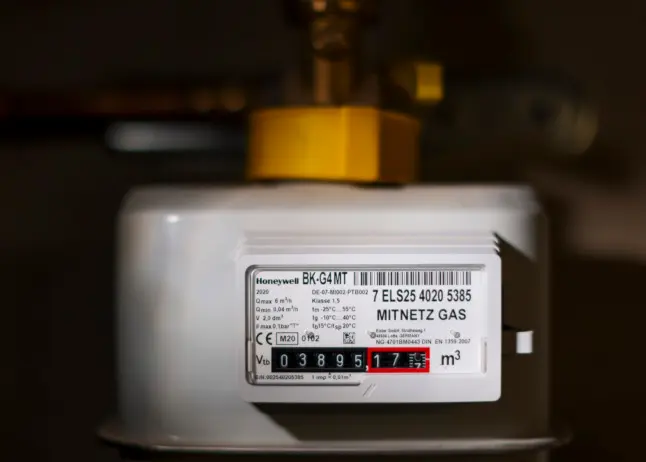
Energy bills in Germany rose steeply last year amid issues in the supply of natural gas and rising wholesale prices, with some families paying hundreds of euros more per year at the end of 2021 than the year before.
READ ALSO: Why households in Germany face even higher electricity bills
The government has already slashed the Renewable Energy Act (EEG) surcharge by more than 40 percent and plans to scrap it entirely by January 2023 in an attempt to ease the burden of additional energy taxes on households.
But a recent survey by price comparison site Verifox found that these savings hadn't been passed onto customers by the energy providers. Instead, a 35 cents per kilowatt hour in January, electricity prices were higher than ever before.
"The extreme increase in energy costs is burdening many households," Föst said. "We are therefore working on many issues at the same time. However, there is no perfect solution at the push of a button."
According to an initial bill by Construction Minister Klara Geywitz (SPD), low-income households living alone should receive a subsidy of €135 in summer to help with their energy costs. For two-person households, a subsidy of €175 is planned, rising by €35 for each additional housemate. The definition of 'low-income' includes anyone who's received housing benefit for at least a month prior.
In the Green Party, however, disagreements have arisen over how to support low-income households quickly.
Ricarda Lang, who has just been elected party leader, told the Rheinische Post that she wanted income raised by the CO₂ tax to go directly to lower-income households to be used as an energy allowance.
However, Green Party parliamentary chair Katharina Dröge said other measures were needed in the short term to respond to high energy prices.
READ ALSO: Should Germany do more to support households with rising energy costs?
"These include the heating cost supplement for housing benefit recipients, an immediate supplement for families with low incomes and a fairer distribution of the CO₂ tax on heating costs between tenants and landlords," she explained.
The coalition is also discussing bringing forward the abolition of the EEG levy - a tax that is added to energy bills to fund renewable energy sources.
"We are currently examining whether and when this is possible," she said.
Useful vocabulary
Heating cost allowance - (der) Heizkostenzuschuss
to relieve - entlasten
housing benefit recipients - (die) Wohngeldempfänger
disunity / disagreement - (die) Uneinigkeit
We’re aiming to help our readers improve their German by translating vocabulary from some of our news stories. Did you find this article useful? Let us know.
Comments (1)