
Die Gurkentruppe, made up of the German terms for ‘cucumber’ (die Gurke) and ‘troop’ (die Truppe) literally translates to a 'troop of cucumbers'. It is generally used to refer to a group of people viewed as incompetent at carrying out a task.
Perhaps the most common translation into English of this word would be ‘a bunch of amateurs’. It can be used in a number of contexts, but is most commonly used to refer to situations in the workplace, sports or in politics where people with little sense or experience get in over their heads on a task.
In a country famed for its productivity, you wouldn’t expect this to be a popular addition to the roster of oddly specific and accurate German words, but it seems like even Germans have their workplace woes.
And in fact, this word has a certain efficiency and cleverness of its own. Cucumbers are the only vegetable really to be enjoyed whilst still unripe - similarly, the football team or cabinet of politicians that this term may be used to refer to are likely not experienced or mature enough to do their job correctly.
Particularly for sportspeople, the prospect of your team being described as a Gurkentruppe is a truly horrifying one. It is one of the many amusing sport-related pieces of slang terminology used in German.
By the way, another example is the haunting spectre of ‘Oma’ (grandma): if your team is performing particularly badly, Germans are wont to remark that their grandma could have done better than you. If a player fails to score what looked like an easy goal, you’ll hear resentful mutters of ‘den hätte sogar meine Oma gemacht’ (‘even my grandma could have done that’) across the pitch.
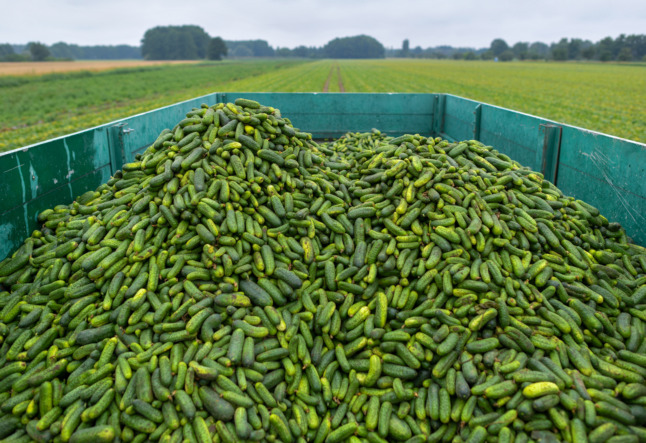
So although describing your least favourite players as cucumbers and comparing them to your gran might not seem like the most devastating of put-downs, in Germany they’re quite cutting insults. But the beauty of this particular misanthropic word is that it’s so versatile - slip it into your conversations about politics, sports, work, study and more to look like a real German pro.
READ ALSO: Borders to cucumbers: Five German words that come from Polish
Examples:
Der Politiker bezeichnete die Partei als Gurkentruppe.
The politician described the party as a bunch of amateurs.
Die Trainerin hätte ihre Gurkentruppe auf die Niederlage vorbereiten müssen.
The coach should have prepared her bunch of amateurs for defeat.
Comments (1)