
Cash will take a long time to disappear
Those of you who live in Germany will be well aware that you have to carry cash on you. Whereas lots of other countries like Sweden have been on the road to a cashless society for several years, Germany has always lagged behind. Eating out at a restaurant? In many places you'll need cash on you for that. Nipping to a Späti (nickname for late night shop in Berlin)? Yup, you'll probably have to stock up on Bargeld. If you try to pay with card at a Kneipe (pub) you'd probably be laughed out the door.
When the pandemic first hit there was a noticeable push in Germany to move to contactless payments. But soon after the first wave, the country was back to its old habits. Compare this to Sweden, for instance, where customers are urged to avoid cash all the time if it's possible.
Yes, we are living through a worldwide pandemic involving an infectious disease. Yes, we have been warned to constantly wash our hands and try and not touch things. No, Germany is not ready to part ways with Bargeld just yet. Will it ever?
READ ALSO: 'They thought it was witchcraft': The verdict on paying with card in Germany
... but Germany is embracing the digital side (slowly)
The impossible happened in Berlin when faced with a call to limit social contact - some things moved online. I know, it's hard to believe. Even I found it difficult to comprehend when I realised could register my new address in Berlin online instead of having to make an appointment and report at the office in real life.
Although things are slow, the pandemic seems to have given Germany a push into the 21st century. As well as some states allowing people to register online, other bureaucratic processes like applying for Elterngeld, or parental benefits, and requesting sick leave from doctors was also given a digital upgrade.
The pandemic also highlighted slow digital progress at schools in particular, such as a lack of Wi-Fi in classrooms and limited use of digital tools and media.
READ ALSO:
- 12 useful bureaucratic things you can now do online in Germany
- How the pandemic is bringing German bureaucracy out of the 1980s
Most of us can't wait for the day when German services accept agreements online. Currently in most cases we have to locate a printer, print a document out, sign it by hand and then send it in the post (or by fax).
 Fax machines are still commonplace in Germany, but there are more services moving online. Photo: picture alliance/dpa | Kay Nietfeld
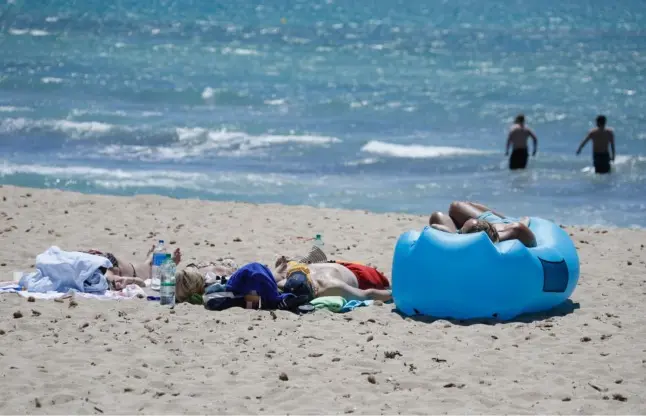
Nothing will get in the way of Germans and Mallorca
This one we learned during the now infamous Easter fiasco, which involved a lockdown that never happened and a grovelling apology from Chancellor Angela Merkel. Oh, and tens of thousands of tourists flying from Germany to Mallorca as Covid infections soared here.
Yes, you heard that right.
But arguably German authorities brought this on themselves. The Robert Koch Institute removed the 'risk' area status for Mallorca in March due to low Covid numbers.
Due to Germany not having a travel ban in place (just a warning) it paved the way for around 40,000 people to book a flight to the island for a sun-soaked holiday, while hotels were closed at home.
READ ALSO: 'I really needed a break': Pandemic-weary Germans find freedom on Mallorca
If ever there was proof that Mallorca really is Germany's 17th state...
German communication isn't really that direct
A stereotype we hear often is that Germans are direct - they don't mess around and will tell you like it is. Of course this varies among individuals but generally is true - at least compared to the culture in the likes of the UK and the US where people often beat around the bush.
But when it comes to communication from the government? I'd argue that Germany has kept it vague or difficult to understand, at least during the second and third wave.
Back in March 2020 during the first wave, there was concern as shops, gyms, bars and restaurants closed. But Merkel made a prime time TV appearance to tell German residents in no uncertain terms to stay at home, underlining how serious the situation was.
The message got through. Germany managed to get infection numbers down and was lauded across the world for its track, test and trace system.
In the second wave the problems really began. A "lockdown light" that came too late in November was meant to last four weeks. What followed was more than six months of shutdown and various measures.
Instead of clear communication to people in Germany, the political struggles between the federal government and states seemed to take centre stage. There was no prominent 'stay at home' message.
Merkel and state leaders instead clashed over and over again during Covid talks. It seemed that no one could actually decide on the best course for Germany.
At times, the patchwork of rules across the country resulted in much confusion and some people had no idea what the latest Covid restrictions were.
Who could forget the '15km rule' they brought in to try and stop people from travelling from home. But the rules around it and how it worked from district to district were so difficult to understand that it was basically rendered useless.
This is a country that's very big on freedom
The restrictions placed on many people in the world due to the pandemic have limited freedoms, causing major stress.
In Germany, these curbs on freedom have continually resulted in people challenging authorities. Courts in Germany have been asked to make key decisions on the fundamental rights and freedoms of citizens.
READ ALSO: How anti-coronavirus measures in Germany are stumbling in courts
These legal challenges to lockdown rules have occasionally been successful.
For example last October, a Berlin court ruled in favour of a group of hospitality business owners to overturn the closing of bars and restaurants in the city between 11pm and 6pm. At the time, the court argued that the restrictions were a “disproportionate encroachment on the freedom” of the hospitality industry.
 Berlin streets were quiet during the recent curfew. Photo: picture alliance/dpa | Christophe Gateau
There were also recent challenges to night time curfews in Germany but the constitutional court said curfews had a "legitimate purpose".
The lesson? If you're going to limit freedoms in Germany, expect to fight for it in court. This, of course, goes a long way to partly explain why the government and states have tiptoed around putting in tougher restrictions.
And let's not forget the regular anti-coronavirus measures protests in Germany that attract thousands of people.
READ ALSO: Thousands protest against Germany's plan for nationwide Covid-19 measures
German efficiency is not real (at least sometimes)
Those of us who've lived in Germany for a while have always known this. But the slow start to the vaccine rollout and the bungled handling of the second and third wave confirmed it to the rest of the world. Complicated vaccine procedures across states and burdensome bureaucracy led people outside the Bundesrepublik to ask: where is the efficient Germany that we've been told about?
The fact is that, despite Germany providing a relatively high standard of living to residents and being advanced when it comes to lots of technologies, there is still a lack of flexibility in German culture - in services that deal with people especially - and an obsession with rules and regulations.
And, as we mentioned above, the country is still struggling to move to the modern age, which all contributes to tiresome bureaucratic procedures. This is illustrated well in the story we published earlier this year (link below), in this story by another news site and in this video by comedian Daniel-Ryan Spaulding
READ MORE: How the Covid-19 fiasco exposes the myth of German efficiency
However, one thing to point out is that when Germany wants to get things done, it does them at full force.
After several government 'vaccine summits' and looking inward to figure out what's going on, Germany ramped up its vaccine rollout and has been breaking European records on the number of Covid jabs administered in a day.
There's even been talk - at least by Bavaria's premier - of giving out vaccines in supermarkets, drive-ins and pharmacies, US-style. Oh how we'd love to see it!
Germany is a social welfare state - or at least tries to be
As I have only lived the pandemic in Germany, it's hard to compare it to other countries when it comes to support for residents hit badly by the crisis. But from speaking to lots of different people and covering the pandemic, it seems clear that Germany has not been afraid to give money out to individuals and industries when needed.
At the very start of the pandemic, the government launched the Kurzarbeit (reduced working hours) scheme and aid packages - streamlined to include as little bureaucracy as possible.
There's been extra support for parents in the form of Kindergeld and tax allowances catered for people who've had to work from home.
Could it be better? Of course. One hundred percent. But it's good to know that we live in a society with a safety net that can support us during the worst times.
The impact of the pandemic also forced the government to temporarily abandon its cherished "debt brake", a constitutionally enshrined rule that forbids the government from borrowing more than 0.35 percent of gross domestic product (GDP). Raking up new debt is hard for the Germans, but some crisis are just too big to avoid it.
Comments (1)