
The compound noun can be broken down to refer firstly to the eyes (Augen). ‘Weide’ in modern German refers to a pasture or meadow, which still seems fitting if the beautiful sight in question offers the same peace and contentment found in gazing at verdant, open countryside.
READ ALSO: This is the most beautiful German word according to foreigners
The phrase actually derives from the Middle High German “ougenweide”, when the word ‘Weide’ was commonly understood to denote food.
This brings the meaning of the word closer to an equivalent English expression ‘a feast for the eyes’, pertaining to the feeling of refreshment and satisfaction that both a hearty meal and an aesthetically pleasing observation can offer.
Essentially, the term can be used to refer to anything that is beautiful or pleasing to look at, be it landscapes, people, or actions and interactions.
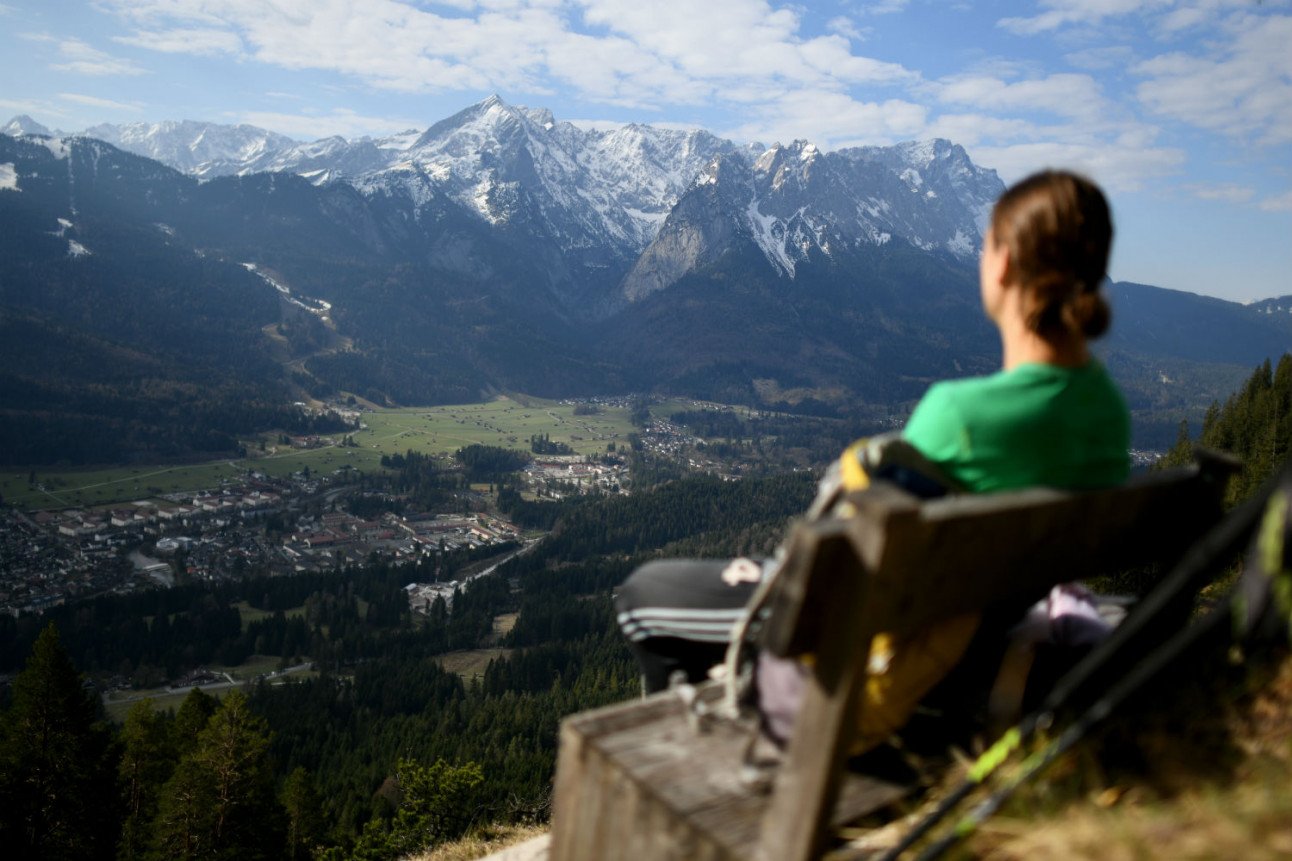
This woman has found an 'Augenweide' in the Bavarian Alps. Photo: DPA
So whether it’s a certain someone who has caught your eye, a breathtaking view of Bavarian Alps or the heartwarming sight of happy children playing together in a park, you now have the word to describe it in German.
And if anything should spoil your otherwise feast for the eyes, there’s a word for that, too: der Schandfleck, literally a ‘shame spot’.
Examples:
Der Bayerische Wald ist eine wahre Augenweide.
The Bavarian Forest is a real feast for the eyes.
Es ist eine Augenweide zu sehen, wie sie die Farben auf die Leinwand malt.
It’s a feast for the eyes to see her painting the colours onto the canvas.
Schau dir den ganzen Müll an, der auf der Straße abgeladen wurde! Das ist ja keine Augenweide.
Look at all the rubbish that’s just been dumped onto the street! That’s certainly no feast for the eyes!
Comments (1)