
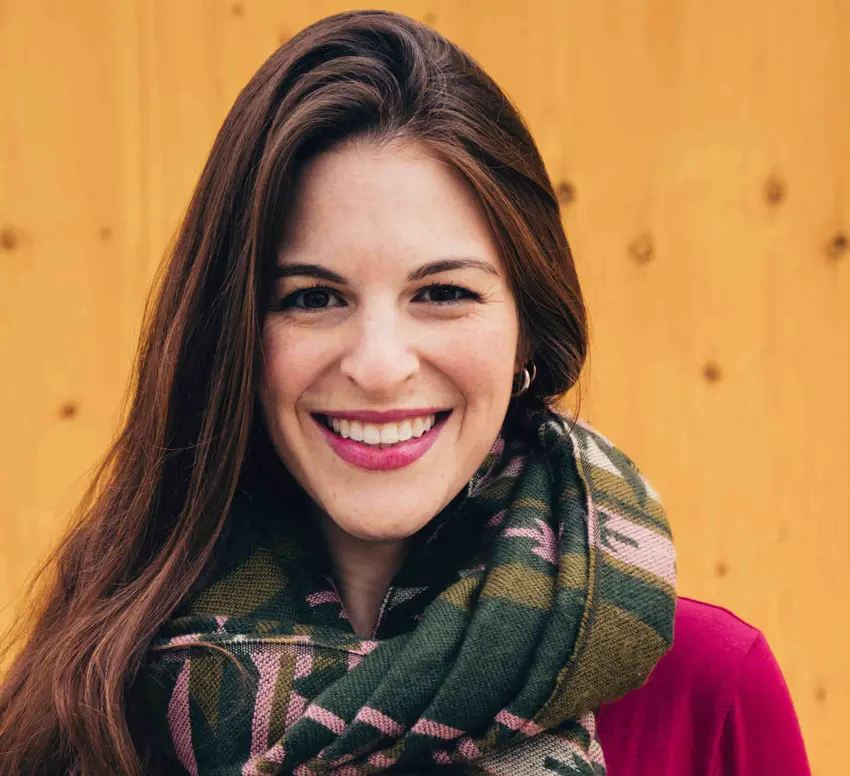
Spurred on by the #MeToo movement, American in Munich Dana Newman had several conversations with German female friends about their own experiences of being a girl and women in today’s society.
READ ALSO: What you need to know about women's rights in Germany
“Sometimes I would tell my friends here in Germany stories of things that happened to me in the US that were more or less ‘totally normal for me growing up there, only to find my German friends respond with shock,” said Newman, who has lived in the Bavarian capital for the past nine years.
"‘What? Are you freaking kidding me?’ they would say sometimes.”
Newman watched her wide-eyed friends as she described the “wait until marriage” sex education she received in a public school in the US state of Florida, or the strict dress code which her schools enforced to avoid “distracting” boys.
But other times, when topics such as body struggles, gender expectations or being pressured into sex came up, her friends could “absolutely relate” and shared similar experiences, she told The Local.
“When I heard other women sharing their stories,” said Newman, “I started being like, yeah, that thing that happened to me that I’d been holding on my shoulders as either something I did wrong or couldn’t put into words.”
'It's not what we say'
The 33-year-old, who has produced over 500 YouTube videos since 2014 spotlighting German culture from weird windows to language quirks for her Wanted Adventure channel, considered making one video comprising these conversations.
Newman's latest video, published for International Women's Day on March 8th.
But she didn’t just want to scratch the surface. Instead, Newman and co-producer and husband Stefan embarked on a Germany-wide tour interviewing other female YouTubers, authors and academics for a full video series “Being a Woman.” They stopped in Stralsund in the north, Berlin, Hamburg and Düsseldorf, among other locations.
“I realized I would need to share my own very personal, very intimate, very guarded and real stories and experiences,” said Newman, who sought the same from her interviewees - many who also opened up on camera for the first time.
What she found was at times touching. “I love everything about being a woman,” states Sarah Jane Scott, an American Schlager singer based in Berlin.
READ ALSO: How Germany's Schlager music is making a useful comeback
But it was also raw and honest. “I don’t have any girlfriend who is really 100 percent happy and comfortable in her body,” says German YouTuber Hannah from Klein aber Hannah in the most watched video of the series on body image.
“From a very young age we are taught that our body is a very big part of our existence," said German YouTuber Marie Johnson. That it’s not what we say and what we know.”
The video in the series which has gotten the most views, nearly 100,000.
The series also spotlights societal differences between the US and Germany. In a segment on motherhood, Newman points out how new mothers in the US, where there is no paid maternity leave, often “don’t have time to give birth”, instead digging into vacation days and sick days, if they had any.
In Germany, by contrast, “you can take up to three years of Elternzeit (parental leave), and your employer has to accept that,” states German YouTuber Trixi from Don’t Trust the Rabbit.
READ ALSO: German parental leave - your guide
The series additionally shines light on the similarities in how gender is perceived in Germany and the US. “If someone cries, it’s okay for a girl and not okay for a boy,” said Cari Schmid from Easy German, echoing Newman’s statements about how girls in her home state were encouraged to “cry things out” whereas boys from a young age were told to hide hurt feelings.
Both also agreed there was one emotion that was more socially accepted for men than women to show in public: anger. “Throughout history when women have gotten angry and passionate about something, they have been called hysterical,” said Newman.
Even Chancellor Angela Merkel is “very calm,” said Schmid. There’s also gender-specific speech used in Germany, like “wie echte Männer (like real men)”, she said, even though this is improving from generation to generation.
Videos für alle
While most of the interviewees are women, the videos are intended for everyone, says Newman.
READ ALSO: This is what German men really think about Gender equality
She also spoke to the German Ambassador to the UN Campaign #HeForShe, Vincent-Immanuel Herr, who states that, “I've learned from experience that some men are more likely to listen to other men talking about sexism than women, unfortunately."
The trailer to Newman's Being a Woman series. Photo: DPA
Newman has so far filmed 18 videos, a number she wants to grow to 20. Her current challenges are finding a sponsor, and that several of the videos are automatically demonetized - meaning that YouTube does not allow advertising on them - when the algorithm detects that sex or “sensitive matter” is a subject.
But Newman says the project, which was self-financed by her two person team, continues be worth it.
"Afterwards many people said to me, 'Oh, that was a nice therapy session! I didn’t realize that I had been holding on to these things'", she said.
Newman herself said she was "so nervous to talk about these topics, and now that I put them out there, I feel like a weight has been lifted. It's a big sigh of relief.”
Comments