
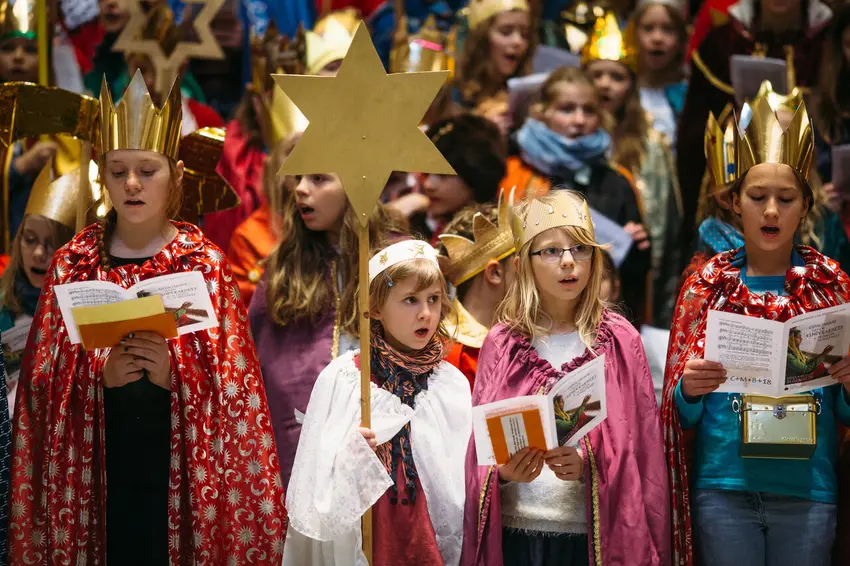
Tag der heiligen Drei Könige or Dreikönigstag (Three Kings Day or Epiphany) takes place on January 6th each year, and signifies the end of Christmas time. Normally Christmas markets have to close by this date, and many people take down their festive decoration on this day.
READ ALSO: How employees can make the most of Germany's public holidays in 2026
For students, this day also marks start of school and university, and for many Germans in general it marks the start of the new working year, since many take leave from their jobs during the holiday season up until the 6th.
In 2026 this public holiday falls on a Tuesday, but only workers living in Baden-Württemberg, Bavaria and Saxony-Anhalt may expect the day off work.
Of course, if you happen to live in one of those states, you should expect that many businesses and shops are closed on the holiday as well.
It's also a public holiday in some other countries, including neighbouring Austria, Italy, Spain and Sweden.
How is 'Dreikönigstag' celebrated In Germany?
Like most national holidays, this one has religious roots – more specifically, Christian roots. On January 6th, people around the world celebrate the Three Kings by paying homage to the new-born Jesus Christ.
In modern day Germany, many people light up their Christmas tree for the last time, and then pack away holiday decorations. The day is an official public holiday in the three states mentioned, but is also celebrated in communities throughout the country.
Lots of people, especially children, take part in the tradition of singing carols (Sternsingen).
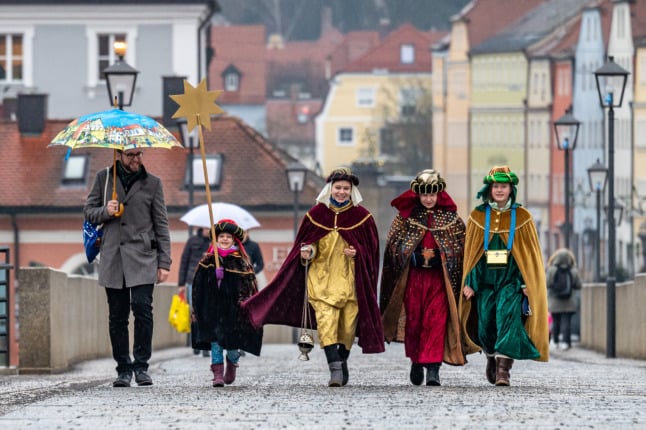
They go from door-to-door, dressed as the Three Kings, singing songs and collecting money for charitable causes and people in need.
When at each front door, they often write the date and “C+M+B” on that door. This abbreviation stands for the Latin “Christus Mansionem Benedicat" - Christ bless this house.
Some people in Germany enjoy eating Three King's Cake (Dreikönigskuchen) around this date.
This holiday is not only viewed as a Christian celebration, but also as a symbol for the beginning of a new year.
How did this holiday originate?
Originally, this day was the feast "Epiphanias", which is Greek for appearance and revelation.
On this day people would celebrate the birth and divinity of Jesus, and the adoration of the Weisen aus dem Morgenland (Wise men from the East).
From the 4th century, the story was divided into two separate celebrations: on December 25th the birth of Jesus (Christmas) was marked, and on January 6th the visit of the wise men who came with gifts for the baby Jesus.
During this change, the celebration on January 6th was renamed Heiligen Drei Könige, but is often still referred to as Epiphany.
The day is also sometimes called Dreikönigstag (literally Three Kings Day), Drei Könige or Erscheinung des Herrn (Appearance of the Lord) in Germany.
What's the story behind the Three Kings?
According to the accounts of the Bible, the Three Kings (also called wise men or magi) – named Melchior, Caspar and Balthazar, followed the Star of Bethlehem to find the birth place of Baby Jesus.
They were the first pagans to recognise the divinity of Jesus. They kneeled before him and presented him with precious gifts.
Comments