
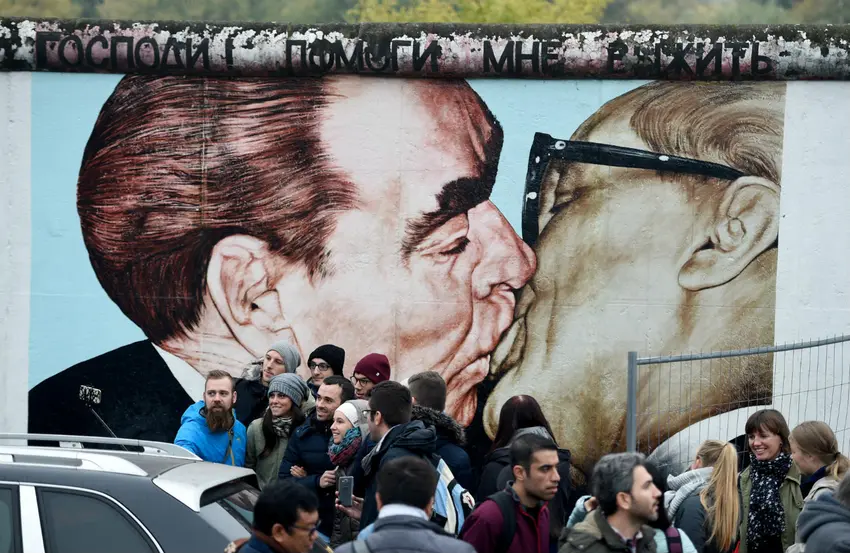
You’ve probably seen photos of the ‘Socialist fraternal kiss’ mural on the Berlin Wall at the East Side Gallery, walked past it, or maybe even taken a selfie in front of it.
Dmitri Vrubel’s graffiti art of the embrace between the former German Democratic Republic (GDR) head of state, Erich Honecker, and ex Soviet leader Leonid Brezhnev is world-renowned thanks to its up-close-and-personal depiction of the greeting used by statesmen of communist countries.
Citizens of the former GDR will remember Honecker, who died on May 29th 1994, as the dictator who co-organized the building of the Berlin Wall and endorsed the ‘order to fire’ policy, resulting in the deaths of at least 140 people.
Filmmaker Thomas Grimm, 64, who grew up in East Germany, decided to research the Honeckers in 1999 when he realized that few people - even in Germany - knew much about the family behind the politics.
He set out to find out about the family, including the former First Lady Margot Honecker and their grandson Roberto Yáñez, now 44, and what happened to them after Erich’s death.
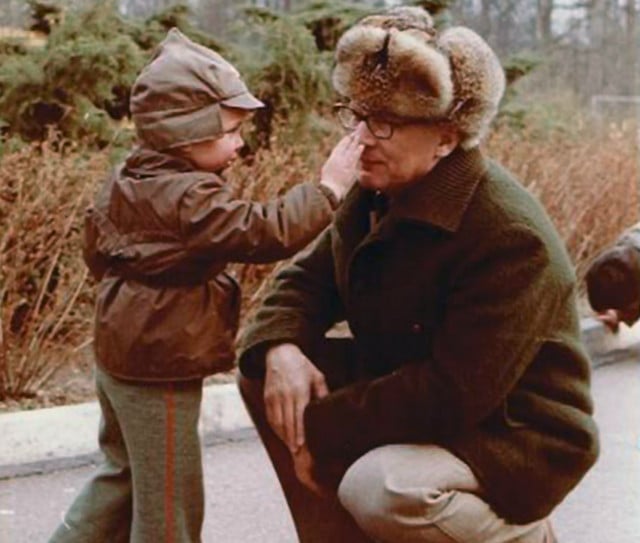 Roberto Yáñez with his grandfather Erich Honecker in the former GDR. Photo: courtesy of Zeitzeugen TV
As well as 14 documentaries, Grimm has recently written a book with the politician’s grandson Roberto. In ‘Ich war der letzte Bürger der DDR’ - ‘I was the last citizen of the GDR’, Roberto talks for the first time about his life as the “favourite grandson” and what happened after the fall of his grandfather and the East German state.
He also revealed for the first time that the ashes of his grandparents are not buried in Chile as was thought - and he hopes that their resting place could be the Socialist Cemetery in Friedrichsfelde, Berlin - an idea that's received a strong reaction from politicians in Germany.
Communist ambitions
Born in Neunkirchen, now Saarland, Erich Honecker was introduced to communism by his coal miner father at the age of 10 - and the political ideology became a lifelong passion. He joined the KPD - Communist Party of Germany - when he was 18 and spent time in Moscow at the International Lenin School.
In the mid-1930s he joined the Nazi resistance, working within the KPD in Berlin under an alias, organizing underground youth meetings. However, in December 1935 he was detained by the Gestapo for opposing the Nazi regime and, in 1937, was sentenced to 10 years imprisonment.
After he got out of prison in April 1945, Honecker stayed in Berlin and quickly become an influential member of the SED, the Socialist Unity Party, when it was founded in 1946. The GDR was formed on October 7th 1949, with the SED, leading the one party state.
Honecker rose up to become leader of the SED in 1971, and eventually took control of the whole country after he became Chairman of the State Council in 1976. Before that, in 1961, he had been tasked with overseeing the building of the Berlin Wall and endorsed the ‘order to fire’ policy on people who attempted to escape the regime.
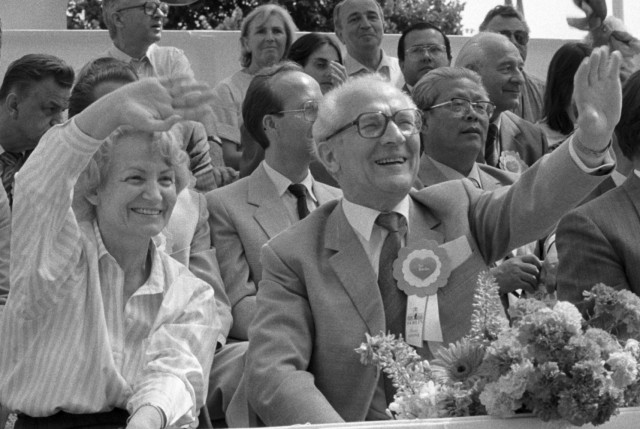 Margot and Erich Honecker during celebrations for the 750th anniversary of Berlin in July 1985. Photo: DPA
Under his rule, East Germany was repressive but he also adopted ‘consumer socialism’ with a focus on the growth of trade, meaning shops were stocked with meat, clothes and gadgets that were difficult to obtain in other Eastern Bloc capitals. He negotiated travel ties with West Germany in return for financial aid. His wife, Margot, was Minister of Education in the East German government.
“He was a dictator-lite,” says Grimm of Honecker, emphasizing that the Soviet Bloc also decided what happened in East Germany.
“The German leadership were puppets for Moscow. The time was a Cold War, it wasn’t just East Germany, the power came from Moscow.”
Honecker, described as a stubborn Stalinist, failed to introduce the Eastern Bloc reforms that were being introduced as Cold War tensions eased around the late 1980s. The leader, who was increasingly suffering from ill health, was pushed out and forced to resign in October 1989, losing his powerful positions. The wall fell on November 9th and Germany was reunified a year later on October 3rd.
Grimm says Honecker wasn’t particularly liked by the GDR public.
“He didn’t develop a cult of personality,” he says. “He was very reserved. People learned more about Honecker much later, not during his time of power.”
Fall from power
In the following months - homeless after being kicked out of their home in Wandlitz, Brandenburg, and with no place to go - the Honeckers were helped by Pastor Uwe Holmer in nearby Lobetal, who gave the couple refuge. They stayed there until April 1990 when they moved to the living quarters in a Soviet military hospital in Beelitz.
After German reunification, prosecutors issued an arrest warrant for Honecker's role in the killings that had taken place under his watch at the inner-German border, the Berlin Wall.
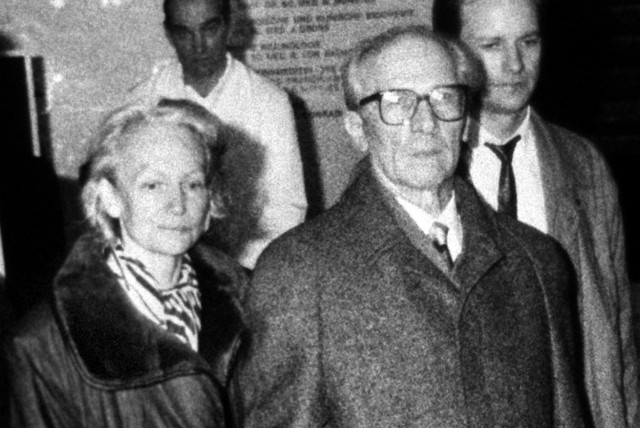 Margot and Erich Honecker leaving the Charite Hospital in East Berlin in January 1990. Photo: DPA
The couple fled to Moscow on a military jet and sought refuge in the Chilean Embassy in Moscow. Honecker hoped for special protection from Chile, due to East Germany’s role in offering Chileans refuge during the Augusto Pinochet dictatorship. Plus his daughter Sonja had a connection to the country because was married to a Chilean.
But the German government finally got their way and Honecker was extradited in July 1992, while Margot travelled to Santiago, Chile.
‘Murderer’
Honecker was flown to Tegel, arrested and detained in Moabit remand prison - a place he had spent time in years before during the Nazi regime. He was reportedly met by crowds, some of whom shouted: “Murderer!” as he was taken into prison.
Along with other defendants, he was charged with 68 counts of manslaughter and attempted manslaughter at the inner-German border, which was known as a “death strip”.
But he did not feel guilty about the deaths. “Honecker didn’t accept personal responsibility for the deaths at the war”, says Grimm. “He believed the people who died were a result of the Cold War.”
There was no resolution because the trial was abandoned, mainly due to Honecker’s ill health, and he flew to Santiago where he was met by family. He died of liver cancer on May 29th, 1994 at the age of 81.
The man behind the ideology
Honecker had a passion for being outdoors and in the wilderness.“He was very much a hunter and in his free time he liked to head out to the woods, like in Shorfheide, north of Berlin, and shoot animals,” says Grimm.
“For him it was wonderful to be out in the nature.”
Photos show Honecker in a Russian fur hat, proudly posing beside animal carcasses after a round of hunting, looking pleased with his haul.
Grimm says Honecker used to entertain western politicians, such as former German Federal Chancellor Helmut Schmidt (SPD), Oskar Lafontaine (former SPD politician and now member of The Left/Die Linke) and Franz Josef Strauss (CSU).
He was a doting grandfather. “Roberto also stayed there a lot,” says Grimm. “He spent a lot of time with his grandparents.”
Honecker wasn’t a big drinker, says Grimm. “Two beers and nothing more, and just Pilsner,” he says.
 Federal Chancellor Helmut Schmidt and Erich Honecker during Schmidt's three-day visit to East Berlin in December 1981. Photo: DPA
GDR’ on the other side of the world
When Honecker arrived in Chile after the abandoned trial, his grandson Roberto, who had come to Santiago in March 1990 aged 15, was in a psychiatric hospital battling a drug addiction.
"During this time Roberto’s life was very difficult,” says Grimm. “He was the grandfather of Honecker but he didn’t want to hear that name anymore. The topic and who he was came up often but he didn’t want anything to do with it.”
After Honecker’s death, Margot invited Roberto, who had a difficult relationship with his mother Sonja, to her home and promised to help him get back onto the straight and narrow. But it wasn’t an easy experience.
“His grandmother was undoubtedly a very strong woman and had a strong communist ideology,” says Grimm of Margot, who identified as a Stalinist like her husband.
“While living with ‘Oma’ he had to speak German and he had to live as a German, to eat as a German and to think as a communist.
“When he went outside he was an artist and knew regular Chilean people. But he didn’t have a lot of money at this time so his grandmother gave him a little bit of money and a room to sleep in, as well as food.”
During this time the pair’s lives intertwined and they began to depend on each other. Roberto lived with her from 1994 until Margot’s death in 2016.
“A symbiosis formed between the grandmother and grandson,” says Grimm.
Margot helped Roberto battle his addictions and he has been clean since 2004.
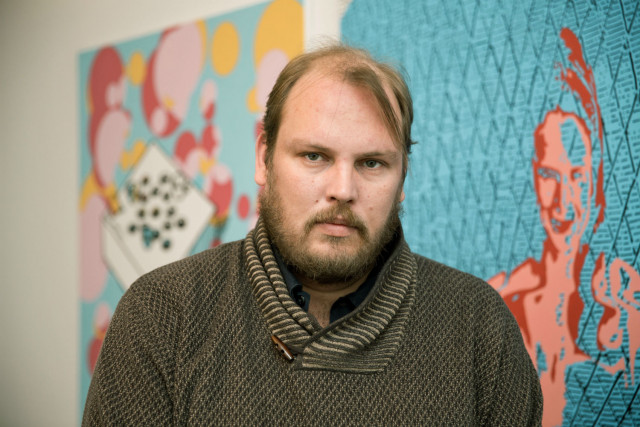 Painter, musician and poet Roberto Yáñez during a recent visit to Berlin to launch the book. Photo: DPA
“Margot was getting older so Roberto helped his grandmother. He would go to the shops with her and bring the groceries home, and go with her to the doctor.”
He felt like the last citizen of the GDR - as the title of the book says - because Margot had turned her Santiago home into a tiny East Germany.
Grimm says Margot's "house and garden was the last little GDR...Roberto was the last person to live in this territory,” he explains.
Who was Margot Honecker?
Margot Honecker was minister of education in the GDR for 26 years. Grimm says the system was known for providing a solid education, but there were many questionable aspects, such as when she introduced education for ‘Wehrkunde’ - how to use weapons.
“Young people had to learn how to shoot,” says Grimm. “It was said that you had to learn how to defend yourself against the enemies in the west.”
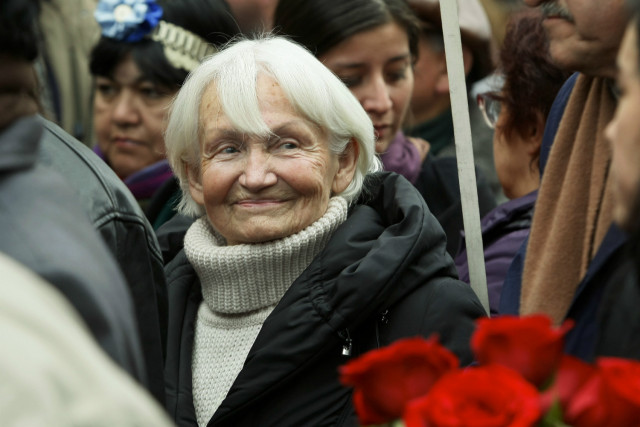 Margot Honecker in Chile in 2010. Photo: DPA
She was also “against anyone who didn’t like the GDR or had a problem with East Germany”, says Grimm.
After the wall came down, tabloids and many eastern Germans saw her as the ‘rote Hexe’ - the red witch. In the GDR time she was, for some people, the ‘lila Hexe’ - the purple witch, because of her hair colour.
“On the other hand she was open to new processes and new ideas when it came to education and was respected for that but generally she was not liked,” says Grimm.
In Santiago, Roberto, an artist, poet and musician, found it difficult living in “the GDR” but Margot was “basically his mother," says Grimm.
“It was very exhausting when he had to talk with her about politics,” he adds. “On the other hand, she gave him a structure for his life. He had to be on time to eat meals and he got some pocket money.”
Roberto sold many of his paintings and pictures, and busked with his guitar to earn money on the streets.
“Sometimes he wanted to get out so he left her and lived this way. When he came back to his grandmother this way of living wasn’t possible anymore. But he could invite friends round, he played a lot of guitar in the house.”
Grimm says ‘Oma’ had a sociable side. She welcomed Roberto’s friends and cooked for them.
'The last bastion’
Although he lived in a German speaking household, Roberto felt alienated from the country he had left aged 15.
“That wasn’t the case for Margot,” says Grimm. The former First Lady was always interested politically in the Federal Republic and had many contacts with communists in Europe.
Most of all, Grimm says, Margot Honecker tried to defend attacks against the GDR.
“She considered herself as the last defender of the GDR, the last bastion.”
Roberto is not a communist and has “respect for democracy,” says Grimm. Margot Honecker died on May 6th, 2016, at the age of 89. Roberto says that his grandmother’s death “was for me the fall of the wall”.
In a way he was finally free.
Should the Honeckers’ last resting place be in Berlin?
In the book Roberto raises the question of where the Honeckers should be laid to rest. It was thought that both sets of ashes had been buried in a cemetery in Chile - but, as German media recently picked up on - Roberto says the urns of his grandparents are with a family friend in Chile, awaiting their last journey.
“It’s a discussion in the family: ‘what will we do with the urns?’” says Grimm.
Roberto’s mother Sonja had thought about the Pacific Ocean because it stretches across the world.
But Germany is also being debated. It was always Erich Honecker’s wish to find his last resting place there- preferably in his birthplace in Saarland.
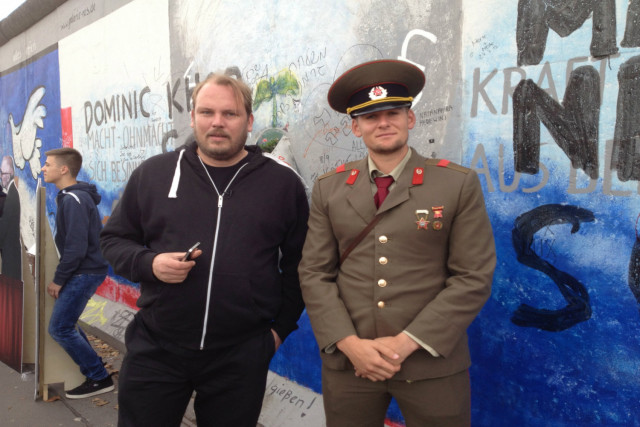 Roberto Yáñez at the East Side Gallery, where the artwork of his grandfather is. Photo: courtesy of Zeitzeugen TV
“Roberto believes his grandparents are part of German contemporary history and therefore should be buried in the country, preferably in the Cemetery of the Socialists in Friedrichsfelde,” Grimm says of Roberto’s wish.
The cemetery is the resting place for revolutionaries including Rosa Luxemburg and Karl Liebknecht.
The idea has been met with little enthusiasm in Berlin, given the Honeckers’ turbulent history. Politicians including The Left’s Gregor Gysi called it an “unsuitable” idea.
“I think it wouldn’t matter to people from the west of Germany,” adds Grimm.
“But the victims, former East Germans, would say no: no more dictators in Germany.”
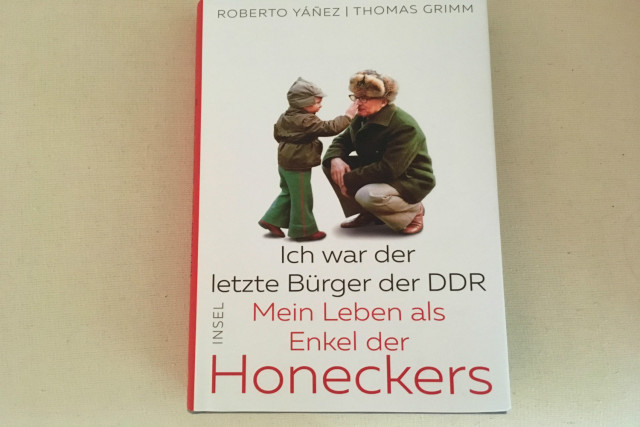 The book by Roberto Yáñez and Thomas Grimm.
Born in Aue, East Germany, close to the Czech border, Grimm himself lived under Honecker’s leadership. He moved to Berlin at the age of 19 in 1977. “We hoped that Honecker would step down, we didn’t like him at the time," says Grimm.
“We believed that a new generation could come and then we could organize a new system with freedom and democracy.”
The Honecker family’s legacy
For a documentary in 2003 by Grimm, Roberto, a father-of-three, visited Berlin from his home in Chile and the wall which his father had a role in building.
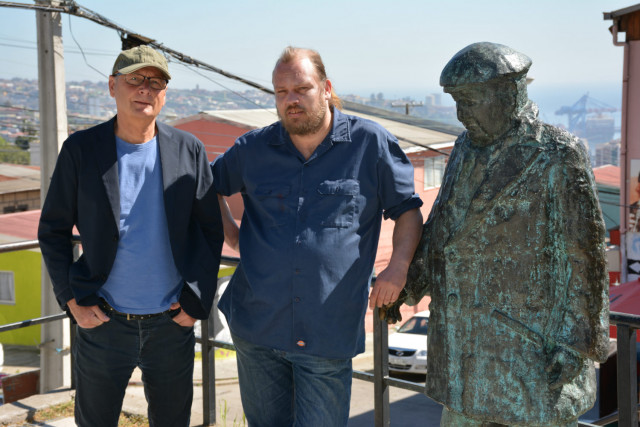 Thomas Grimm and Roberto Yáñezin Chile. Photo: Courtesy of Zeitzeugen TV
Roberto also saw the famous graffiti of his grandfather's fraternal kiss at the East Side Gallery, which he took in good humour.
As Roberto was given a tour of the wall museum at Bernauer Straße, historian Axel Klausmeier discussed the deaths of GDR refugees at the wall.
In the book Roberto says: “I didn’t build the wall, my grandfather did. I was born in 1974. It was another generation who did it, not me.”
However, Grimm, whose last film on the Honeckers will be released next year, says another statement by Roberto is relevant to the current political climate.
“Roberto told me: ‘Walls aren’t good anywhere in the world’.”
Comments (1)