
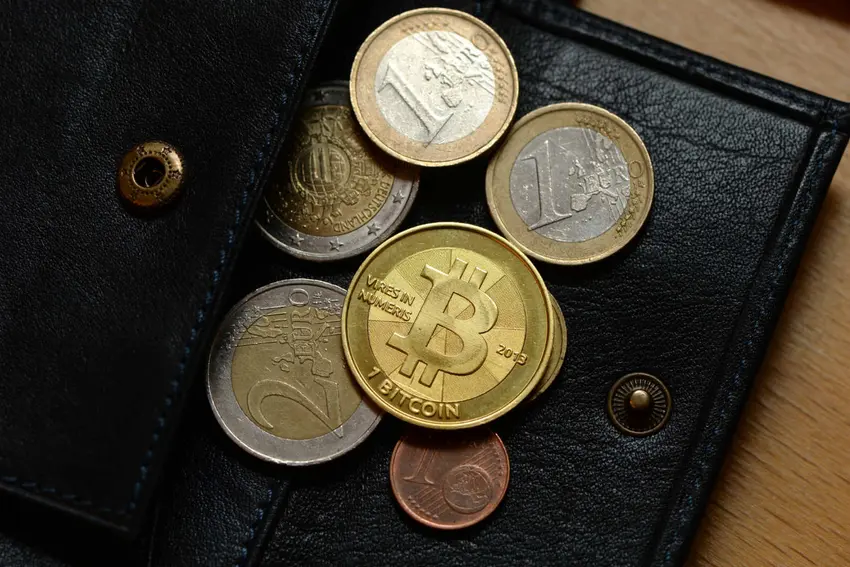
While bitcoin’s volatility has harmed confidence amongst most Germans and alarmed regulators around the world, the digital currency has retained its cult status in Berlin. Here, young entrepreneurs dreaming of a decentralized future aren’t worried about the short-term price crashes, confident that bitcoin assets will have a much higher value in the long-term.
However, the sustained optimism amongst Berlin’s investors that bitcoin will rise is at odds with warnings from finance officials and economists. Germany’s Finance Minister, Olaf Scholz, said on Tuesday that he doubts digital coins will replace existing currencies, comparing them to the tulip fever that created a speculative bubble in 17th Century Netherlands.
Unfazed by price volatility
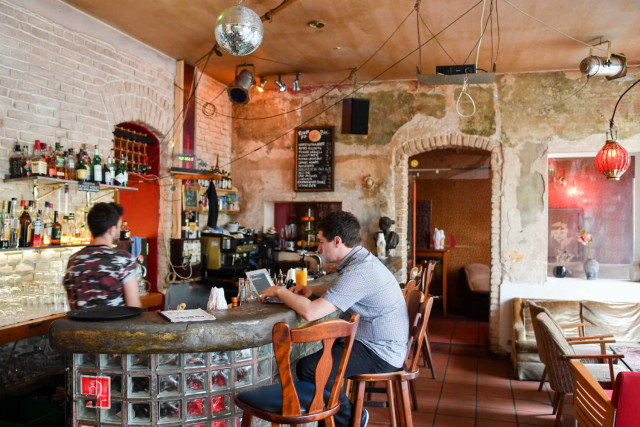
The bar Room 77 has been a long-running hangout location for Berlin's bitcoin community. It accepts the digital coin as a form of payment. Photo: DPA
Each month, Berlin’s digital currency enthusiasts gather for a Stammtisch of burgers, beers, and bitcoin buzz at the world-famous bar Room 77.
Located in Kreuzberg’s funky Gräfekiez, Room 77 has been accepting bitcoin as a form of payment since 2011, making it one of Germany’s first bitcoin-friendly bars.
Guests simply scan the QR code on their smartphone's bitcoin app to make a payment.
“We’re just a social gathering, so there’s no agenda, no talks, we just hang out and talk about bitcoin,” says Jeff Gallas, who has been part of the meetup group since its founding in June 2011 and now helps organize it. He is also the founder of the German Bitcoin Foundation.
With Bitcoin, Gallas says, you can become less reliant on “the banking dinosaurs” and become your own bank.
“It’s truly peer-to-peer. When I pay for my burger at Room 77, it’s just me and the bar and it doesn’t involve any banks or intermediaries,” he says. “You know, you can read about riding an elephant or paying with bitcoin…but only once you’ve experienced it can you understand why it’s so amazing.”
Gallas says optimism amongst members has not waned because their eyes are set on bitcoin’s future and how it will revolutionize the global financial system.
“This is a long-term experiment,” he says. “It isn’t even 10-years-old. And the important part is that a lot of people are in it for the philosophy and not for the short-term gains.”
Bitcoin.org was registered only ten years ago by the project’s original developers, Satoshi Nakamoto and Martti Malmi, so Gallas regards the price fall as a mere temporary dip.
“It’s just in its infancy and, also, it’s not a loss if you don’t cash it in, right?” he laughs nervously. “I mean if you see a loss in your spreadsheet and you don’t exchange it for some other currency, like dollars, you won’t experience a loss.
This is a popular strategy amongst bitcoin investors: “HODL.” The term started out as a misspelled word written by an apparently drunk user on a Bitcoin web chat forum in 2013. It quickly became a mantra amongst investors and earned the status of the humorous backronym: Hold On for Dear Life.
HODLers are bitcoin investors who buy and hold onto their assets, no matter how the price fluctuates, confident in bitcoin’s long-term value.
'Anarchist culture in Berlin'
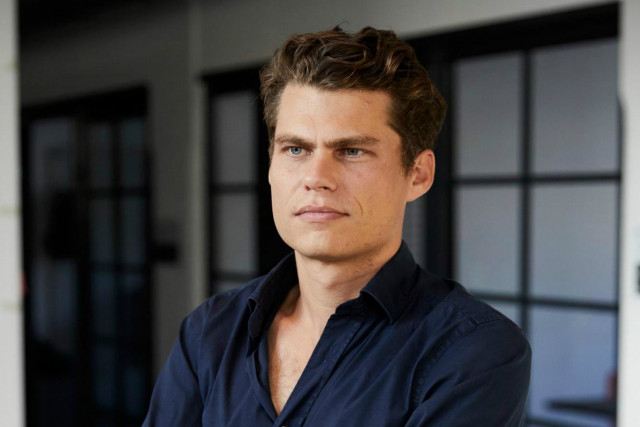
Co-founder of PredictionVC, Joe Charlesworth. Photo: Private
Joe Charlesworth left a venture capital firm and set up the cryptocurrency startup PredictionVC. It seeks to help cryptocurrency investors make smarter investment decisions by making information on blockchain assets more accessible.
“I wanted to harness the power of the crowd with a new form of decentralized-investment funding,” Charlesworth says. “We’re using more mathematics and crowd-sourced intelligence to make investment decisions and relying less on human biases.
Originally from the UK, he moved to Berlin three months ago, inspired by the capital’s tech scene and rebellious atmosphere.
“There’s this kind of anarchist culture in Berlin that fits very well with the earlier version of crypto,” Charlesworth says, sitting in the garden outside The Factory HQ, a former brewery in Mitte that has been converted into a hip campus for startups.
Charlesworth's company, which makes hourly, weekly, and monthly price predictions for cryptocurrencies, foresees that the three major digital systems of money – Bitcoin, Ripple, and Ethereum – will start to stabilize and then increase in price six months down the line.
“We’re not even getting started,” he says. “We’re just at this period of time where people have got burnt by the industry. But make no mistake about it. Bitcoin’s going to return to the levels it was once at and go higher.”
While Charlesworth admits that cryptocurrencies have their drawbacks – problems with codebases, poor governing structures, enormous environmental costs – he argues they have one thing that other technologies lack, which is trust.
“Transactions on the network are all open-source, so everyone can inspect it, check for bugs, and verify it,” he says.
Moreover, Charlesworth compared bitcoin price volatility to the dot-com bubble, suggesting that bitcoin is simply suffering the same fate as the American stock exchange Nasdaq did during the tech bubble.
In 1995 to 2000, excessive speculation led many Internet-based companies to peak in value before crashing suddenly. Once the bubble burst, many online companies shut down, but a few, such as eBay and Amazon.com, recovered quickly.
Bitcoin has ‘no fundamental value’
However, many experts have taken a negative opinion of the price crash and caution against investing in bitcoin.
Dominik Rehse, blockchain-specialist at the Centre for European Economic Research, attributed the dramatic fall of bitcoin to speculation.
“There appears to be largely no fundamental value to Bitcoin except for money transfers outside the existing financial system and for using Bitcoin as an entry ticket to the cryptoverse,” Rehse says. “This makes it basically impossible to judge on where prices are coming from and where they are going.”
The price development is driven largely by speculation, essentially because people tend to buy bitcoin not because they believe in its potential to become a global currency, but rather because they simply expect its value to rise.
Given that bitcoin assets have risen and fallen sharply in value, Rehse warns against people investing large fractions of their wealth or investment portfolio into such speculative investments.
“All crypto enthusiasts have to be clear that betting on crypto asset is highly speculative,” Rehse says. “They should allocate their funds to crypto assets with great caution.”
Ceaseless optimism
Despite the warning, confidence that bitcoin is destined for greatness remains high in Berlin’s crypto community. Supporters envision a decentralized future where digital coins overtake burdensome banks and traditional currencies.
“The price volatility doesn’t bother me too much. I already experienced [bitcoin] going from $1300 down to $200, so am somewhat battle-hardened,” says Brian Crain, who podcasts for Epicenter Bitcoin and co-founded the Berlin-based cryptocurrency startup Chorus One.
“This is still the beginning of this technology,” Crain adds. “I do expect that it will go many orders of magnitude larger and, 10 years from now, there will be billions of cryptocurrency users.”
Comments