
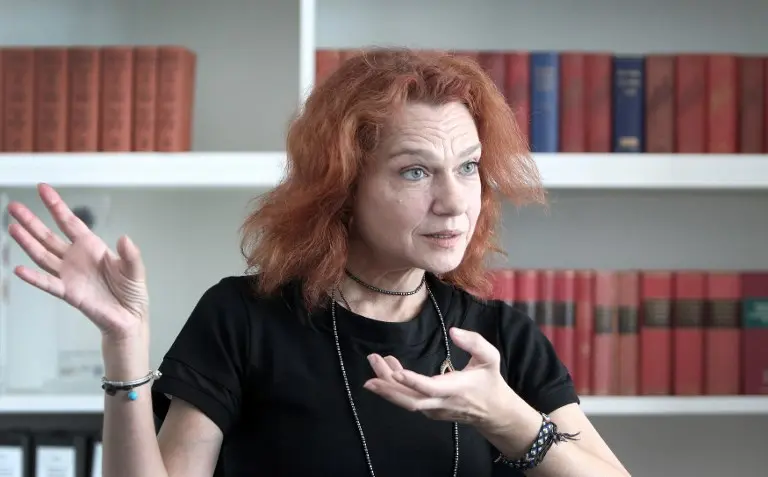
The award-winning author, still traumatised by the four months she spent in an Istanbul prison, warns that Turkey’s institutions are “in a state of total collapse”.
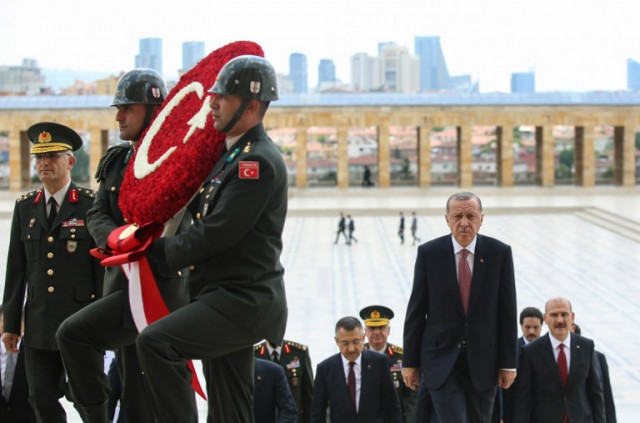
In President Recep Tayyip Erdogan—no relation—she sees a man tightening control over everyday Turkish life, emboldened by an outright victory in June elections, sweeping new powers and a crackdown on opponents.
“The extent of things in Turkey is like Nazi Germany,” the flame-haired 51-year-old told AFP in an interview in Frankfurt, her temporary home as she awaits the outcome of her court case in absentia.
“I think it is a fascist regime. It is not yet 1940s Germany, but 1930s,” said Asli.
“A crucial factor is the lack of a judicial system,” she added, describing a country of overcrowded prisons and pro-Erdogan judges in their twenties rushed in to replace ousted peers.
Asli herself was among the more than 70 000 people caught up in a wave of arrests under a state of emergency imposed after a failed 2016 coup against Erdogan.
She was held for 136 days over her links to a pro-Kurdish newspaper before being unexpectedly freed on bail.
The detention of the author of such novels as “The City in Crimson Cloak” and “The Stone Building and Other Places”, famed for their unflinching explorations of loss and trauma, drew international condemnation.
Turkey’s Nobel literature laureate Orhan Pamuk has called her “an exceptionally perceptive and sensitive writer.”
'Pathetically funny'
Turkey’s post-coup purge targeted not just alleged backers of preacher Fethullah Gulen, blamed by Ankara for the attempted putsch, but also opposition media and people accused of ties to Kurdish militants.
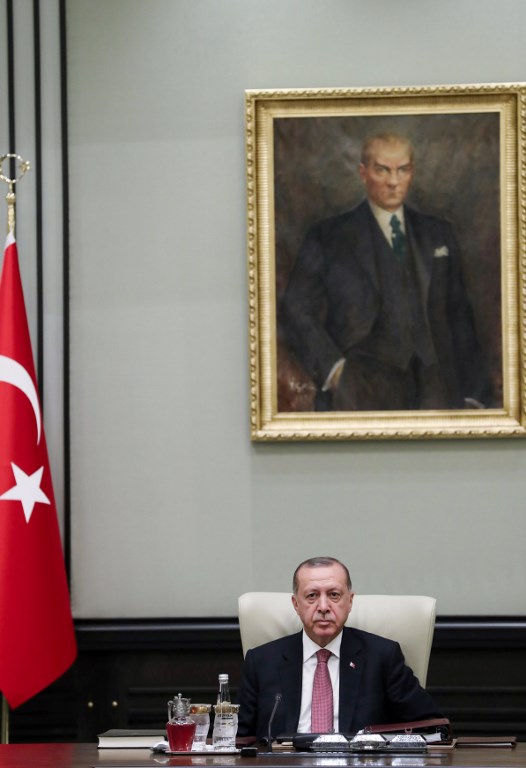
Turkish authorities reject accusations of widescale rights violations after the coup, and the state of emergency was lifted last month, after Erdogan was re-elected under a new executive-style presidency giving him direct control of ministries and public institutions.
“Erdogan is almost omnipotent,” Asli said.
“He decides on the price of medicine, on the future of classical ballet, his family members are in charge of the economy… Opera, which he hates, is also directly tied to him,” she added, chuckling.
“That’s the nice thing about fascism, it’s also pathetically funny sometimes.”
Turkish lawmakers have also approved new legislation giving authorities greater powers in detaining suspects and imposing public order, which officials say is necessary to combat multiple terror risks.
“It’s an emergency state made permanent,” said Asli.
'Not bluffing'
As for herself, Asli has given up hope of being acquitted and returning to Turkey anytime soon.
“They are not bluffing,” she said she realised after several journalists were sentenced to life terms.
She faces charges of spreading “terror propaganda” for her work as a literary adviser to the newspaper Ozgur Gundem.
The paper itself was shut down, accused by Turkish authorities of being a mouthpiece for the outlawed Kurdistan Workers Party (PKK), considered a terror group by Ankara and its Western allies.
The next hearings in Asli’s case are scheduled for October and March.
The diminutive former physicist said the wait for the verdict was “almost unbearable”.
“One of the biggest tortures you can do to a human being is to keep his fate unknown.”
‘You write with blood’
Released from prison in late December 2016, it took Asli until last September to get her passport back from Turkish authorities.
She immediately left for Germany, following other Turkish artists and intellectuals into exile.
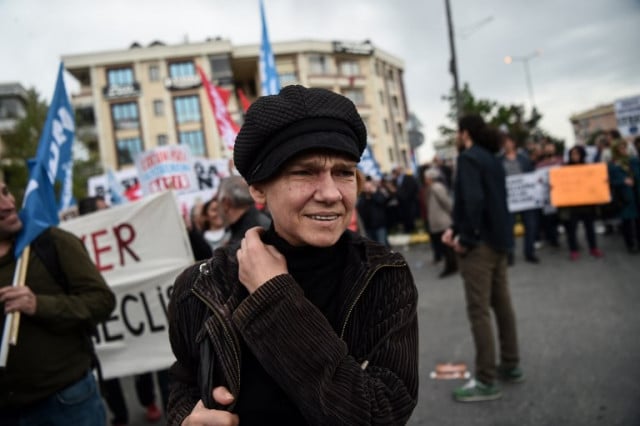
She now lives in Frankfurt, the recipient of a flat and a monthly stipend as part of the international Cities of Refuge project.
The scheme aims to provide persecuted writers with a safe haven from where they can continue working.
But Asli, who has written eight books translated into 20 languages, hasn’t been able to pick up a pen yet.
Struggling with insomnia, depression and health problems, it has been easier to “play the professional writer” in past months, travelling abroad for literary events and talks.
But slowly her nightmares about prison are becoming less frequent, she said, while a painful neck hernia has done her the unexpected favour of forcing her to slow down.
Asli said she was getting “more in the mood” to write, but her immediate focus remained on raising the plight of those still locked up in Turkey.
“I have been pushed into a political role, which I try to carry with grace.”
But when she is ready, she will put her own experiences of prison to paper, in what Asli predicts will be “a very heavy confrontation”.
“In literature, you have to be more than 200 percent honest,” she said. “You write with blood.”
Comments