

Two different surveys in 2016 reflected the loneliness that many immigrants experience upon moving to Germany: it’s hard to make friends because Germans are perceived as unfriendly.
But nonetheless, many of us outsiders from countries of hugs and kisses do eventually end up forming tight bonds in the Bundesrepublik, or even marrying a German. Here are some tips to help you down that bumpy road.
1. Find a hobby and join a club
Germans are big fans of joining clubs, or Vereine. It could be for anything from books to sports. But getting involved in a group that regularly meets almost forces you to develop friendships with the other members over time.
And if you fear your German isn’t good enough (or perhaps even non-existent), at least it could give you a physical activity to share and potentially discuss - even if it’s just through body language.
2. Take a German class - or some other class
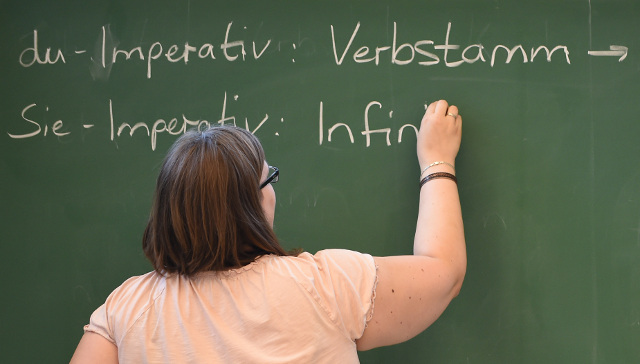 Photo: DPA.
While I do know a number of expats who never get around to learning German despite living here for years, having some knowledge of the native tongue will certainly open up even more doors for you socially.
Private tutors can be great, but having an additional interaction with others through a course who are in the same boat as you, so to speak, can also be a great way to make friends.
I’ve personally had a mixed experience with classes, some being more social than others. The best classes for me were at the public Volkshochschule - which is also much more affordable than private courses. There the people seem to be more committed to living in Germany, rather than just passing through, meaning they were more likely to be looking for long-term friendships. And I also tended to be the only English speaker, meaning we were all forced to communicate in German.
Plus many of them were in relationships with Germans, so visiting classmates at their flats helped me to further immerse myself into German social life.
3. Make plans, don’t just wait to be invited
Honestly this is generally just a good friend-making rule of thumb for adults, especially for the immediate post-university period where you may feel shocked by a sudden lack of immediate community.
But especially since Germans are known for often not making plans right away in new friendships, it’s good to take the initiative and do the inviting yourself. The worst they can say is ‘nein’.
4. Expand your interests and vocabulary
 Photo: Pexels.com
When you’re in your home country, it’s easy to fall back on topics that most people can relate to, and that tends to be pop culture, sports, or some common set of jokes. But these things don’t always transfer or translate well in another country. The people you’re surrounded by didn’t grow up with the same references.
So instead of informing everyone about things you like from back home, ask them questions about what they like or their traditions. It can lead to some pretty entertaining conversations about ridiculous kids’ shows, YouTube stars and wedding traditions.
If you learn more about German culture, you'll get more ideas for conversation starters - listen to the radio, watch their shows, read the news (we can help with that!), etc.
5. Find a tandem partner (or two)
If your German class is full of tight-lipped, asocials, maybe it’s time to find a tandem partner. This arrangement means you already know your partner is interested in learning your language and meeting up regularly. Perhaps they’re a German who also just moved to your city and they too want to meet someone new.
It’s also totally fine to find a couple tandem partners - maybe even someone who’ll help you with a third language, if you’re daring. Universities like Humboldt and local Goethe Institutes will often offer services to arrange these partnerships. There are also websites like TandemPartners.org that allow you to set up a profile, describe what you’re looking for, and find someone who matches you - kind of like online dating.
6. Bond with your roommates - but don’t depend on them
 Photo: DPA.
Having social roommates who already know the city and culture can be a great gateway to meeting even more people. But don’t go into a new WG (Wohngemeinschaft, or flatshare with roommates) expecting to become besties - Germans don’t always work that way. Some prefer to keep their home space quiet for personal reflection and rest, not for socializing.
One way to filter out non-social situations is to rule out anything defined as a Zweck-WG. The term literally means “purpose flatshare” and is for people who are just looking to share costs, nothing more. They’re not looking to make it a warm and cosy community living situation.
Still, even those who advertise “keine Zweck-WG” may not always be overly outgoing.
So basically, don’t get your hopes up - and if your flatmates turn out to be friendly, you’ll be pleasantly surprised.
7. Remember the term ‘verabredet’
Germans have a specific term for being committed to attending an event - even a casual get together: verabredet. And they take this seriously.
At least for this American who’s used to flaky fellow Millennial friends back home cancelling at the last minute via text message, this can be both a surprising and refreshing realization.
But an easy way to burn bridges in Germany is when you’ve said you’ll go to something and then bail. I once thought house parties were an exception to this rule, but no: I’ve had German friends call me out for even this. So don’t say you’ll go somewhere unless you really mean it.
8. Be patient
 Photo: Pexels.com
Forming friendships always takes time, whether your new city is within your home country or abroad. But coupled with the language barrier and the different norms when it comes to friendships, it is easy to feel frustrated and hopeless. So give it time.
Friendships will start to form slowly - perhaps slower than you like - but they’ll be worth it because you put time and effort into them.
Comments