
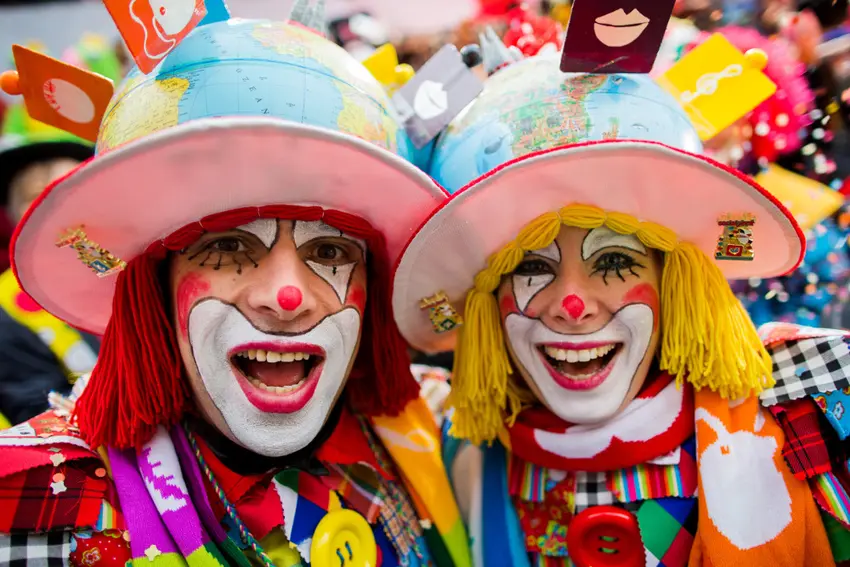
Carnival in Cologne can feel like a big, colourful mess of costumes and clowns that all blurs together before you even know what you’re supposed to be doing (especially due to all that Kölsch beer consumption).
So it’s probably best to plan your days before you start boozing to be sure you don’t miss the biggest events.
The Carnival tradition can be found around the world, from Brazil to Venice, and the biggest in Germany is certainly Cologne. Local revellers - called Jecken - use the celebrations to indulge in parties leading up to the Christian Lent season of fasting and abstinence beginning on Ash Wednesday.
SEE ALSO: Ten words you need to know for Carnival
The main events revolve around watching parades in which various city groups march about in costumes with lively floats, but the participants are far from the only ones in costume.
In fact, you’ll find yourself feeling quite out of place - no matter what time of day - if you’re without some kind of ridiculous garb, so remember to bring along your face paint and clown shoes.
Women's Carnival Day (Weiberfastnacht): February 12th
This is the first big event, where women dress up in their whimsical best - even on their way to work. The thing not to miss starts at 10am when the women head to the Alter Markt (Old Market), and then at 11.11am when the Prince, Peasant and Virgin figures officially kick off the party.
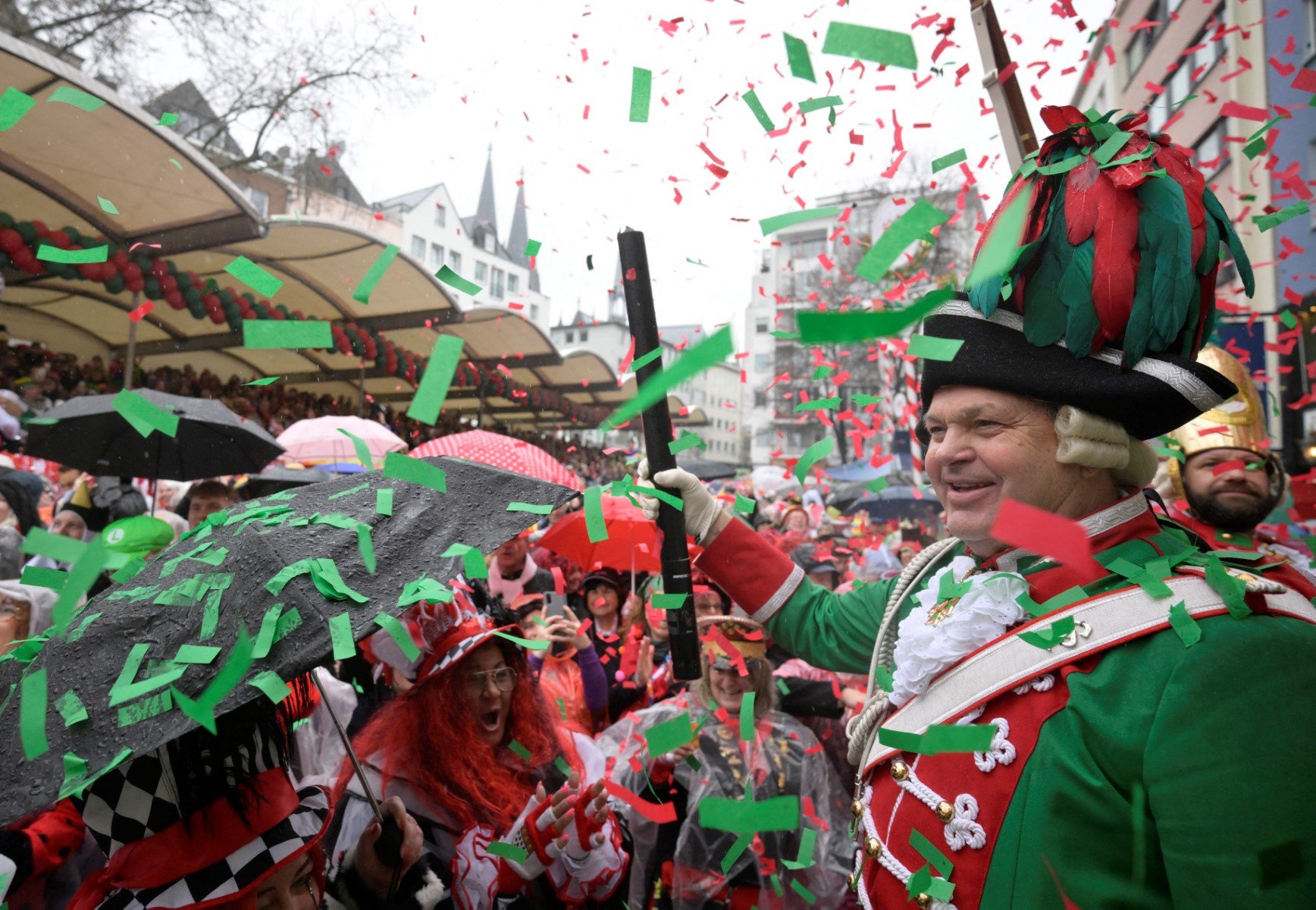
It’s then tradition that at 1.30pm, performers reenact the unrequited love story of Jan and Griet – based on German Count Johann von Werth – at the Torburg at Chlodwigplatz.
After that, street parties will follow for the rest of the day and night - and basically won’t stop for several more days.
Carnival Friday: February 13th
The festivities from Thursday don’t really die down going into Friday, but the thing to make sure you recover and turn up for is the Sternmarsch, where different groups converge at the Alter Markt to show off their parade costumes from the last season.
Spectators typically start filling the area from around 4pm, but it’s best to arrive earlier to find a good spot in the crowd to see the colourful ensembles and belt out the various folk songs in the Kölsch dialect.
When in doubt of what to shout, just remember “Kölle Alaaf!” as that’s mostly what they’ll be saying.
After that, revellers will again hit the bars and the streets to drink and dance the night away.
READ ALSO: IN PICTURES - The wildest 'Rosenmontag' floats at last year's Carnival in Germany
Saturday Ghost Parade (Geisterzug): February 14th
Things take a slightly darker, Halloween-ish turn on Saturday evening with vampires and witches turning out for the ‘Ghost Parade’.
While at other parades later on you can expect to catch candy thrown by the marchers, this Ghost Parade offers up another tradition: Bützje, or a kiss on the cheek.
Sunday School and District Parade (Schull- und Veedelszöch): February 15th
Perhaps you’ll still be partying from the night before when this morning parade kicks off at 11.11am, so better grab a cup of coffee and go, because this is one of the major events.
On Sunday different school and city groups show off their brand-new costumes for the first time and parade through the city centre, past the famous cathedral and the train station.
You’ll probably be in for a Bützje or two, but also Kamelle (candy) and Strüßjer (flowers).
Rose Monday (Rosenmontag) – the main event: February 16th
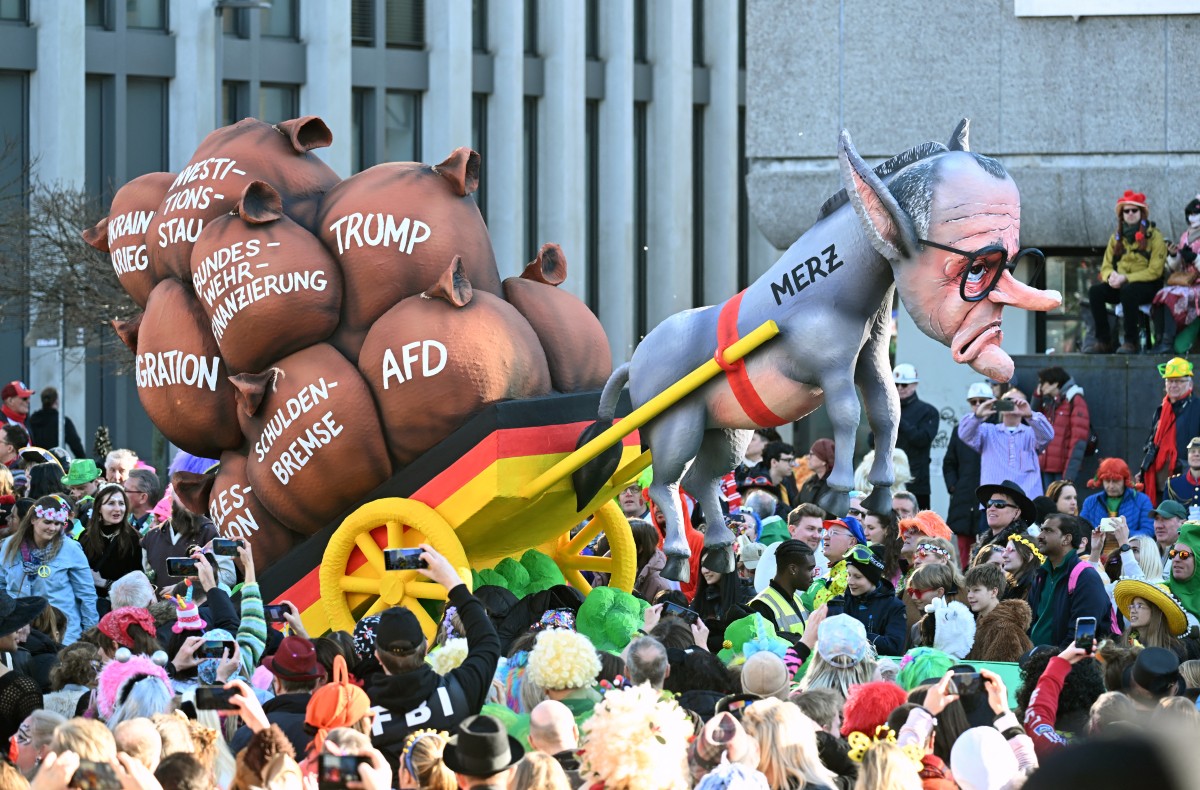
If you have to plan your days around one event, it’s this parade. Around one million people attend each year when the main Rosenmontag parades occur, featuring massive floats with sharp political satire on current leaders.
Expect floats targeting prominent figures such as US President Donald Trump and Chancellor Friedrich Merz, alongside jabs at coalition in-fighting and European politics.
Violet Tuesday (Veilchendienstag): February 17th
In one last hurrah before it’s time to give up alcohol, sweets or some other vice for Lent, Cologne’s Jecken host more parades, mainly in the Mülheim, Nippes and Ehrenfeld districts.
Afterwards the event not to miss is the burning of the Nubbel - a lifesize straw doll that represents the transgressions the partiers have committed throughout the debaucherous season.
Bars around the city will be burning their own straw dolls at midnight, and around 10,000 people are expected to turn up at Zülpicher Straße, where many will have been enjoying the lively nightlife.
This marks the official end to Carnival, as churchgoers prepare for Ash Wednesday services. A lot of Carnival groups still meet up after, though without costumes, to eat the traditional fish meal as Lent begins.
SEE ALSO: Six things I learned from my first Cologne Carnival