
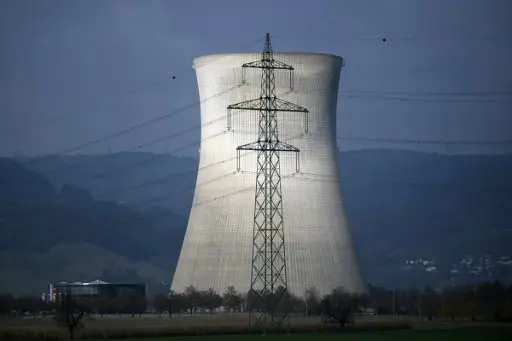
Shortly after the reactor was brought on line at around 5.30pm on Friday, operator KKL noted a malfunction of the exhaust system responsible for filtering gases from the condenser in a non-nuclear area of the reactor, KKL said in a statement.
The system was manually shut down “in an orderly manner” and the incident was not classed as a dangerous incident.
According to the KKL and the Swiss federal inspectorate, ENSI, this latest malfunction has nothing to do with the problems that led to Leibstadt remaining off line for six months from August 2016.
Back then, tests indicated traces of oxidization due to ‘dryouts’. An inspection was then carried out to determine the cause of the problem.
Last Thursday ENSI gave KKL the green light to restart the reactor under certain conditions to ensure that such dryouts did not reoccur.
During the inspection process nothing called into question the safety of the reactor, said ENSI in a statement.
However it seems this has not convinced the German environment minister, Rita Schwarzelühr-Shutter, who on Saturday said it was “unfortunate” that the reactor had been restarted without its problems being completely clarified, reported German media.
”We would like to understand the technical background that led to a decision to restart,” added the minister.
Greenpeace has also criticized the move, while 16,000 people have signed a petition against the reactor led by a Swiss Green Party politician, reported Swiss news agencies.
Some 12 Swiss and German groups have written to the Swiss government to demand the shutdown of the reactor.
Leibstadt is due to be restarted again on Monday evening after the problems with the exhaust system have been fixed, said KKL.
Austria’s Volarlberg region has also previously expressed concerns about Leibstadt.
Dating from 1984, Leibstadt is one of Switzerland’s five nuclear reactors, but it’s far from the oldest. That record is held by Beznau I, which was built in 1969.
Comments