
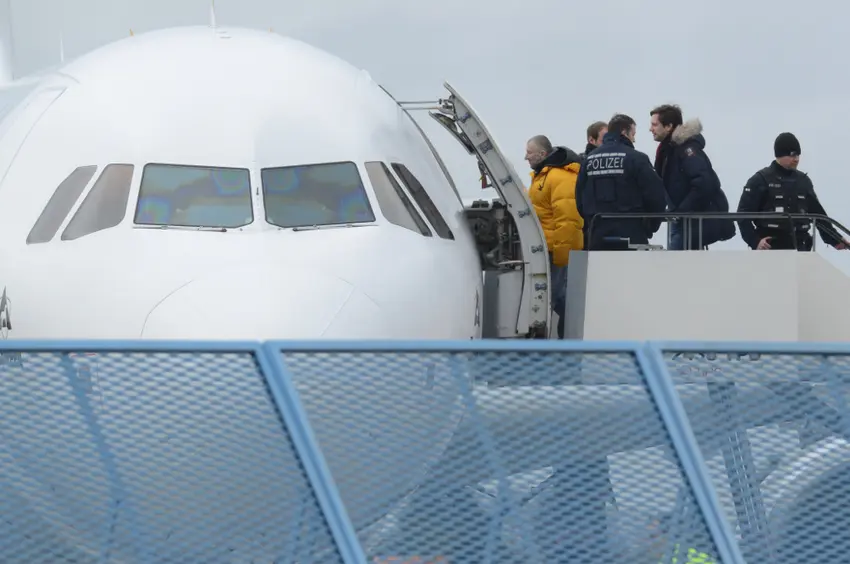
According to the report by publishing group Funke Mediengruppe, Schleswig-Holstein, Berlin, Bremen, Lower Saxony, Thuringia and Rhineland-Palatinate are all having doubts about the federal government’s classification of Afghanistan’s level of safety, and therefore about Afghan deportations.
The information came from a survey of state interior ministries as the federal government reviews a new UN report on Afghanistan. The UN said on Monday that there had been a record number of civilian casualties in 2016 with nearly 3,500 killed and more than 7,900 injured.
“The killing and maiming of thousands of Afghan civilians is deeply harrowing and largely preventable,” said the UN Secretary General’s special representative to Afghanistan, Tadamichi Yamamoto, in a statement.
The report noted that anti-government forces including the Taliban were mainly responsible for the casualties, while it blamed pro-government forces as well for about one-fourth of the casualties.
“Children have been killed, blinded, crippled - or inadvertently caused the death of their friends - while playing with unexploded ordnance that is negligently left behind by parties to the conflict. Women continue to be brutally punished in parallel so-called ‘justice’ processes while religious minorities are targeted as they pray in their mosques,” said UN High Commissioner for Human Rights, Zeid Ra’ad Al Hussein, in a statement.
But despite prior concern raised about the situation in Afghanistan, the German federal government has continued to justify its waves of controversial collective deportations under an Afghan-EU deal signed in October. The government has continued to claim that the situation in Afghanistan is varied with some regions being relatively secure.
Bremen state senate regards Afghanistan to be unsafe, according to the Funke report, while a Schleswig-Holstein government spokesperson said the state is reviewing whether it would be possible to stop deportations.
Lower Saxony’s government is now reviewing security reports about the country, and during this review will postpone deportations “due to the security situation which currently has not been sufficiently clarified”, a spokesperson said.
In Thuringia, immigration authorities told the publishing group that, at the moment, no rejected asylum seekers will be sent back to Afghanistan against their will until state officials receive confirmation from the federal government that the security situation in the country has actually improved.
Rhineland-Palatinate officials said the state is only deporting Afghans back home if they are convicted criminals or deemed potentially dangerous.
Nationwide as of mid-December, there were around 11,900 Afghans who were designated to be deported, but about 10,300 of them are "tolerated" by the government and able to stay.
The deportation process can be a difficult one in Germany. Some countries of origin may delay taking back their citizens - or deny that someone is their national - and Germany may also grant certain forms of protection, such as "tolerated" status, if returning them would pose a danger to them.
It ultimately becomes the individual state's responsibility to enforce the deportation.
Comments